Lokshe (Lokše)
Ingredients: 6 potatoes, cup of flour, oil, salt, sauerkraut or jam with poppy seeds
Prep Time: 30 minutes
An indispensable part of the Slovak kitchen are lokshe (lokše, lokša singular). They are thin pancakes made out of potato dough that are baked on a hot plate or an ungreased frying pan. They are kind of like Slovak tortillas. These will be found on any Christmas table! You will also find them offered at Christmas markets held in just about every town during the holidays. Today I am again at my grandma, so I watched as she prepared a batch. Follow the following easy steps to prepare this delicious and cheap Slovak treat at home.
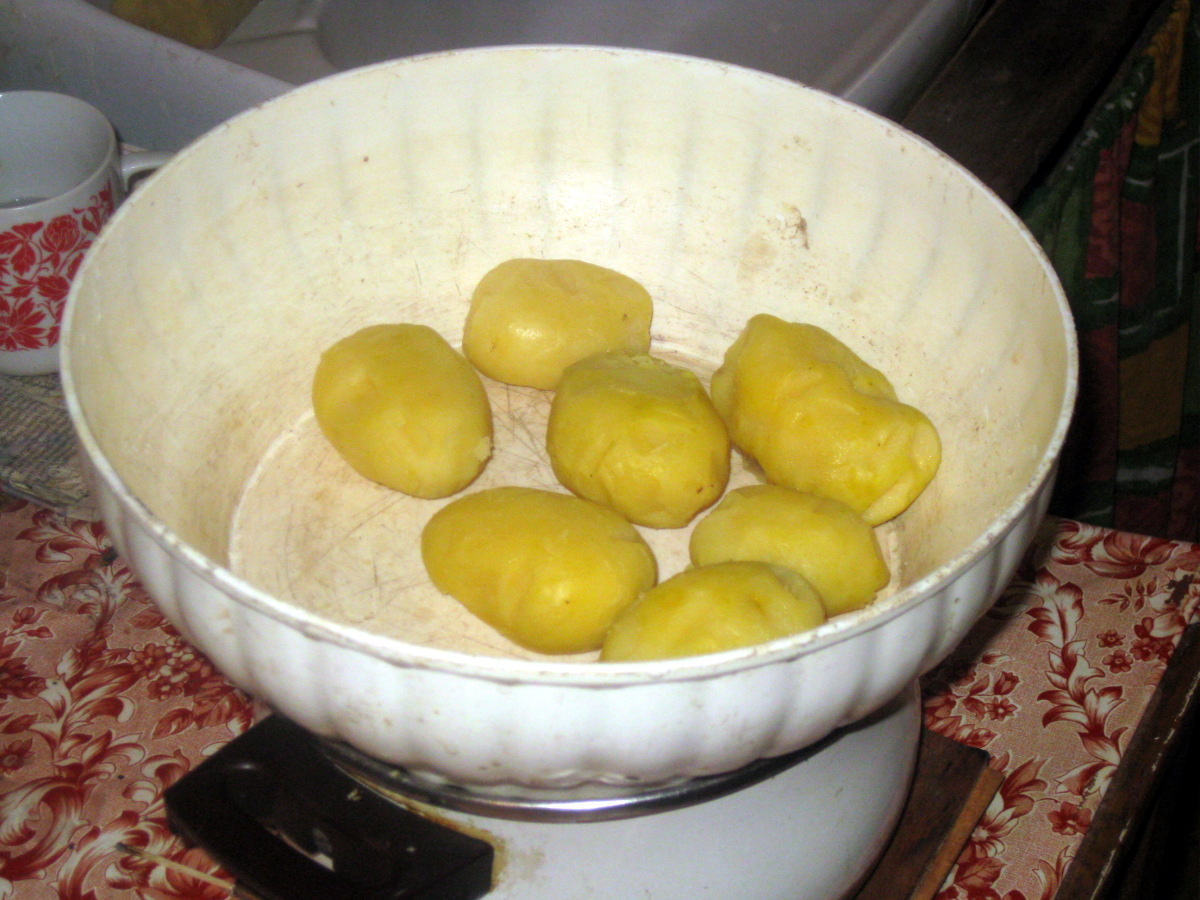
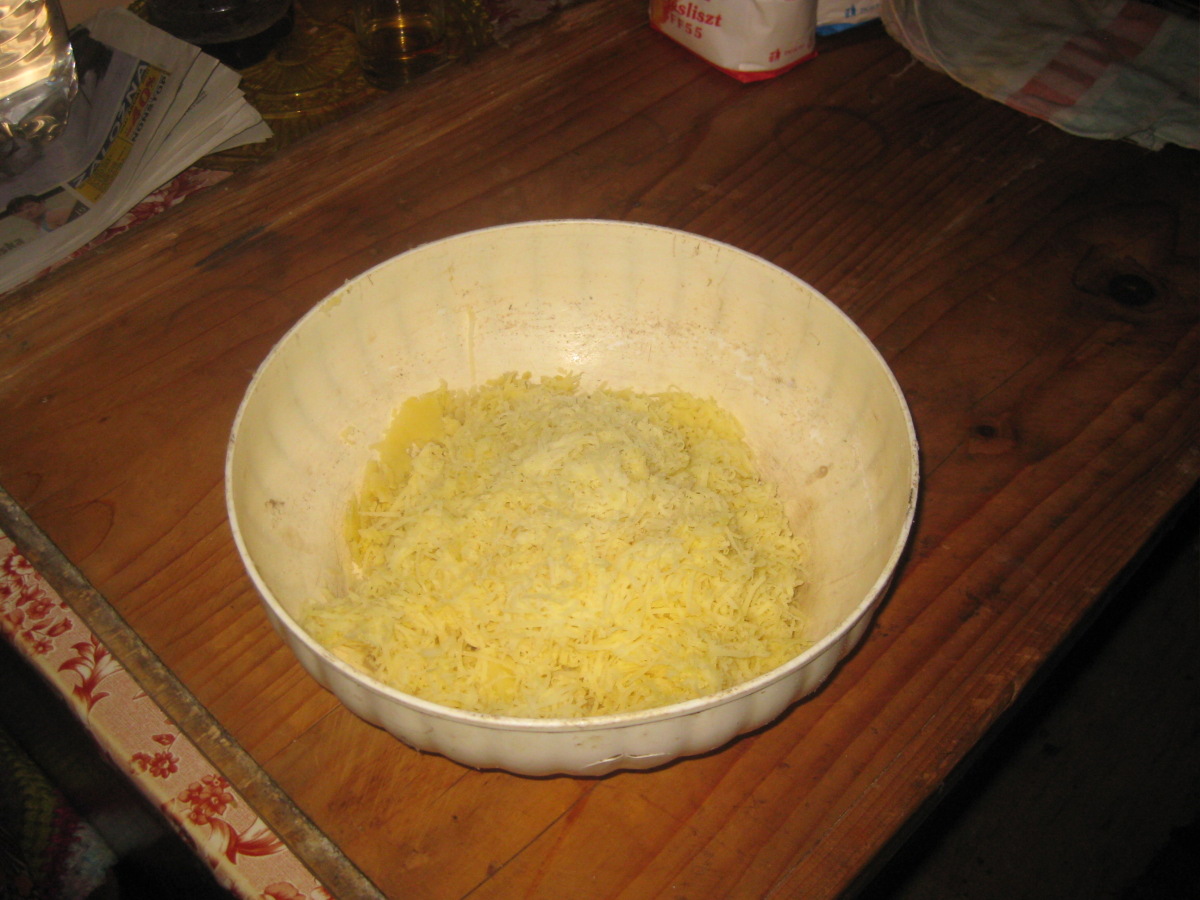
Start by boiling unpeeled potatoes (zemiaky v kožke, potatoes in skin). Don’t boil them all the way, just long enough so that you can stick a fork in part of the way. Remove the skin, and grate them.
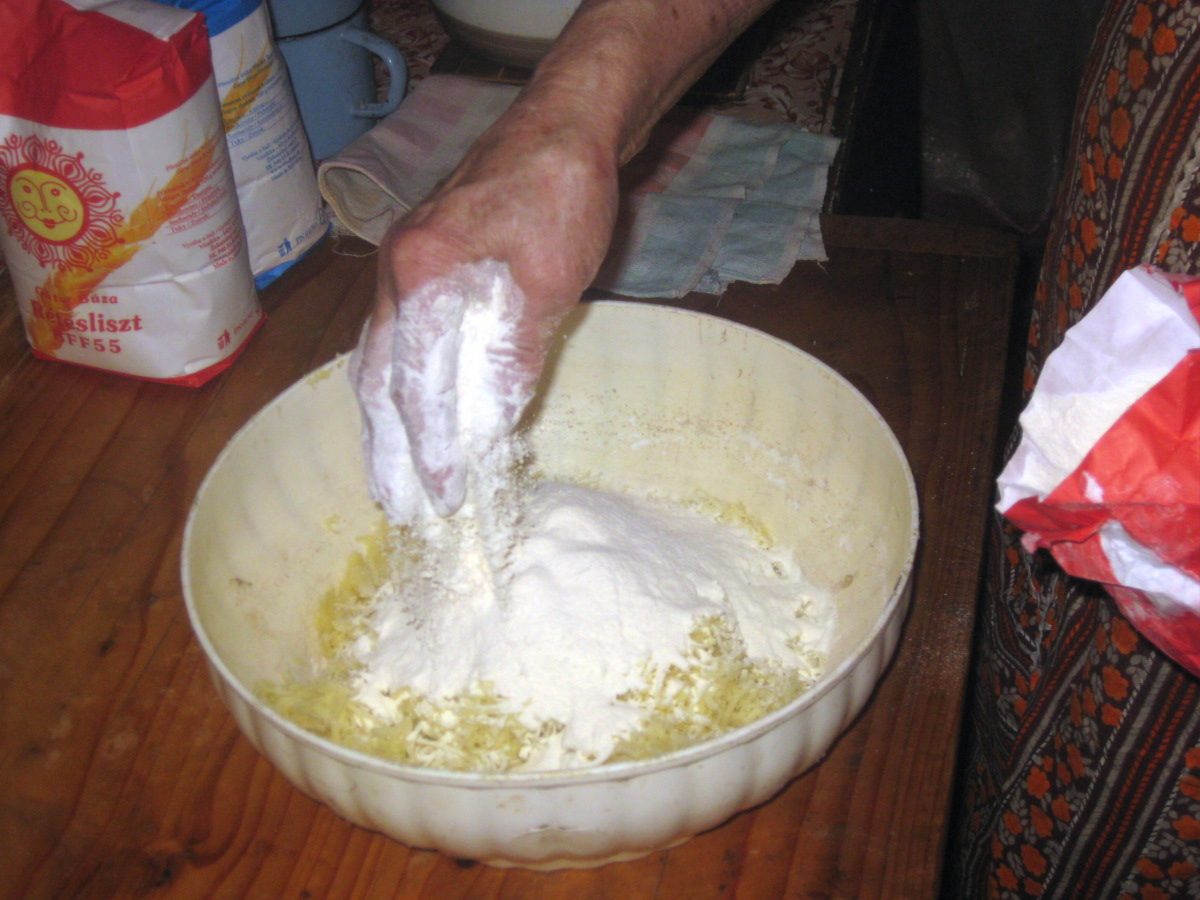
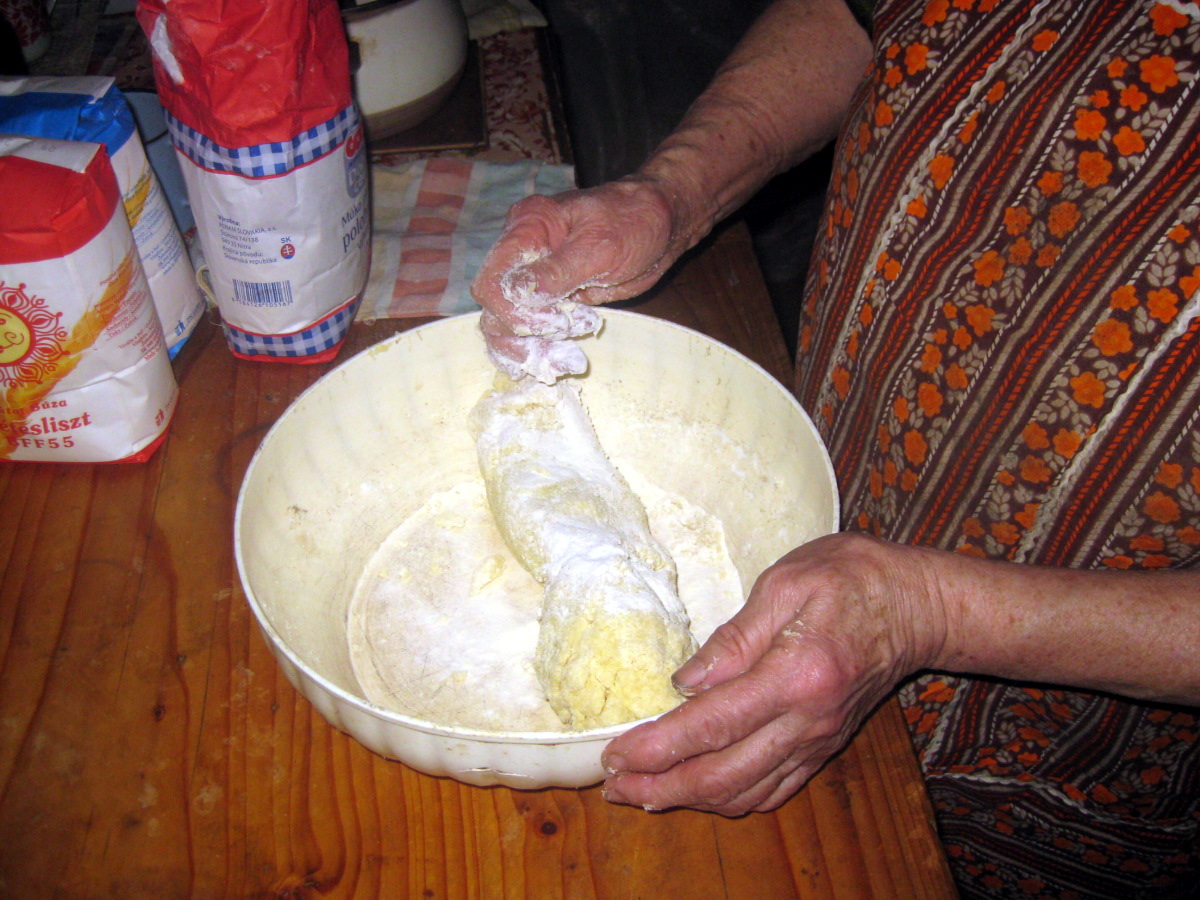
Then add about a cup of flour (múka) and a dash of salt (soľ). Work into dough.
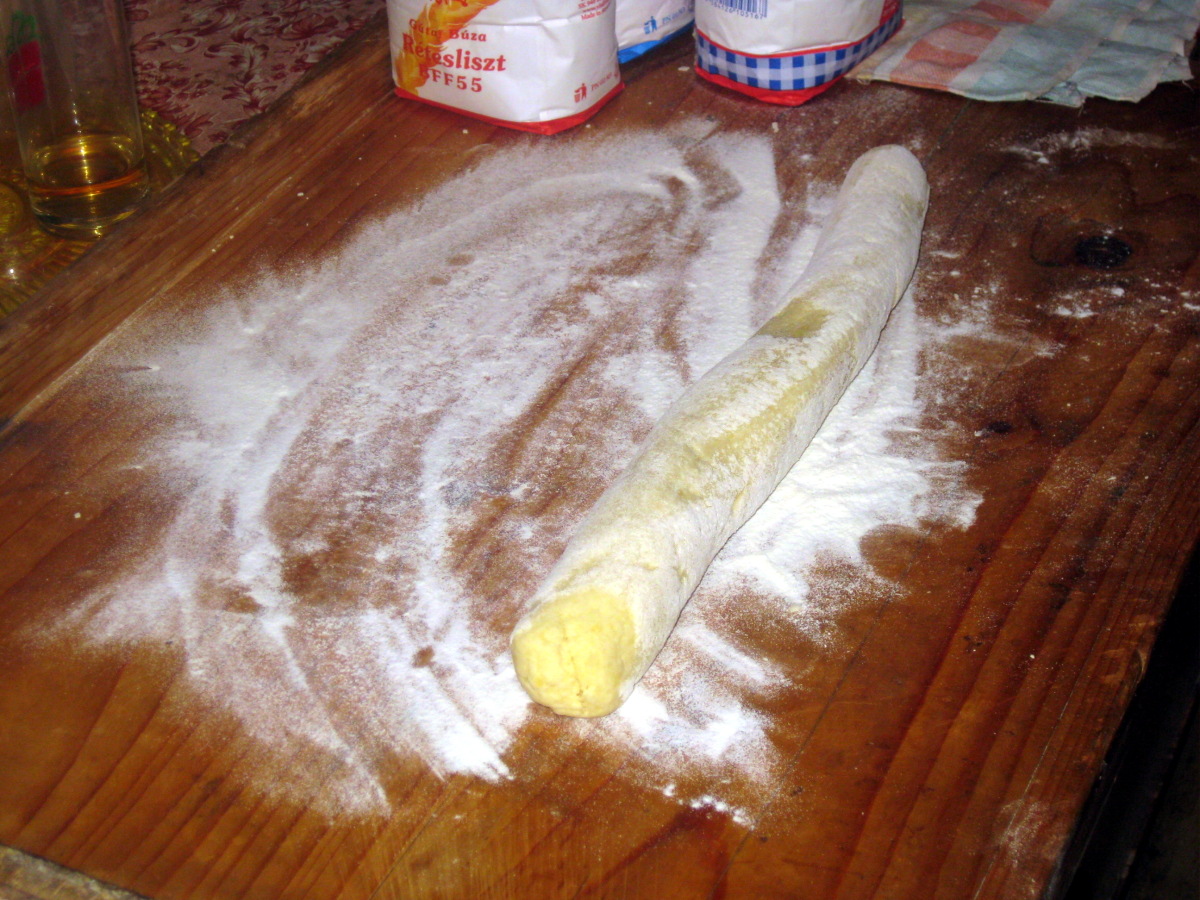
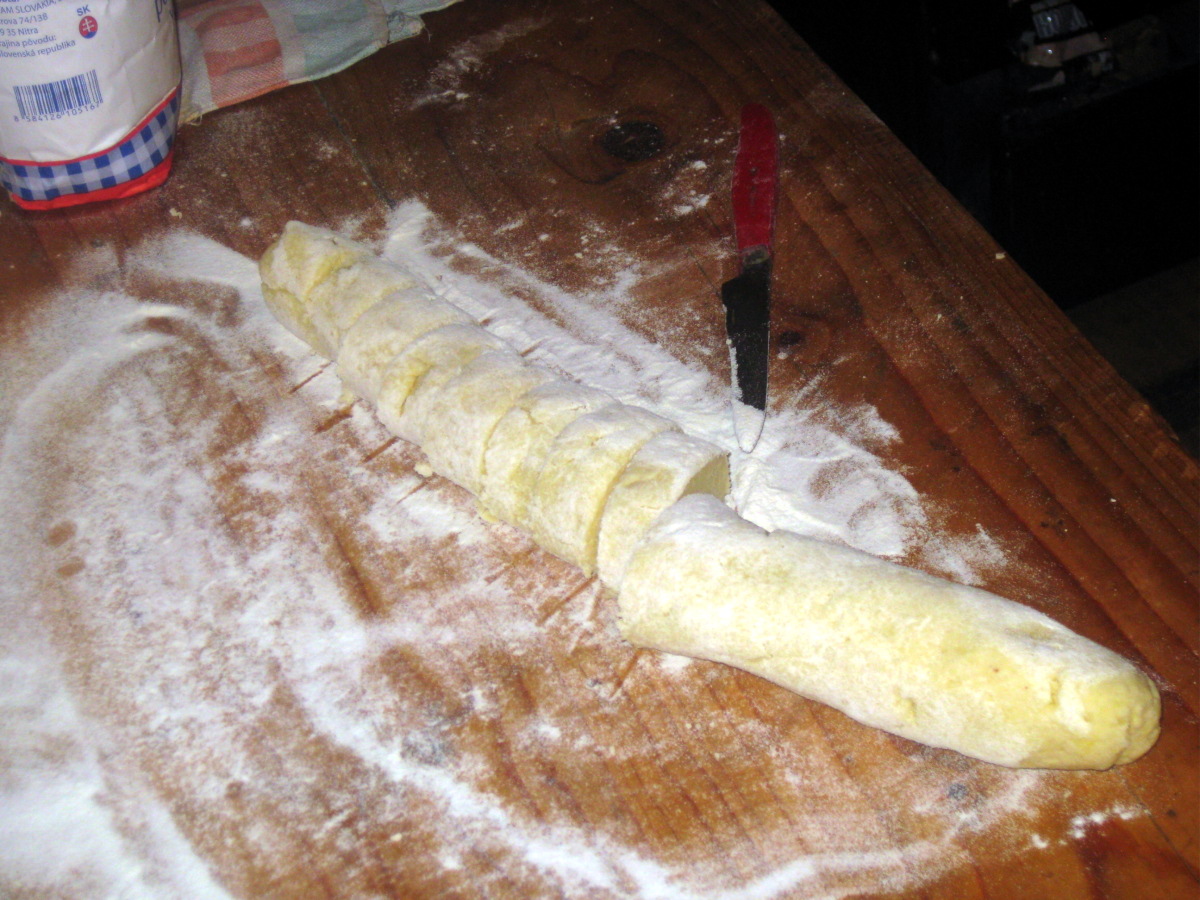
Transfer onto a floured board, and roll into a tube some 2-3 inches in diameter. Cut out individual slices about an inch thick.
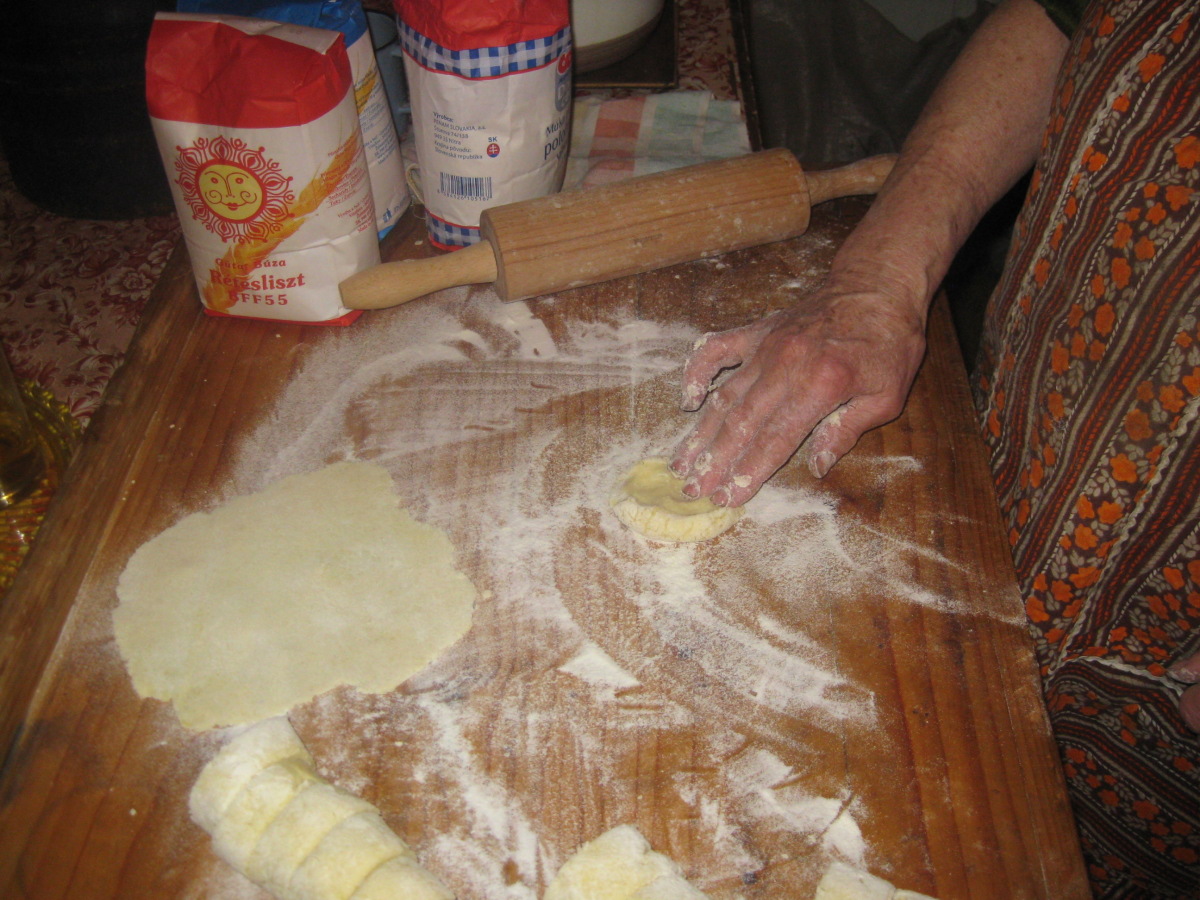
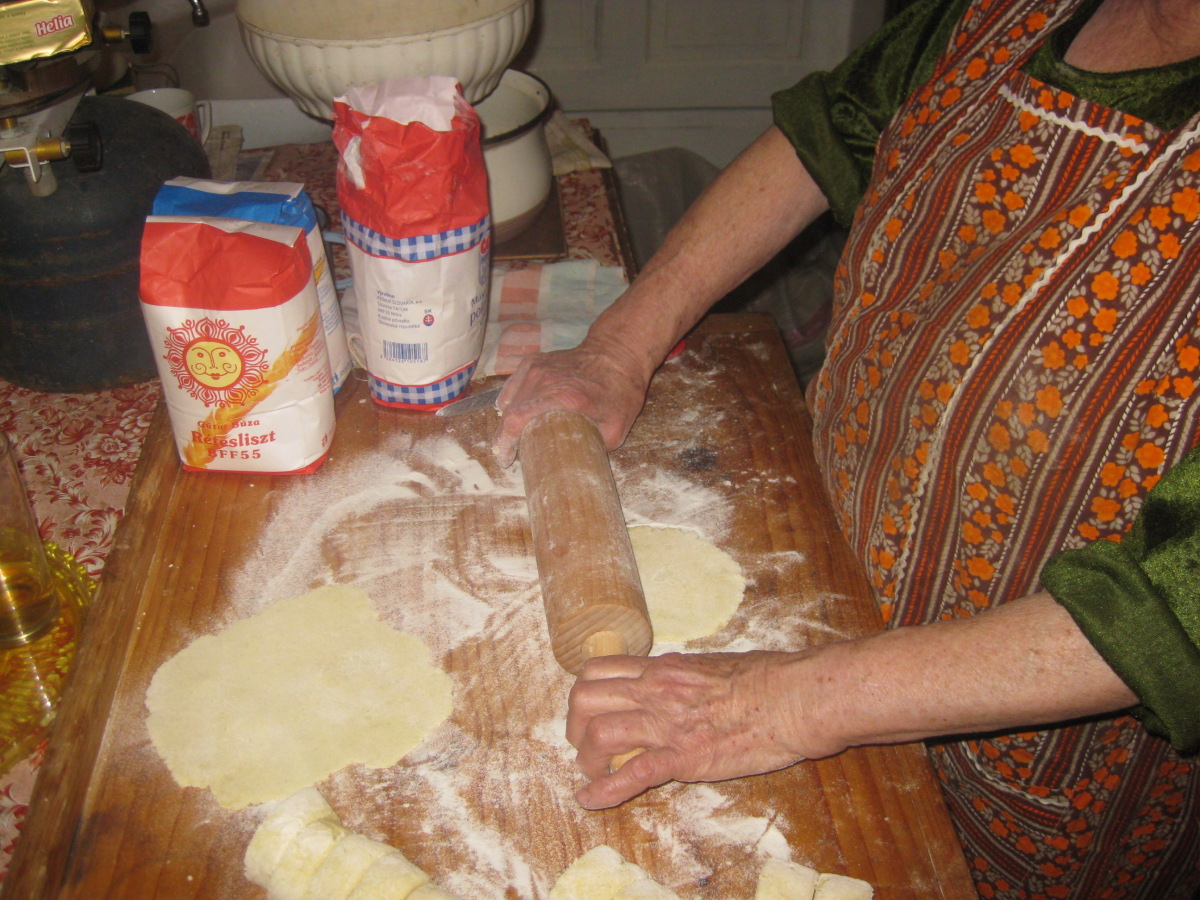
Then take each piece and transfer onto a floured section of the board. Sprinkle more flour on top. Pat it down a bit with your fingers and roll out with a short back-and-forth motion until you have a pancake some 1 or 2 millimeters thick.
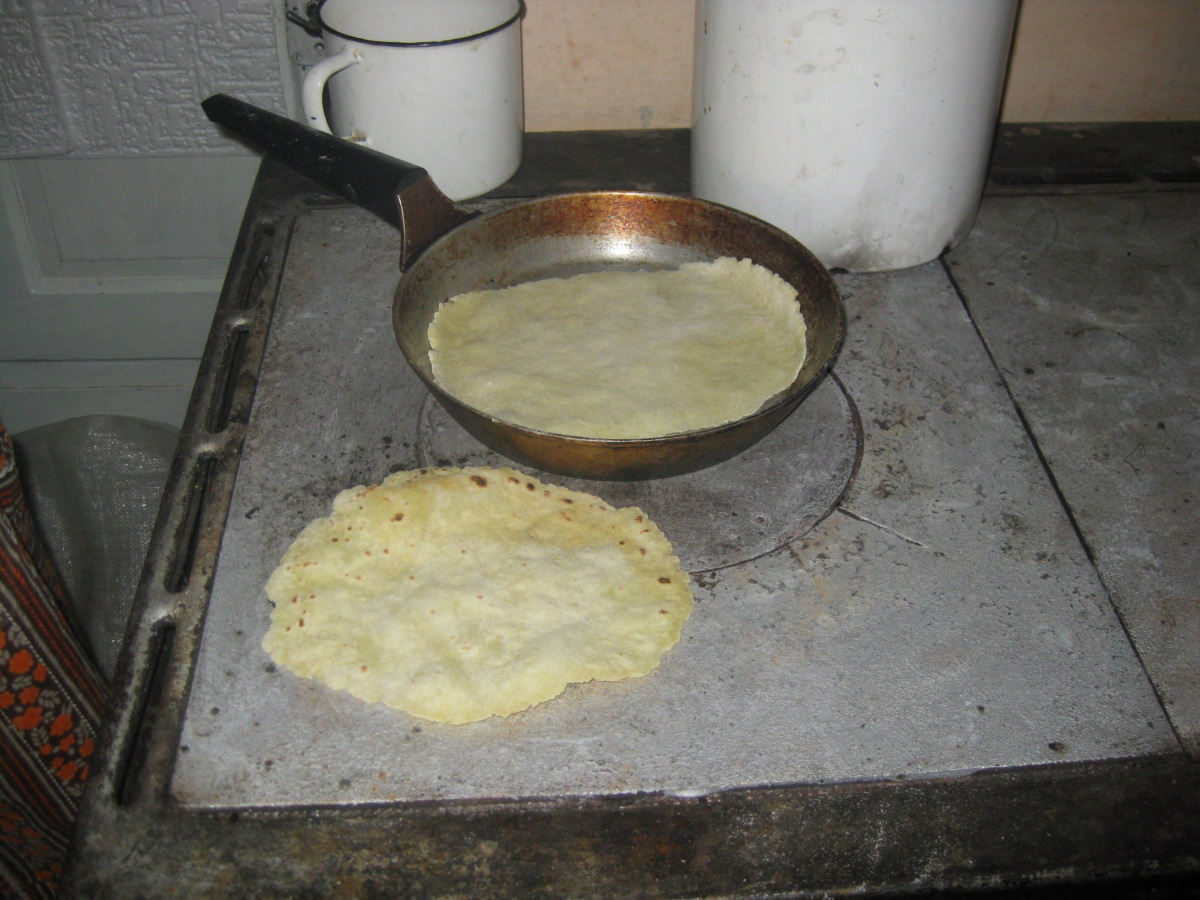
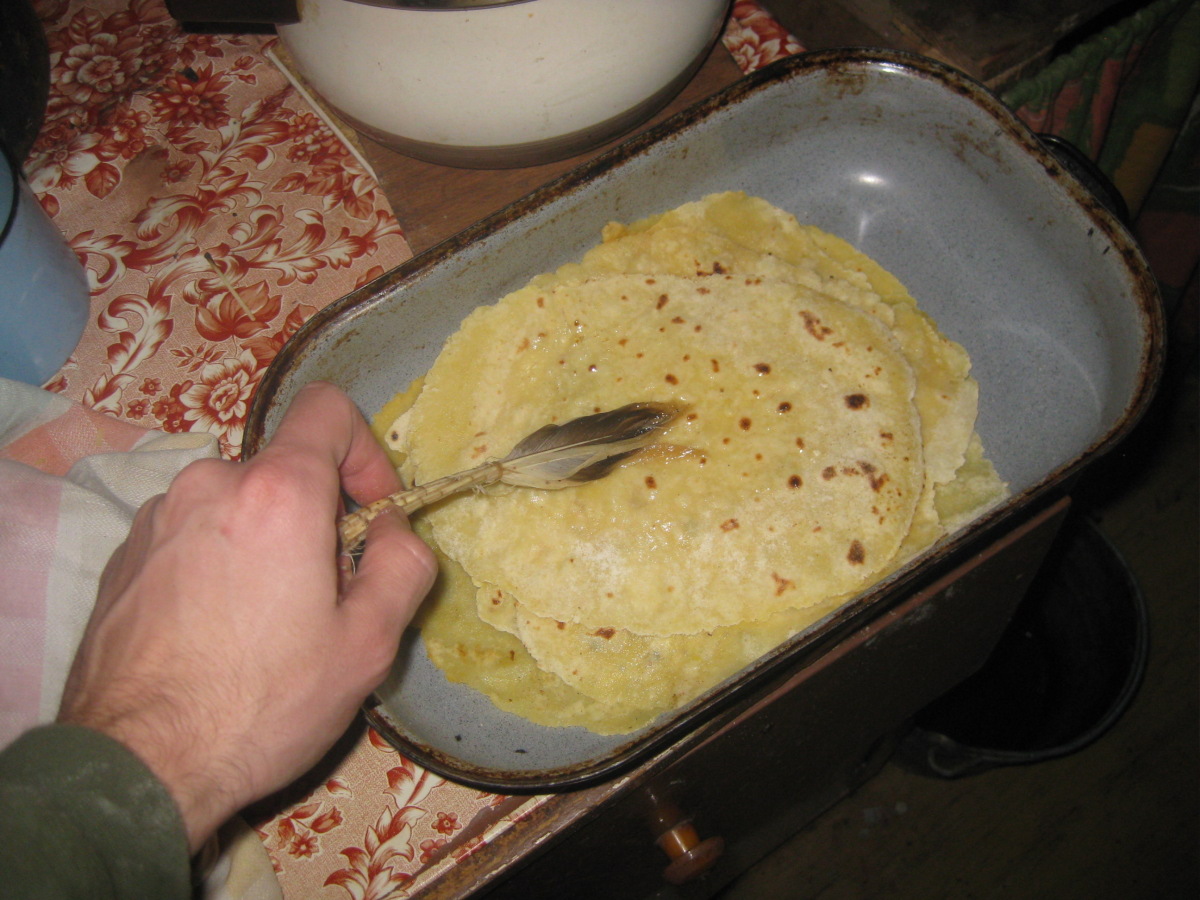
Then bake on an ungreased frying pan, hot plate, or, like my grandma did, directly on her wood burning stove (šporák). Bake each side for few minutes, until they look done – they’ll get dark spots. Grease one side with oil (olej).
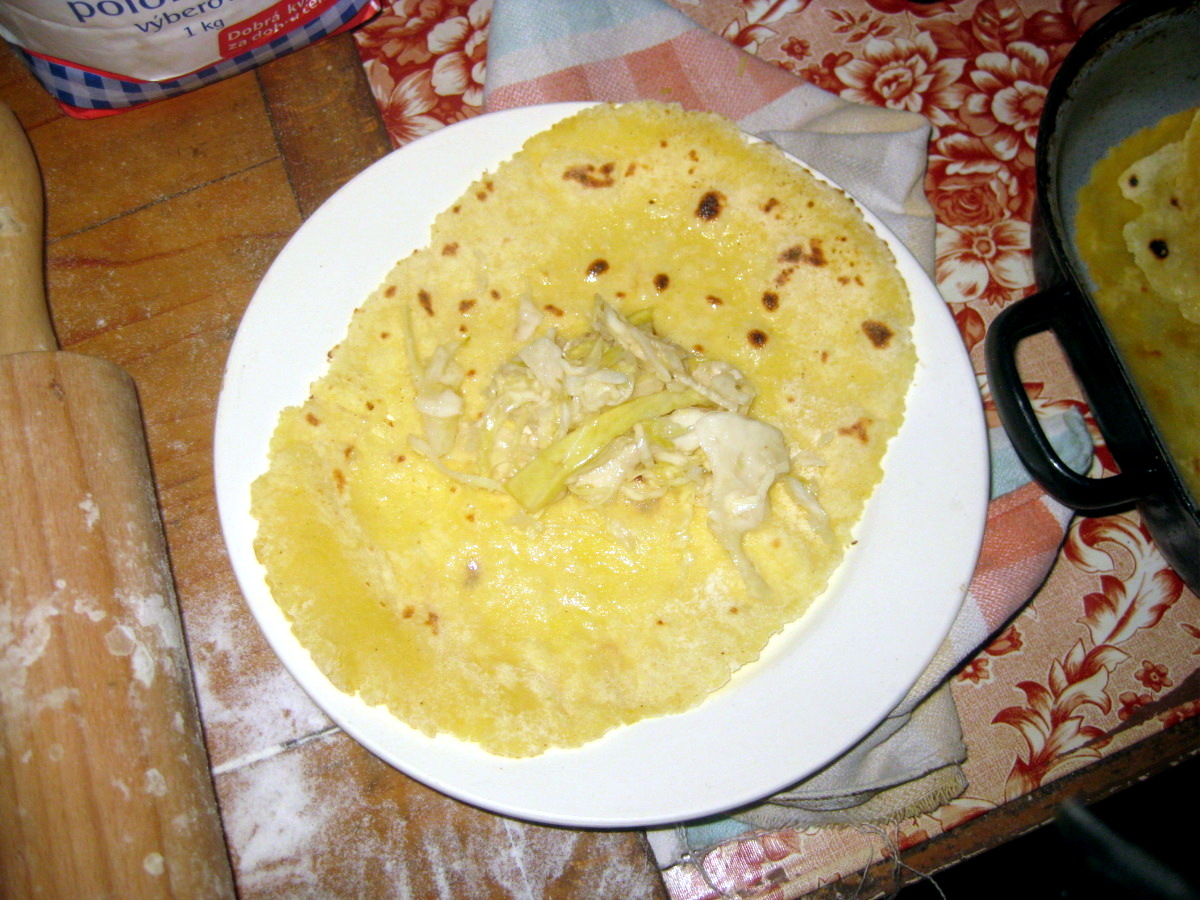
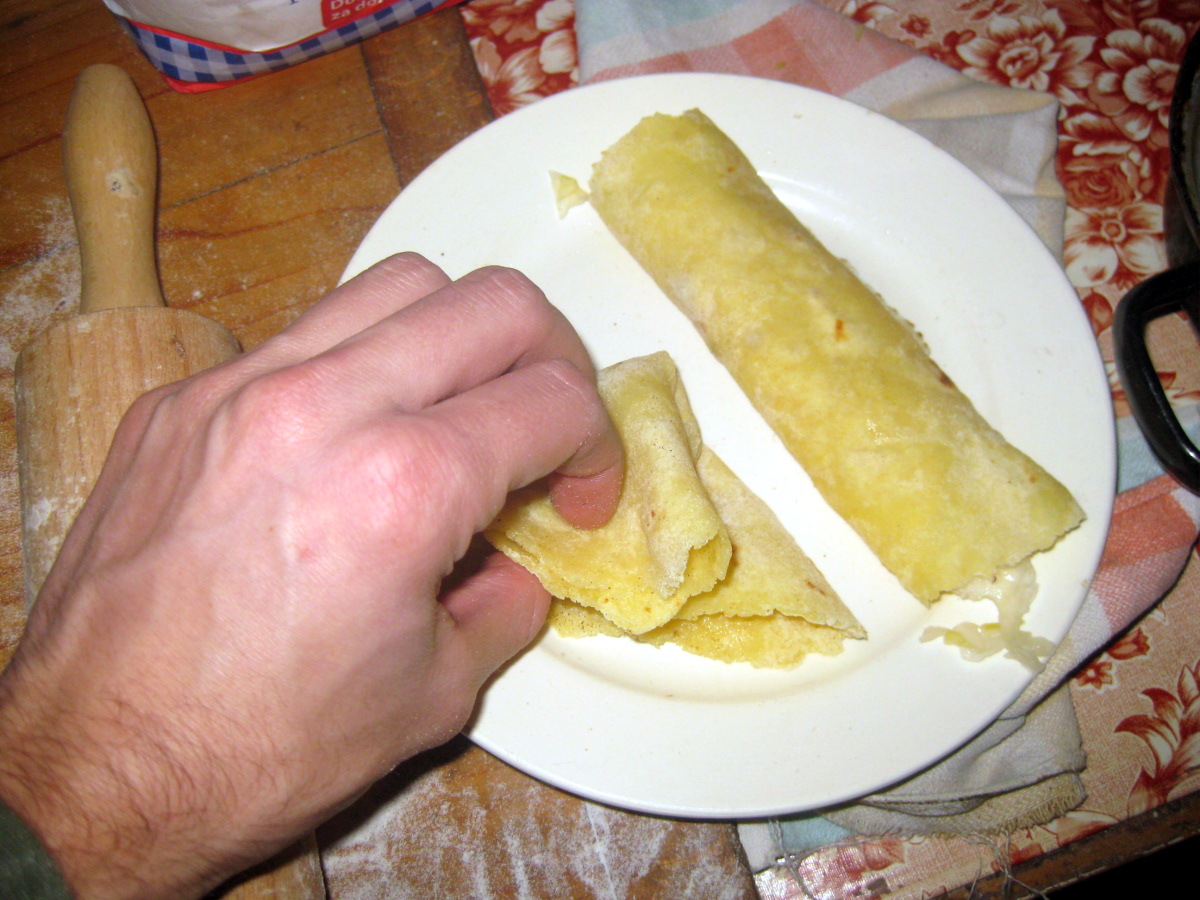
Fill with sauerkraut (kyslá kapusta) and roll into a pancake. Or, fold over and over again to make a little sachet.
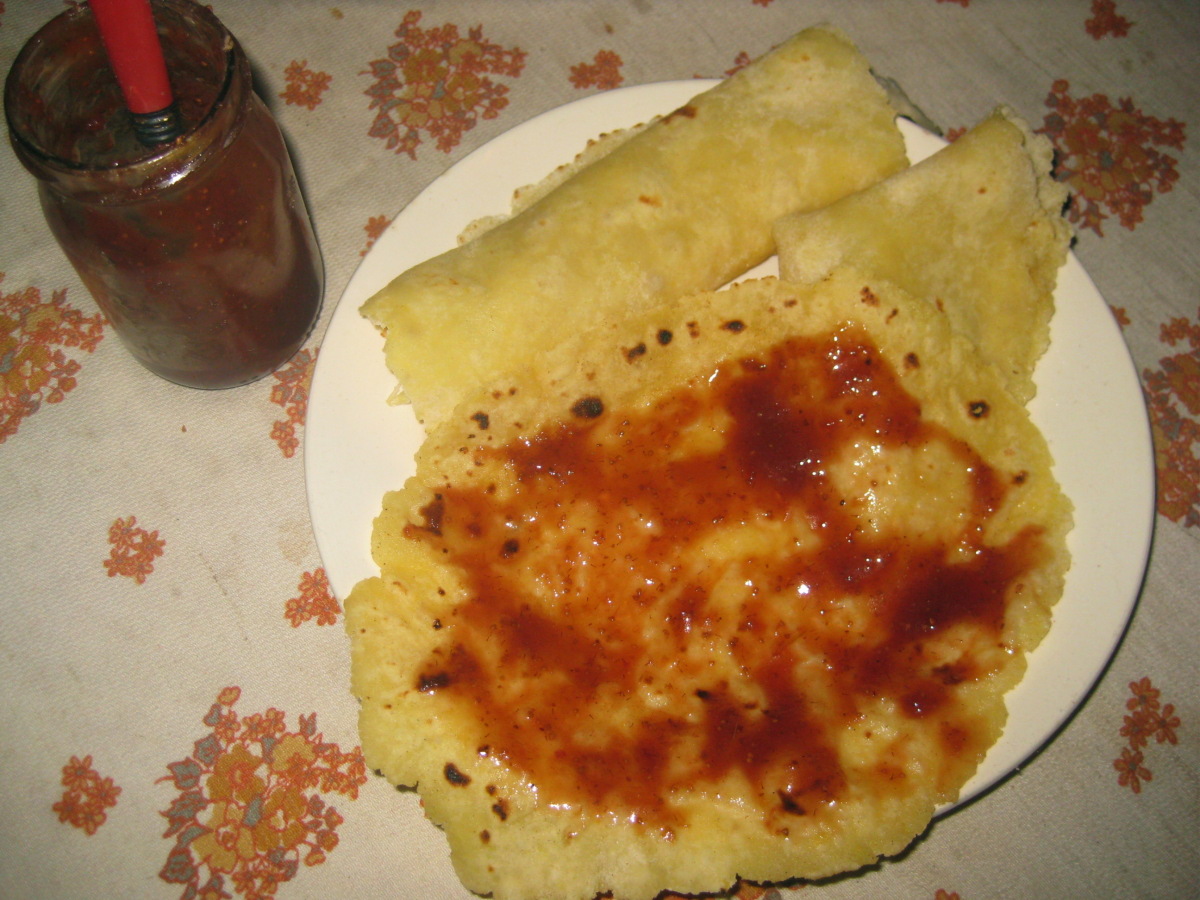
I also convinced my grandma to try them filled with raspberry jam (malinový lekvár) and topped with poppy seeds with sugar (mak s cukrom), the way I had them in Bratislava on New Years. They are delicious like that, although my grandma wasn’t quite sold: Chutia ako palacinky (They taste like crepes) she said. Yes, the traditional way is to eat them with sauerkraut or cabbage.
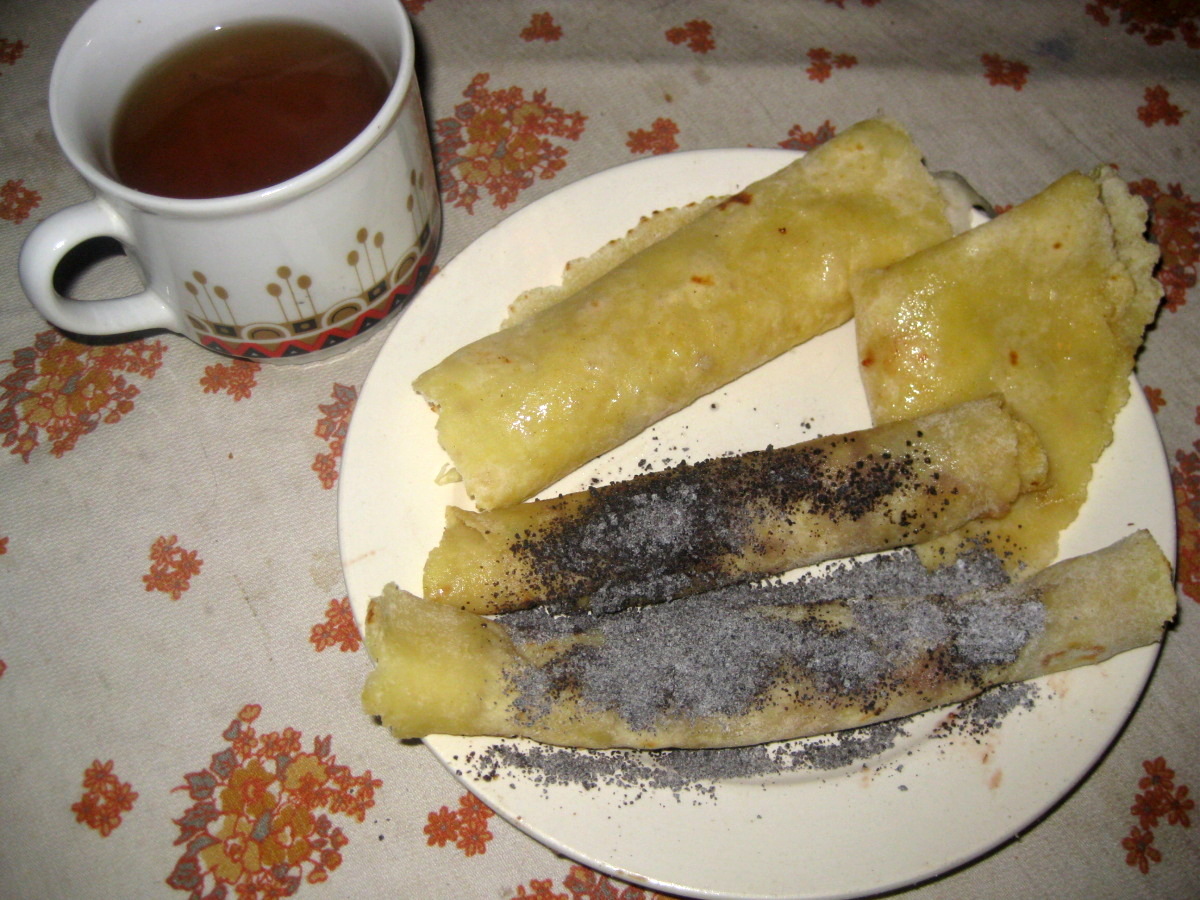
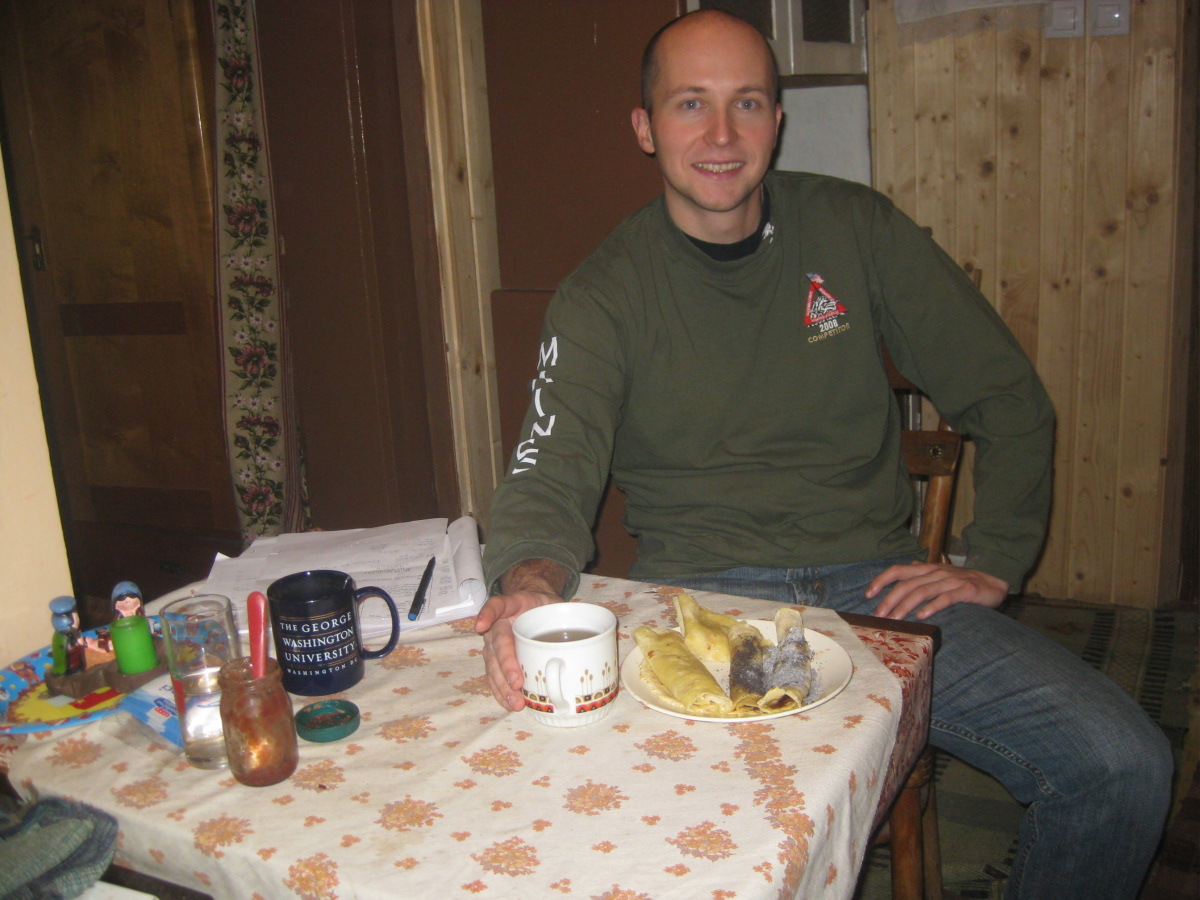
You can also eat them plain. They are great like that as a light snack with tea or coffee. Lokše are typically eaten on Christmas after the traditional helping of kapustnica and fried carp. Lokše are also eaten on Good Friday.
Thanks for the demo/recipe. I think my grandmother and mother made them a little differently. They were a little thicker and I remember melted butter, browned a little, and then brushed on them. I’ll try this on Good Friday.
I’ve been trying to find this recipe for years. My grandmother made them, as did my mother, with just some browned butter on them. I’m making a batch tomorrow. Thanks
I grew up having these with browned butter only. I now make them when I have leftover mashed potatoes. I have a special griddle that I make them on.
We make them a lot from leftover mashed potatoes. When all done, they are brushed on both sides with browned butter. Making them tomorrow with the left over potatoes from Thanksgiving.
Lubos:
Whenever you have the opportunity – can you educate me regarding the Slovak name/spelling/pronunciation, for the thickener made of flour, fat, sometimes sour cream mix (zaprashka; my phonetic spelling) which my mom and grandma used to thicken various soups, stews, etc. Often she made a soup with green beans and potatoes, water; then, after the vegetables were cooked she added the flour thickener to the soup to plump it up slightly. It was delicious and I still make it now. But, I’m having difficulty finding out what it was called, I only can refer to my poor phonetic spelling of the word. In French cooking this procedure, it is referred to as a “Roux,” and I just wanted the correct Slavic spelling and pronunciation. Hope you can help me.
Thank you for taking the time to reply. I love reading and looking at your descriptions of your grandma’s work/cooking. My own grandmother and mother cooked on a similar looking stove as your grandma, but those stoves were coal fired. I’m born and raised the coal mining area in Pennsylvania. The coal mining area is where my paternal grandparents settled in the US. How I wish I’d paid more attention in my kidhood and young adulthood – I’ve forgotten so much Slovak, I need to start all over.
Love your site and appreciate your efforts. Enjoy Slovakia and your family before you come back to the US of A.
Blessings,
JoanB.
You got it right, it is called zápražka, pronounced zAAHprazhka (my best attempt at phonetic spelling). I make it by just browning flour for a minute or two on a bit of melted butter. You can see it in the recipe for lettuce soup. Thanks for stopping by and leaving your comment! I really like how my grandma can cook up all these tasty dishes using not much more than two pots, one frying pan and few logs of firewood.
Privarok … really thick milky stew
I love lokse. My favorite filling is chicken liver for salty kind and poppyseed(we put it inside together with jam) for sweet kind. I like them greased with duck or goose fat(lard). In my family we also fill them with coldmeat and cheese, kind of like cold wraps.
Can’t wait till summer to have some again.
Hey! glad you stopped by my place in blog world- I’m always on the look out for good ethnic recipes!
Can’t wait to check some of yours out!
Quite easy way, although not traditional, is to use your leftover mashed potato. Just add some flour when it’s cold until it has a consistency of a dough and then continue as in this recipe.
My Grandma also made hers with day-old mashed potatoes. What is the correct consistency, Kristina, and how do I get the dough to that point? What I usually get is a dough that will not hold together long enough to form, and if I do get something that looks OK, bits and pieces fall apart when I roll them out. Also, I used a cast iron skillet, and I’m unsure if I’m heating it to the correct temperature. I don’t use any oil, as instructed. Thanks.
Hi. When I make lokse, I mix left over mush potatoes with flour, take handfull out and keep adding more flour until it looks like it could be rolled out. My mum says the more you kneed potatoe dough the softer it gets. And being rubbish at doughs I decided to do it the simple way. And this way my children take a part in the cooking as much as possible. In Slovakia we always had lokse on its own, only occasionally (when cooking for foreign visitors) we had them with duck and cabbage. When we have it in UK (my spoiled husband wouldn’t have it empty) I often fill it with stir fry veg and hoisin pork.
Sounds like you need to add more flour to make somewhat of a dough
Hi Mike! Since you asked this question several years ago I’m sure you have it down to a science by now, but since I didn’t see the simple answer to what I think your problem could be I thought I’d comment. The minute I read your problem, my first thought was that you need to let the mashed potatoes sit out awhile,because you don’t want to start with cold mashed potatoes. Simply leaving them out for an hour may be the solution to your problem. If this doesn’t enable you to roll it out without cracking, you may need to try the other suggestions mentioned. Perhaps I’m lazy, but I’ll always try the easiest solution first!
Lokše. Mňam! This was our family meal. Grandma used to make about 100 of them for any kind of family celebration. We ate it with goose fat, red stewed cabbage and grilled goose or just plain.
Hi. Well done on this website. I just wanted to add that it is important to use old potatoes. In general potatoes available here in Australia are so different to ones in Slovakia that most potatoe recipes (and there so many) are not trivial to recreate here with authenticity. For this recipe old potatoes are essential, most people in Slovakia traditionally grew their own so it was very easy for them judge the age of them, or they bought in bulk and stored them for the year, new or younger potatoes have too much moisture which requires too much flower and also the dough from new ones is very sticky and gluggy and hard to work. Basically the dough in this recipe is the same as what the Italians make for gnochi. Gnochi too are best when the least amount of flour is added. Like most slovak foods, Lokse are valid in almost any guise, are a fully fledged accompaniment to roasts (esp duck or goose roast) taking the place of potatoes or rice or dumplings. Or can be eaten alone as a snacks sold on the streets either plain or greased with dripping or savoury filled with sour cabbage or pate or sweet filled with jam or ground poppy seed and sugar. Often they appear on restaurant menus as starters/appetisers and will be savoury or amongst desserts and will be sweet.
Juraj, thanks for a great comment and a great tip. You seem to know quite a bit about cooking. I have to admit I have not considered the importance of old vs. new potatoes, but what you are saying definitely makes sense. The potatoes we used in making this recipe came from a cellar, where they were aging for quite some time.
I am of Bohemian descent, as is my husband, rather than Slovak, but I think my family will love these anyway! I’ve spent the past 25 years working on making potato dumplings just right, like my grandma-in-law did. What usually works best for me is a waxy red potato, rather than a mealy white potato. The Idaho or baking potatoes seem to fall apart when they are boiled unless I use a lot of flour, and then they are so heavy they sit in your stomach for hours. I wonder if that will matter with this recipe? I guess I’ll find out! Thanks for this recipe.
Juraj a Lubos, “old potatoes” are really essential in making “stuff” like halusky, lokse, etc.
“New potatoes” are great to boil and use as a side dish early in the year (with a bit of butter, parsley, and spring onion you can eat it with nothing else and enjoy it) however I could never make it “right” with new potatoes when making halusky or other stuff.
Too much moisture, I was semi successful in putting shredded potatoes to a cloth and wringing out the moisture, yet, it still was not the same. Old does it, new one not so well.
cheers
My grandma always made lokse from left over mashed potatos. Always served with soup. I attempted to make it myself a year or so ago and couldn’t get the consistency right (too much moisture). My Mexican hubby, a veteran tortilla maker, took over and saved the meal!
have to do foods of your country and I am very happy to see other recipe from Slovak. I an cooking for my class and a few people at my school so I will let you know how it goes.
Its starting to get cold and damp here in Southwestern Pa., almost time to pick wild mushrooms for Christmas Eve soup and of course my appetite turned to Lokshe. In the past twenty years I have stopped at every Slovak club, community center, etc. trying to find out the trick in making them, most people have never heard of them. My Slovak Grandmother would make them for me as often as she could, they are by far my favorite snack. Just rolled with a lot of melted butter and salt. This morning I set out to try and find the right recipe and my Ask.com search led me right here. Thank you for taking the time and effort to publish this recipe, it really made my day.
It’s these kinds of recipes that maintain our customs and traditions, something I like to instill in my children. When making Lokshe with my Slovak Grandmother as a child, you put the rolled out pancake on the stove, said the Hail Mary in Slovak and then flipped it, another Hail Mary and it was ready to be basted and rolled. If you were making Pizzelles with my Italian Grandmother, you pressed the dough in the iron, said the Hail Mary in Italian, flipped and repeated. Cooking with my grandmothers was like being in church, but the end result was well worth it.
Thanks again, I look forward to reading more on your website.
Milý Luboš, oceñujem tvoju snahu. Fakt pekná stránka. Co sa týka lokší zvykneme ich jest’ ako nedel’né rañajky tu na Kanárkych, kde uz 13 rokov bývame. Ibaze ich plním netradicne. Za horúca ich potriem zrelým avokádom a posypem strúhaným syrom
a troskou oregana. Syr sa krásne nat’ahuje a lokše sú výdatnejsie. Vzdy ich jeme so surovou cervenou sladkou paprikou ako príloha takze hoci nie sú mastné sú stavnaté a navyse aj zdravsie.
Este tip k príprave: cím menej múky osahujú tým sú chutnejsie, ale cesto sa zacne lepit ak ho rýchlo nepouzijeme. Preto pripravujem cesto po troche vzdy na 4-5 lokší. Najl’ahsie sa pripravujú zo zemiakov co sú sypké nie z mazl’avých a pevných odrôd.
Dakujem! No tak to je teda fakt netradicna plnka; nepamatam ze by u starkej rastli avocados 🙂
After having Lokse in the Christmas Market in Bratislava, this has become one of my favorite things to eat. Love the Lokse with Liver. Mnam.
Oh My Goodness, I have searched for years for this recipe. I did not know the Slovak name for the potato “crepe”. My mom made these occasionally and it was always a treat for me. She would always give me one hot off the griddle and we would slather lots of butter on it and roll it up. YUM
Now if you can help me with another recipe. It was also made with potatoes, tasted like potato pancakes but was baked in a loaf pan in the oven.
Thank you so much for publishing,
Babka is the name, but I don’t have the recipe. My Polish grandmother would also add onion and crumbled bacon.
The photos show exactly how my Baba made them. The thicker pancakes fried in butter are the German kind. Whenever I would talk about Baba’s potatoe pancakes people would confuse hers with the German kind because that is all they ever knew. These slovak potatoe pancakes are sooooo much more delicious. The only difference is, in our family, we only ate them with lekvar (prune butter). It was delicious! You can buy lekvar in the pie filling section usually around Easter time. It is good to hear everyone’s memories.
Hi Mary, we also make thick potato pancakes (called haruľa) in Slovakia. Check out the recipe here http://www.slovakcooking.com/2009/recipes/potato-pancakes/. Those are very popular as well, you’ll often see them as a side dish with meats.
You gotta love the traditional way of cooking. I love the simplicity of it. You don’t even need a frying pan, the stove suffices!
My thank you for showing how to make lokse! I use to watch my mother make them. She made the dough rolled to about bit, it was on the thicker side , took the handle of a butter knife and poked a few holes in it here and there, and tossed directly on the bottom of her gas oven, with racks removed, browned on one side and flipped it over a few mins. on the other side, we had butter on it and some fruit jam,many cold winter mornings walking to school! Thanks for showing how to make it, I really like your website, Where in Slovakia are you? Philka
Thank you, Philka! I am actually outside of Washington, D.C. in the United States, but my grandma lives outside of Banská Bystrica, in a small village on the way to Podbrezová. That’s where these photos were taken. I am heading to Slovakia again this summer so I’ll make sure to document more dishes, how they are made, traditionally, in Slovak houses.
My grandmother used to make lokshe in the bottom of the oven. She would pull out the racks and make the lokshe in the oven. I use mash potatoes with flour and make the lokshe on top of the stove using cast iron skillets. I melt some butter with oregano and hot sauce and brush on the lokshe. My kids love it.
Hi Jay, I have not tried to make lokse yet, it will cold and snowing here tonight in Indiana, so I am going to try it! Thanks for the iron skillet tip! Where in Slovakia is your family background?
Philka
Hi Philka,
My grandparents were from Czechslovokia. I use the cast iron griddle/skillet because they hold the heat and they are not expensive. Lokshe is easy to make and they are so good.
Thank you for writing Jay, Do you know what region or part of the former Czechoslovakia your grandparents came from? I am trying to decipher if lokse is made mostly in a particular area.
My grandparents came from Eastern Slovakia, Near Hummene”
Philka
Hi Jay, how are you? It is getting to cool weather and I am planning to make some Loksha.
My Mother made the dough from leftover mashed pototoes and flour tiny bit salt, once she rolled the dough out, she took the handle side of a butter knife and tapped on the Lokshe, to make some holes, then tossed in on the bare bottom of her oven, don’t know what temp.
I am thinking maybe 400 F. for a few mins, flip over for one min and out, She immediately buttered it and we spread lekvar or Strawberruy jam on it, ate it for breakfast with big glass of Milk or running late for school we ate it on our walk to shcool.
Hope you enjoy.
This site is so much fun!
Philka
The oven should be 500-550 degrees. Bake on the very bottom shelf on an over turned pizza pan. When you see the brown circles appear, lift an edge to see the even circles underneath, also more time causes more crispy, less will be softer. I love them either way.Make sure the oven with pizza pan is very hot before placing the first luksha in. My mother spelled it Looksha and said it meant shoe leather.I only use the leftover mashed potatoes and flour. My grandmother always said not to use too much milk in your mashed potatoes. She would boil,mash then cool extra potatoes, so there would be a lot.Her skillet was always full. My kids eat faster than I can make.My Nuna was so much faster than me. I’m so glad to be able to make these.
Can you tell me how to store potatoes and how long to make sure they are old enough to use in this recipe but not too old that they’ll taste bad? Is there a certain kind of potatoes that work best?
That I don’t know
Adele, It is best to store the potatoes in a cool dark place. We always stored potatoes in the basement. Light is what makes them turn green. I would get them from a farmers market if I could. The ones in the grocery store are exposed to daylight and florescent light all the time. As to how long to hold them, I don’t know. I would think you would want to use them before they sprout or get spongy.
I agree. In Slovakia, potatoes are typically stored in komora, dark cool root cellar under the house or dug into the hill side. You can see a photo of my grandma’s cellar here: http://www.slovakcooking.com/2010/recipes/chicken-noodle-soup/
I think that older potatoes are better for something like lokshe because they are dryer and easier to work with when mixing in flour. Use boiling or all-purpose potatoes since baking potatoes like to fall apart when you boil them. This makes it more difficult to grate them.
To Philka,
I finally managed to get some time to get back to my favorite web site, Slovak cooking and recipes. As I read some of the messages, especially the ones from Jay, I realized that had to be my brother. Jay and his family have lokshe making honed to an art, he makes some of the best.
In reply to your query as to where our grandparents came from, I remember Grandma talking about when she was a little girl she would leave her home village of Tusla (not sure of the spelling or pronunciation), she pronounced it “Tooz-la”. Her family were bakers and she would deliver loaves to surrounding villages in exchange for butter, milk, etc.. Grandma taught me how to make apple pie from scratch, apple dumplings, fried doughnuts, and many other baked dishes. She was a miracle worker with dough.
We still always maintain our traditional Christmas Eve and Easter meals the way my Grandmothers prepared them. These meals are always the best of both worlds when it comes to delicious recipes, one table with traditional Slovak dishes, and the other is Italian.
Take Care and Good Cooking!
Ray
Can you please send me some dough recipes for I remember it was a flat tart but took up whole pan and it was sweet. Do you have that one and it was thick but somewhat shall we call flaky or light.
Once again I am stunned by how lokshe can be prepared. We always made them (and still do) using mashed potatoes, flour, a little salt and that’s about it. We cooked them on a steel griddle my parents had. I now use a saute pan that is heated as hot as possible. It only takes a few seconds to cook them and they “blister” and bubble a bit. Keep them hot by putting them between moistened hand towels in the oven. When you are done cooking them, brush with melted, browned butter. Roll up and eat as many as you can as quickly as you can. When everyone tastes them, there will be a fight as to who can eat the most! Browned butter is something of a specialty. It’s a bit difficult to make since it is easy to burn or undercook. When it is done right the butter takes on a nutty flavor, a bit like hazelnut. It is impossible to describe the difference between simple melted butter and browned butter. But the taste is heavenly.
Tim
To ja vzpominam,moje babicka to delala z den predem uvarenych brambor a hotove pomazala maslem maslovackou a posypala ml.cukrem!mnam,jdu varit brambory!!!
It so interesting how different immigrants brought with them variances on recipe’s ‘from Slovakia. My grandmother, and now I, make Lokshe with simply flour water and salt. After the thin cakes dry and harden, we break them into large pieces and scald them in boiling water. Then mix the soften pieces with friend sauerkraut and butter. It’s a Christmas Eve delight!
This is just GREAT. Thank you. My grandma made them with day-old mashed potatoes also. I tried making them after reading this recipe, but I could not get the dough to a handling consistency. Unlike Fiona, I do not have a skilled tortilla-maker in the house. Any tips on getting the dough to the correct consistency, especially using old mashed potatoes? Thanks, again, for publishing this recipe, and thanks for all the helpful comments.
I’m in the same boat with trying to get the consistency to roll, my mom always used leftover mashed potatoes, sauer kraut, a bit of sauer kraut juice, and flour. I’m to afraid to keep adding more flour. We always ate along with navy bean soup, having family from out of town and wanted to surprise them with loksa, not going well. My mom has Alzheimer’s and cannot answer. This recipe makes me cherish watching her make it and eating them hot off the skillet. Thx for publishing the recipe.
My slovak grandmother made these for us. I’ve been making for yrs now. I add flour a scoop at a time and knead until it holds together. If you start to roll out on floured board & see it sticking,roll back into a ball and add more flour. I invert a pizza on very bottom shelf of oven 500-550 degree on bake. Wait till oven and pizza pan is hot before placing luksha on it. When you see brown circles appearing turn over. I then have a stainless skillet with melted butter on the stove low heat.As I take the luksha out of oven I try to dust a little of the flour off with my oven mitts,place in skillet, brush both sides with butter, cut in pie wedges roll up & enjoy! My brothers and I fought over who had more,then my 5 children (who are grown) still do the same.We’ve never had anyone who tried not love them!
I meant to say a pizza pan.
Sandy,
I used to watch my grandmother in the middle of summer make lokshe in the oven. I found an easy way to make lokshe on top of the stove using a cast iron griddle. The cast iron holds the heat perfect and makes excellent lokshe. We make lokshe quit often at our house and we love it.
I’ll have to try your way. Thank You
Lokše from the oven are called tašky
Áno, popisujete tradičný spôsob pečenia lokší. Dovoľujem si Vám poslať recept, ale je v slovenčine. Vrecko kyslej kapusty môže znamenať 1/2 kg alebo aj 1 kg kyslej kapusty. V takom balení sa kyslá kapusta predáva v obchode. To zvážte sama. Želá Vám dobrú chuť.
http://diva.aktuality.sk/recept/30812/tradicne-lokse-s-kapustou/
When my grandmother made Lokse she would boil 10 lbs of potatoes to feed her 7 children and the wives and grandchildren. Assembly line style. She would roll, and slap on the top of the stove, one daughter in law would flip and another would butter. Sometime it was hard to keep up to keep the plate full of the 10 inch rounds of goodness. Just another memory this website is giving me. Thank you so much.
The wood stove is long gone and my father bought 2 cast iron rimless skillets. Pretty good substitute.
Irene,
I use two cast iron griddles on top of the stove and they are great for making lokshe. My wife always makes extra mashed potatoes (10lbs extra)so we have lokshe the next day. We start out with the butter and salt, then we started making them with a hot wing sauce and yesterday we brown some butter, onions and saurkraut and rolled the lokshe with the saurkraut inside. They were great. We also have an assembly line, one mixes potatoes and flour, one rolls the dough, one flips the dough and one does the butter or wing sauce or saurkraut.
Jay
lokse, yum, I may make me some toningt
I was just taling to my brother about how I wished I paid more attention to my mothers cooking. I’m 66 and never thought I’d ever have them again but so I’m thrilled to have found the recepie from you. My mouth is watering just remembering helping her butter them after cooking them in a large cast iron frying pan. Again, thank you so much!
Sooooooo,,,,,,just wondering………can you now give us a good chicken liver recipe to fill them with!! Love this web site! My husband was born in Trencin. I always try to make some “home” cooked food for him…..But, unfortunately, the relatives don’t speak much english. So, now I have this!!! I can’t wait to surprise him tonight!!!
I used to like chicken liver but be careful. If you do it, use organic chicken liver. The problem is that the liver is organ that process all darn bad things, aka chemical, drugs, etc. Chicken raised in the US of “Chicken farms” are fed all the bad stuff and it ends up in a chicken liver.
However, if you get a good chicken liver, it’s nothing spectacular to prepare them. Try this:
1 lb chicken liver
2 tablespoons olive oil
1 teaspoon butter
some dried basil leaves
a teaspoon of ground black pepper
one or two crushed garlic cloves
Sauté the livers on basil, pepper, garlic in the olive oil and butter until done to your liking. I’d say about 4 minutes.
We use to eat lokše with duck or goose liver
Did not even know lokshe—but we make them! My Mom(deceased) called them pagacha, which is a double crust w/ potatoes inside…,totally not what we make . So we knew them as pagach or “Pags”. We boil our potatoes the night before and put them through a ricer(better consistency than mashed potatoes)..The next day I mix a small batch at a time w/ water, flour,& salt and make small balls. I place saurkraut (previously fried) in the center and roll out on a well floured surface. A good tip is to use a rolling pin sock on your rolling pin and it won’t stick as much as it could!I fry them on an ungreased griddle till brownish and then butter them w/ brown butter..My children prefer (I do too) the plain potato ones…We all love them the first day they are made…My husband likes to place a slice of ham and roll it up w/ horseradish–yuck–not for me though…
So now I know them as Luksha–wish Mom was here to share all this slovak info!
Hi Patricia,
I think what you describe is really pagace, not lokse. Lokse are just thin and flexible “pancakes”, like a soft tortilla thing. You don’t fill them up, you use them later on a table to “scoop the things up and wrap them in lokse” be it a geese, chicken, etc. Much like the Mexican fajitas with soft tortillas to wrap things up and eat it.
oops, I re-read your post, and indeed you are making lokse, That sourkraut in the middle confused me, as well as “frying” as you don’t fill or fry lokse. But there sure is a variation how to make them.
Anyway sorry for missreading you. cheers
My grandmother made them the same way also but baked them in the oven instead of trying them.
frying
does it matter if you use wheat flour
Hi everyone. I am in Canada. We always use the brown skinned baking potatoes to make Lokse. This variety is drier and best for them. We also make Platzky from the same type of potato, but the potatoes are grated raw, add egg, flour, a little baking powder, salt, Spread them thin with a flat knife on the wood stove or cast iron skillet, oiled. Flip over and slather with melted butter and sprinkle garlic powder on them. More yummy and shorter time to make. These were my dad’s favorite. After mom passed away he even learned to make them himself he loved them so much. I make them for my son who loves them as well. Yum Yum Yum.
Hi again Whoops forgot. A little finely chopped onion makes them even tastier.
I’m Slovak but just found this website. I learned how to make Lefse from my Norwiegan friends and used an electric lefse flat pan, so easy. I just rolled them in butter & cinnamon sugar. My daughter loves them for breakfast. I also make them from Hungry Jack instant potatoes and they have a wonderful flavor. I use a ricer for the regular potatoes.
I frequently enjoyed Lokse on my trips to Slovakia (I live in Vienna, just around the corner). My favourite combination was roast goose with Lokse and red cabbage, particularly in a pečená hus restaurant in Slovensky Grob. I was glad to find your recipe 1n the web – I used it several time at home, along with pečená hus, and always with success.
My mother & grandmother cooked the potatoes & mashed them with butter & salt only. Not adding the milk gives them more of a tortilla texture. They always browned them on a dry aluminum griddle (like Club Aluminum). We then brushed them with bacon grease, rolled them up & used them instead of toast with breakfast. I was really interested to find this recipe on the WEB. None of the other people I know who are of Slovak descent have ever heard of this recipe. My family are Carpetho Rusyn from Zemplin County.
We have been making lochsi at saint Michael’s church in Freeland Pa. for many years and we love them as do our many faithful customers. Mashed potatoes cooled over nite, no milk or any liquid is added. the next day add your flour and don’t knead to much for a nice dough. Cooked on a hot dry skillet a couple of minutes on each side and your done. One of our favorite lenten foods. Wishing Everyone a blessed Pascha . Christos Voskrese ! Christ is Risen !
Hi, My mother use to make them all the time, but we do it just a little different. Shred the potato then add the sauerkraut which has been drained and squeezed to make shore all moister is removed, then cut up with scissors, then add flour,salt, mix well then follow as you do them, after you remove from skillet brush with malted butter.
Hi,
Just found this site. My husband is Polish/Slovak and his mother made a variation these but the called them bondochiniki (I’m sure that is not the correct spelling.)
Her recipe was mashed potatoes, flour, dry fry, then coat with butter and white sugar. They were stacked like pancakes and then sliced like a cake.
My daughter is exploring her heritage and would like to know if anyone has ever heard of the above name (is it Polish, Slovak, or just made up?), if so, how does one properly spell it and has anyone seen this variant.
Thanks so much!
Debbie
Hi Debb! I found the recipes for “bandurčeníky”, mostly from northern and eastern regions of Slovakia (Šariš) but also Czech rep.
I always put melted butter and sprinkle white sugar on mine, then roll them up and eat them. Delicious!
Grew up with these. Grandmom brushed them with a goose feather dipped in melted lard and garlic. Then baked for a while covered. They are like the most wonderful yummy food on earth.(except for nut rolls of course)
okay, loksha, never really got it the way great grandma made in on the botton of her coal stove, but keep trying in an electric oven. yes, mashed potatoes rolled out with cheddar cheese, 10 minutes in the bottom of the oven, flip, 10 minutes more, then rolled and wrapped in a damp dishcloth for 10 minutes, then brown buttered.
As I am preparing to make a batch right now I wonder just what the carb count would be for something like this. My mother-in-law taught me how to make this and I’m trying to teach my grand daughter. The way I was taught it was served dipped in browned butter. My husband did say the correct way was to serve it as a side with a meat, but we don’t bother with that. We enjoy it just the way it is!
I am Slovak & Sicilian … I don’t remember my mother making these however she made a thick potatoe pancake (more like a hamburger) with mashed potatoes, onion, a little flour & a little milk if needed. Fried them dry then buttered.
Hi Suzy
What you are talking about are called lanesniky, (I may have hit spelling wrong), which are actually more like thick pancakes as opposed to the thin crepe like lokse…
Eileen, When eating treats like these, Slovaks typically don’t worry about the cars count lol…
I find it fascinating to hear the different regional variations on lokse described above…
My family’s from Eastern Slovakia where it was considered blasphemous to taint the flavour of lokse with jam, sour cream, or the other side dishes mentioned as well….we also never ate them on Christmas or Good Friday, but enjoy them year round….
My dad used to make very similiar. He was of Russian and Slovak decent. What he made was called “Bondonicci” I’m not sure of the spelling. Sounds like (bondo nicky)
After dry frying (with only flour on the pan)the thinly rolled out pancakes in a cast iron skillet with
I have been looking for a recipe for “bondonicci” for years. This is the first time I have seen a recipe which might be what I have been searching for. My mom and grandmother made them. All I remember is they were made on a flat cast iron plate of some kind that was placed on the burner on the stove. They were fried and had dark spots. Then they brushed butter on them and served them warm. I remember the ingredients as being potatoes and was not sure what else. This looks like the recipe I may have been searching for. If recipe for “bondonicci”is any different, I would appreciate the info. Thanks.
The pancakes or capes were layered on top of each other and smothered with butter and onions until the stacks were maybe 20 deep. They were served with homemade soup.
Lots of work but sooo good.
Back in 2011 I wrote describing my grandmother’s Loksha recipe without mashed potatoes. I have searched the internet for ten years hoping to find someone else who made this recipe. Well tonight I found it. The flat breads are called adzimky and they are an ancient flat bread as far back as the Stone Age. They are made on a stove or a fire. Now I can rest! I’m not going crazy!
I’ve so enjoyed reading these comments! We had the same thing on Christmas Eve…and it was my favorite food as a child. My mom was of Russian and Slovak descent, and her family called it something like “Gruelnikki”, which we simplified by calling it Grill Nicky. So Mike, it sounds similar to your “bondo nicky”. Wish I knew the original spelling. Didn’t know another family in the world that ate this until my niece discovered that the Slovak “lokshe” was our beloved grill nicky, just with a different name (or maybe a name that morphed through time?) My mom boiled potatoes the night before in salted water and mashed them (no milk or butter added) Drain, mash, and chill overnight in the refrigerator. Next day (Christmas Eve)she made a dough with flour and the cold mashed potatoes and continued as in the recipe above. She always said there were good years (when they rolled out nicely) and bad years when they tended to be sticky. She always thought it had something to do with the potatoes in any particular year, but never heard about the new potato/old potato theory. So good to know! Use old potatoes! Anyway, she stacked them in a high stack on two very long perpindicular sheets of foil, then wrapped the foil up over the stack and kept them warm in the oven. Before serving, she brushed both sides of each one with garlic butter (butter that she had melted and put several whole cloves of garlic in and let sit while). She cut through the stack like cutting a very tall pie, and we ended up with little triangles of deliciousness. I love knowing there are others in the world who know about this wonderful treat! We only had ours with garlic butter and not as a main meal, but along with our Christmas Eve meal.
We called these Locksha. Made the same way, eaten warm with butter and salt.
Just an aside my grandparents on both sides were Rusyn. When young we went to St Michaels Carpatho-Rusyn Orthodox Church in Rankin, Pa.( just outside
Pittsburgh ) All the food was great especially the haluski,stuffed cabbage and
Pierohi.
Enjoy
Yunko
I’ve been trying to get this recipe out of my mom for YEARS! But she always says, “But I don’t measure, it’s just some of this and some of that.” It took a librarian I work with to find it. Thank you!
We tend to eat them plain except for some garlic salt. Mom makes her’s out of leftover mashed potatoes and fries them in vegetable oil. She would mostly make them when we were sick alongside chicken soup.
I love Slovakia! (Tho I’m from Australia) thx 4 the recipe!??
Ucim anglictinu na slovensko (Som Oregonu)…. a moja studentka sa ma spytala ci poznam loksa. Pocula som o tom volakedy, ale som nevedela presne co to je. Tak dakujem za ten post… problem solved! 😉
Pekny den prajem…
Hello, I love these pancakes. I would like to know if you think they freeze well.
Thanks.
My Baba always used to make these in bulk when she would come out to visit us. She froze them and it seemed to work well. It’s been quite a while, but I remember them tasting pretty good 🙂 Best of luck!
Just wanted to comment that we ate our lokshe dipped in lard that had garlic sautéed in it and stacked up in a pan and as each loksha was made, it was dipped (one side) into the lard with garlic and then stacked up on top of the pile and kept warm. folded the loksha in half and again in half and ate it with homemade vegetable soup. My grandmother was born in Bratislava, Czech. She was such a great person and cook.
I love all the slovak traditions and we continue them all. Especially Christmas Eve traditions with Oplatki, garlic, apple, honey, walnuts, grapes, and make one of these for an empty place for missing members of the family and the eldest member of family eats this one.
and have that first before our homemade cream of pea soup and
mushroom saur kraut soup. Bobalky with poppy seed and some with nuts for those who did not like the poppy seed. Also riffles and nut rolls and poppy seed rolls. First we started the dinner off with a toast with
home made Jeziskovy. A delicious drink that we make every year and use throughout the year for colds and sore throats. Everyone in the family gets a toast of Jeziskovy from little on up.
Loads of wonderful slovak traditions.
My other grandparents were born in Lynch and Trnava, Czech.
thanks for your web site. I enjoy it. Learning of all the other traditions that the slovak people had. So sad that I have forgotten a lot of the
slovak since my grandmother died in 1977 I have lost a lot of the slovak.
Wish I could speak it today. I am 80 years old and have not spoken any slovak since 1977.
My grandmother made these with leftover mashed potatoes. Watery batter instead of rolled out dough. But I can’t get the consistency quite right for crepe-like result. My mom made them for dinner rolled up with applesauce or garlic sour cream. I’m taking them to a potluck with sweet and savory fillings: applesauce or jam, and garlic chive sour cream or sauerkraut. Thank your for the recipe and video!
Due to forty of the covid-19, our family is cooking food from around the world and the country chosen was Slovakia. Tonight, we will be doing Lokše, Bryndzové halušky and Vyprážaný syr. Unfortunately, here in northern Brazil, we do not have “bryndza”. We will improvise. I appreciate your Lokše recipe and wish you all the best.
It is nice to see slovak food her and they are made of slovak ingredients too,as for lokše i make them from Idaho potato flakes and flour when i want it easy way,this kind of lokše are very light and taste good but of course if i have a good quality potatoes it is best to make lokše from them
Love these things. Carbs, carbs, carbs and fat from the buttered slathered all over.
Yum Yum Yum
Make them only about twice a year, for a treat.
What my mother called lokshe was nothing like this. She made a mixture of cubed white bread, gd. poppyseed, sugar, and warmed milk–and maybe something else. Then she would chill this mixture, and we would eat it cold on New Year’s Day. Any idea what this is really called?
@Sharon: It sounds like “opekance s makom” or “bobaľky”. Some people make dough, some use white bread or “rohliky”
https://www.slovakcooking.com/2010/recipes/bobalky-opekance/