Bobalky (Opekance)
Ingredients: leavened dough or few days old bread rolls, ground poppy seeds, sugar, milk, butter
Prep Time: 5 minutes if you use old bread, about 2 hours otherwise
Integral part of the Christmas table in many Slovak families are little pieces of sweet bread known as bobaľky, opekance or pupáčky. They are typically topped with poppies (s makom), but some people eat them with farmer’s cheese (tvaroh) or even cabbage (kapusta). In this recipe I show you how to prepare this delicious desert.
Opekance are typically eaten as the third “course”. First, there is the prípitok, a shot of liquor. Then, the lady of the house (gazdina) passes around Christmas wafers (oblátky) with garlic (cesnak) and honey (med). Then come opekance followed by soup and the main meal. While garlic and honey are supposed to bring the person good health, poppies symbolize wealth. There is supposedly even a tradition which involves tossing them on the ceiling, but this is not something I am familiar with.
Although opekance are very traditional, they were not prepared in my family. I don’t remember ever having them while growing up. This is a shame, because they are delicious! So when I first decided to make them, I was not quite sure how they ought to taste. I found several recipes online, with some of them saying bobaľky should be baked few days ahead of time, and then allowed to completely dry up. They are then soaked in hot water until soft. This is the method I tried, and my first attempt ended up in a disaster. I left them in the water way too long, and they ended up soggy.
The good news is, none of this is necessary if you just want to prepare a tasty treat, and not stockpile them for winter. You prepare opekance from the same sweet leavened dough that is used for buchty or makovník. However (I have not tried this yet), I think you could get by just using few days old white bread, or bread rolls. Finally, you will need ground poppy seeds. You can find poppy seeds in most grocery stores, but finding a grinder is bit more complicated. However, most grocery stores sell poppy seed pie filling in the baking isle. You can use this instead, but the taste will be little different. The filling (at least the Solo brand I buy) tastes more like corn syrup than poppies.
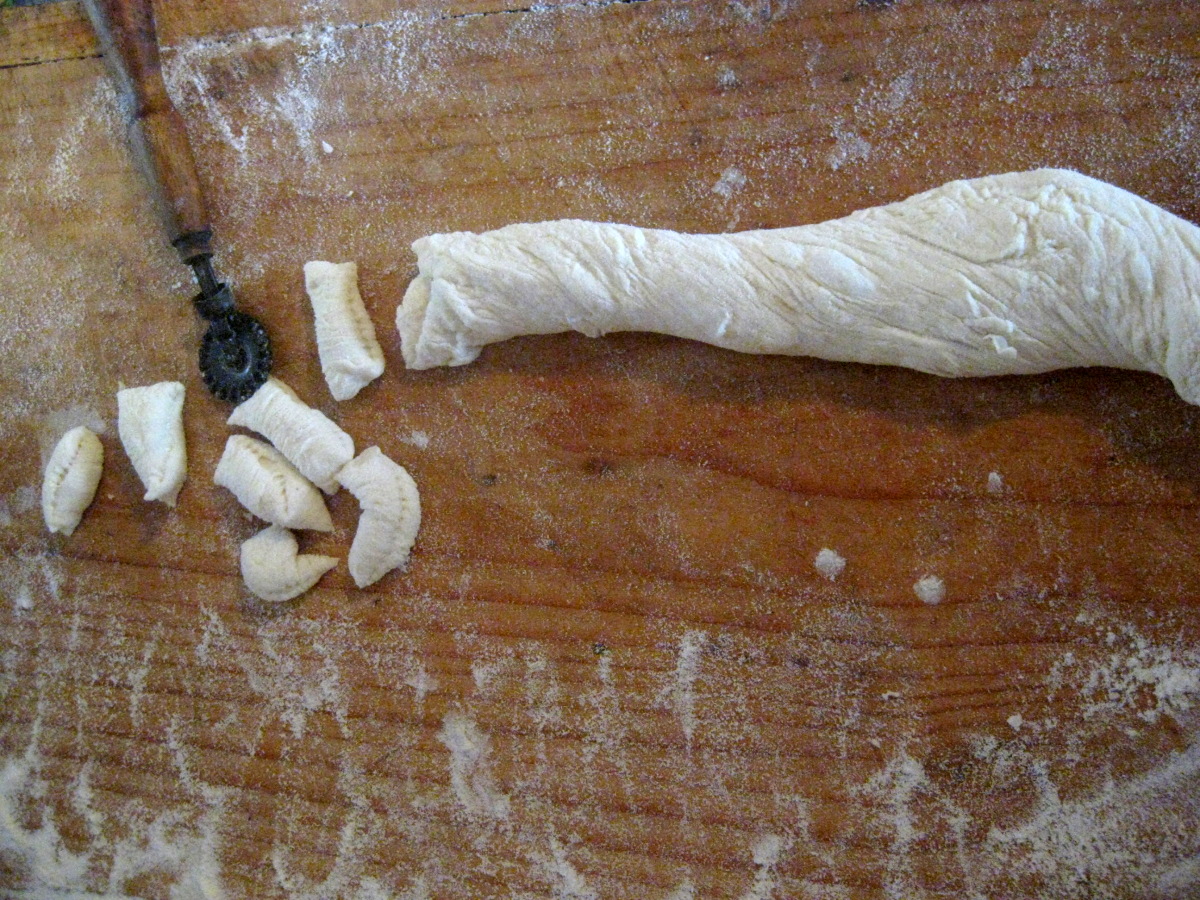
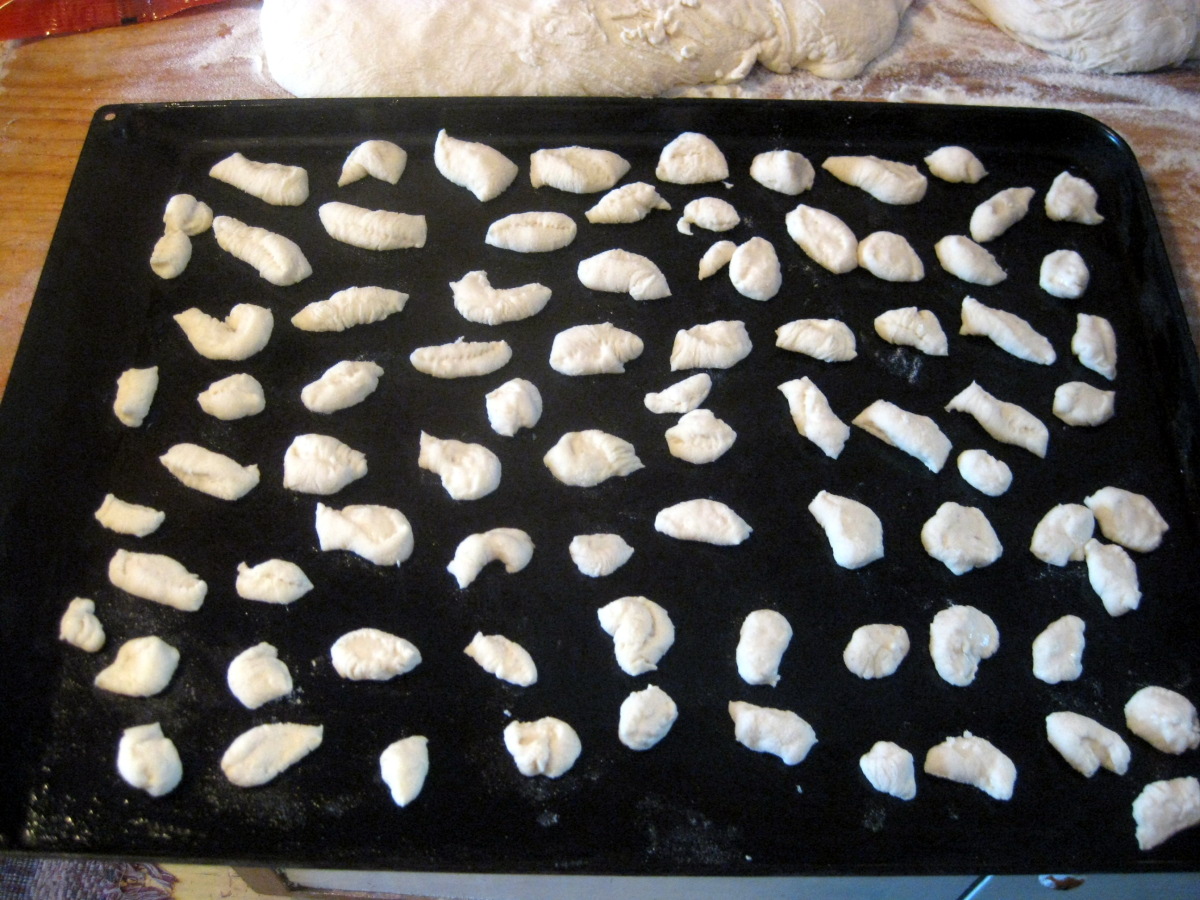
Cutout a piece of dough (cesto) about the size of your palm and roll it into a cylinder about 3/4 inch thick. Using a knife or a similar circular dough cutting tool, cut slices about 1/4 inch thick. Place them onto a baking sheet (with the cut face down) and let rise for about 10 minutes. Preheat your oven.
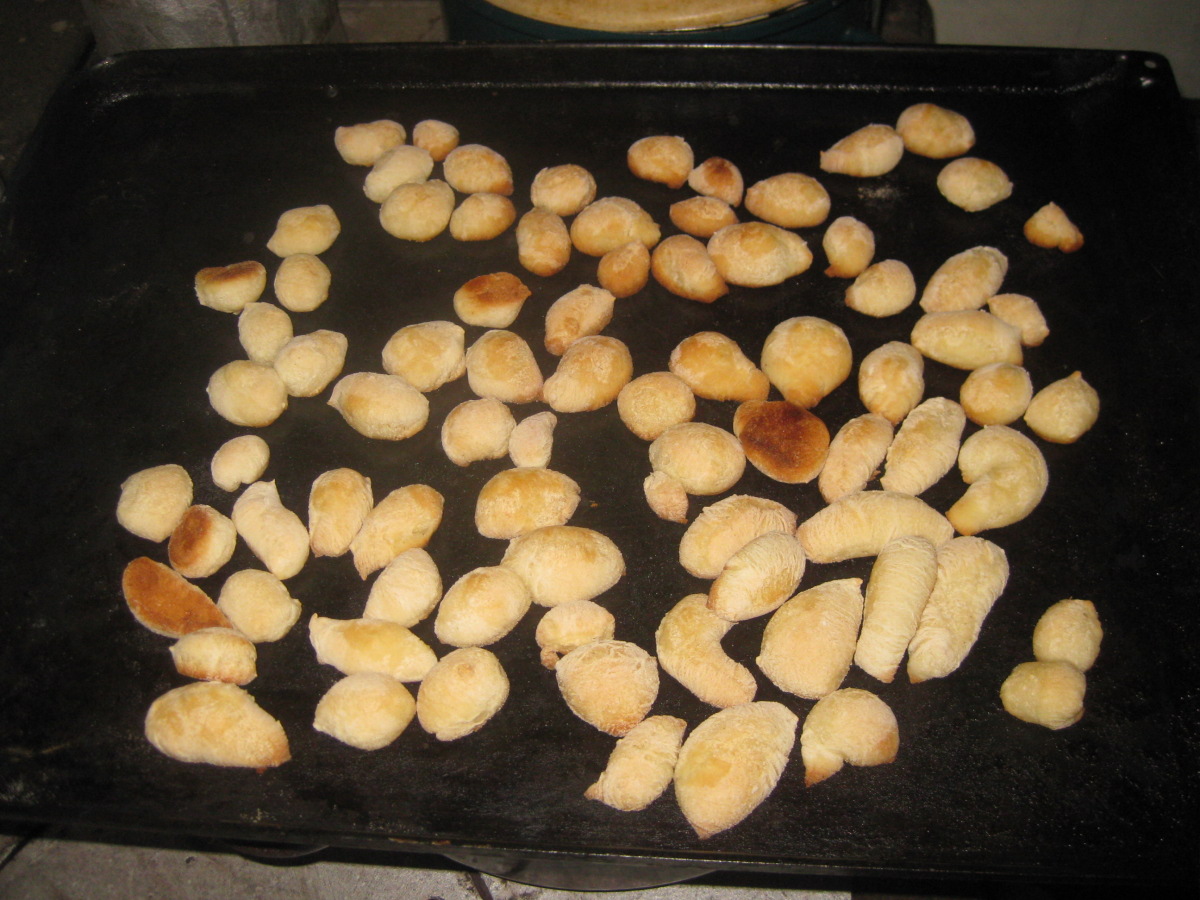
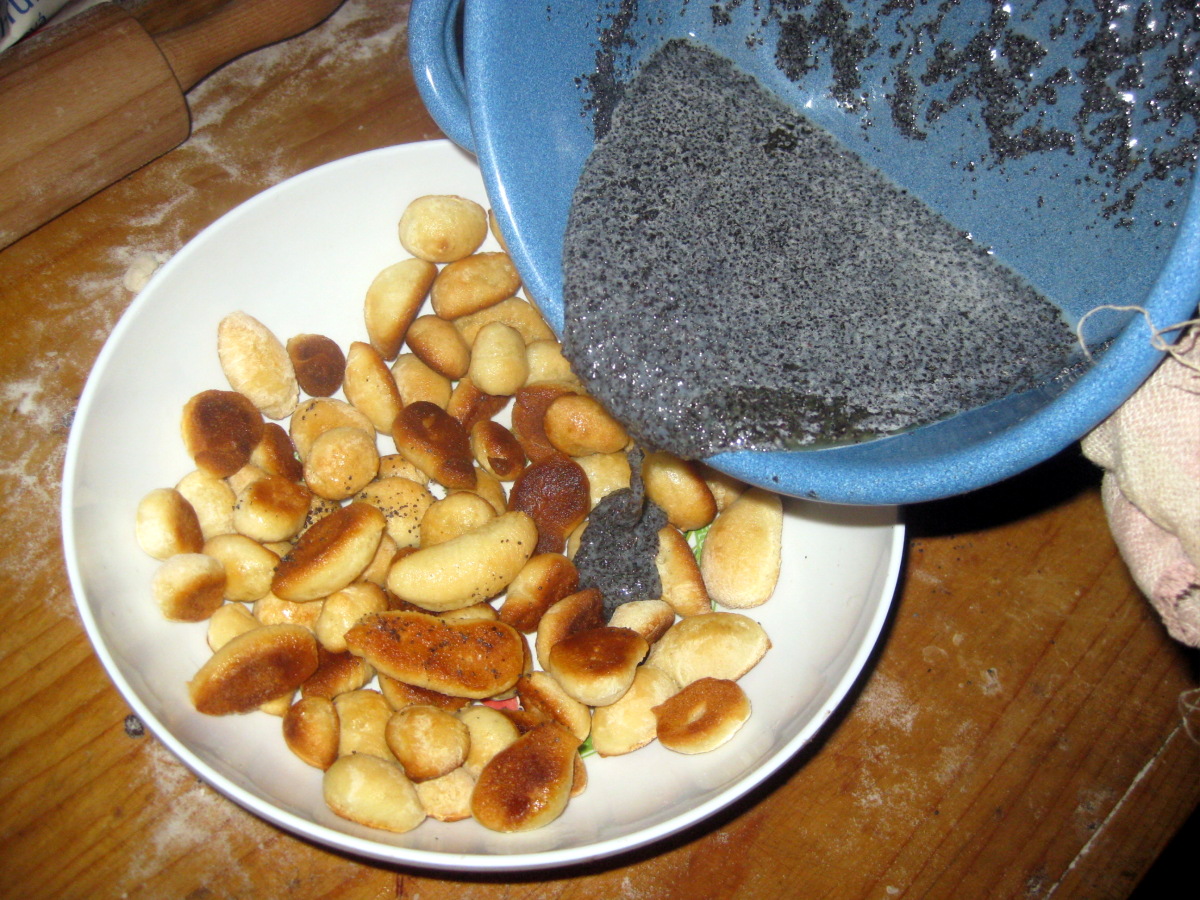
Bake for about 15 minutes until they get golden brown. They’ll be just like freshly-baked sweet bread: crunchy on the outside and soft on the inside. Then combine, in a pot, ground poppy seeds (mletý mak), powdered sugar (práškový cukor), butter (masľo) and a bit milk (mlieko). Bring to boil and pour over the bread.
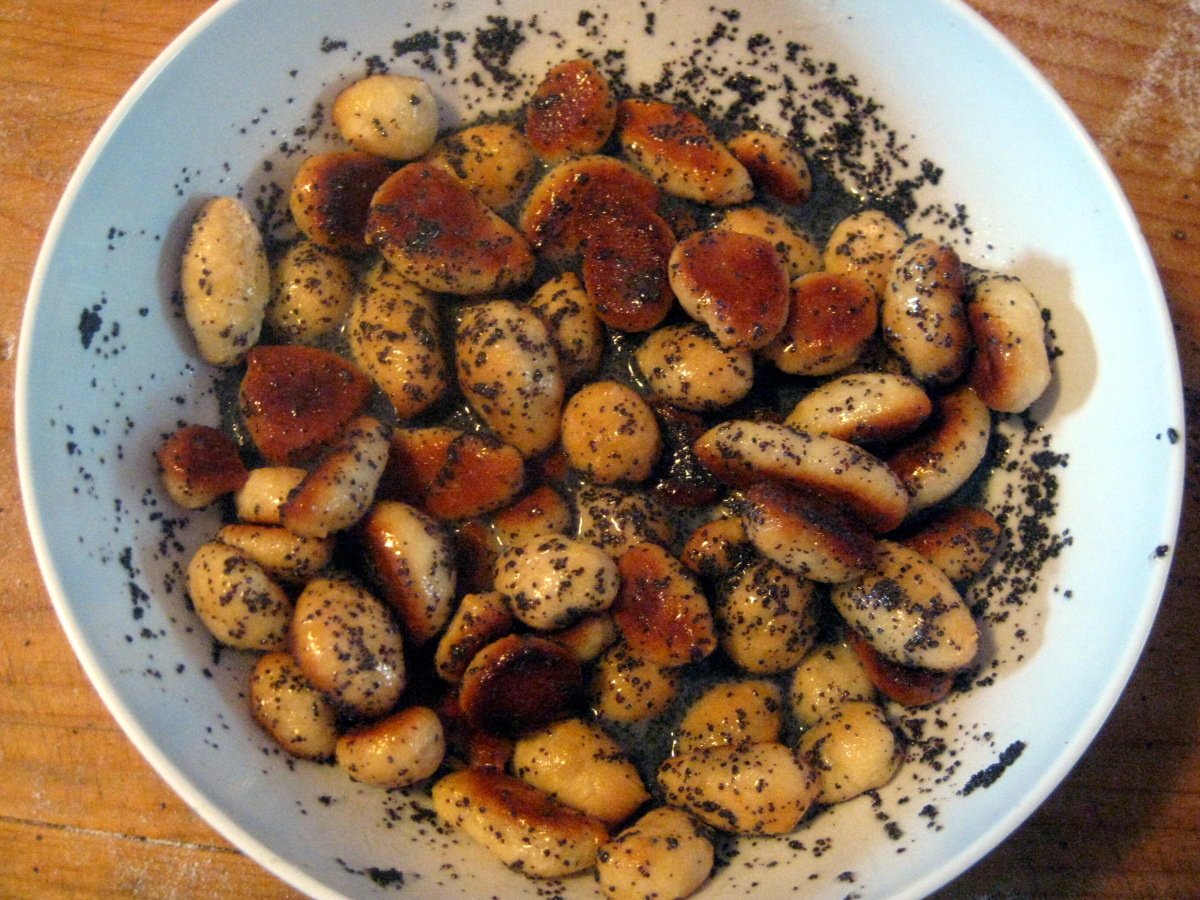
Mix together and enjoy. They were delicious!
My mom always put a lemon peel in there. It gives a very good flavor.
My Russian grandmother baked these cookies. They were simple and so delicious.
These are not cookies. We always have them with fried sour kraut and butter. Some day I will have to try the sweet ones.
I was taught to dry them out a bit. Make the dough balls in the morning and leave them out for the day. To soften them up, simply pour boiling water over the bobalky in a collander. It softens them up without making them soggy.
My grandfather is from Slovakia and each year on Christmas Eve we had “bobalky”, but ours was the bread mixed with honey and poppyseeds. We always had homemade sausage, and sour kraut, and a prune pie, but we never had the bread with cabbage
Sausage would never be served at the meatless Christmas Eve meal!
What do you mean by “meatless” 😀 Sausages in the cabbage soup are a must, better yet if they’re homemade. To top it up, there’s another course in my region (after the soup) which is just sausages and ribs and a liiitle bit of caramelised cabbage on a side.
So…there 😀
Having said that since I’ve been a veggie for almost 10 years now, I can do without it nicely, but even I use some veggie sausage to give the christmas soup that much needed edge 🙂
We also had meatless meals on Christmas Eve. I still make the meals meatless. The bobalky has a warm poppy dressing…adding honey or a lemon peel gives it a lot of flavor! Glad to hear someone else out there has meatless meals on Christmas Eve Vilija
I make Opekance I make the bread balls and bake them a few days before Christmas eve. I put the bread balls in a collander and pour hot water over them. I then mix butter and shredded brick cheese and let melt in the oven. This is what my grandmother served.
A slight variation in preparation of opekance: heat milk with some sugar & soak the opekance in milk, taking them out when they get softer into a bowl. Cover them with poppy seed paste (cooked milk & sugar with loads of ground poppy seeds). This is really delicious; opekance are super soft and moist and poppy seeds paste is plentiful – exactly as I love them 🙂
Thanks for all your comments, M. I have actually tried what you suggested, but the result was awful. I think I either let them soak too long, or they were not hard enough to begin with, but they got totally mushy and disgusting.
Lubos, you probably soaked them for too long 🙂 The length of soak depends on the consistency of the opekance – for the harder, drier ones you need to soak them for longer (a couple of minutes); for very fresh soft dough a quick soak is all they need (generally 20-30 seconds). Also, when taking them out use a sieve to remove any excess milk.
It takes a little practice, but the sure way of ensuring they don’t end up too soggy is basically prick opekance whilst they’re in the sugary milk & the moment they’re soft, take them out with a sieve.
Yummy !
M, that’s exactly how my grandmother used to do them…I loved them…she made a “vajdling” full of them, soked with milk and the poppy seed paste…what we couldn’t finish one day, she left over night in the fridge and we ate them next day cold…loved them too 🙂
Bobalky for us was always a Christmas Eve main dish-the dough balls were first baked, then boiled, then sauteed in butter and drained sauerkraut–delicious! Never a dessert.
Yes I remember the fried sauerkraut and doughballs with butter. Do u know where I can purchase the dough balls?
Prepáčte dámy, nikdy som nepočula, žeby sa opekance posýpali opraženou kapustou. Jedine snáď vtedy, keby to bola náhrada maku. Aj to len v krajnej núdzi. J.
My grandmother would buy HOT ROLL MIX in the bread isle at the grocer… make recipe accordingly, then roll out dough, use a shot glass to make rounds and place on baking sheet. Very easy and they freeze well, too
That’s exactly how my mom-inddd-law made them and our family continued her slovak tradition after she died. In fact, we are having it tonight along w/fried fish, lentils, prunes & rice, sour mushrooms, and more, including Bunyak (spelling / anyone>) & pass around bowl o candy & walnuts in shell, everyone picks one, cracks to see if next year will br “good” or “rotten” we’ve add closing round of singing at end
I see my reply didn’t come after the person I was replying to. It was replying to the one who cooked the bread balls w/saurkraut. We add a bit of pureed onion to the saurkraut and save some of the juice to make the sour muchrooms.
Louise in OH
This is the only way that I have ever had them and they’re delicious. My mother lived to be 97 and I am going for 81 next month. Still remember those happy christmas eve dinners. So different from how thins are today.
This is how my grandmother made them. Fried cabbage.
My mother in law used to make them with the poppy seed or the sauerkraut. when she passed I thought she used fried cabbage and onions. everyone loved it. it wasn’t until a few years later that my sister in law told me it was sauerkraut it was made with. I tried it that way once. I liked it but our company wanted the cabbage so I only make the cabbage now. I buy the Baalbaki. I boil a pot of water and put them in there a little at a time for about 1 to 2 minutes then drain them in the colander. I make sure I fried the cabbage and onions with a lot of butter – no margarine. I put them in a pan and mix them together and bake to warm through. I make them for Christmas eve and New years eve. I’ve had a lot of compliments on them. I never heard of them until I met my husband.
Was pleasantly surprised to find a recipe for these here at your site. These were (and still are) definitely a key part of Christmas Eve dinner – ours were baked a few days in advance, then boiled to soften, then either finished with butter and cheese or honey and poppy seeds.
My grandmother made a dish on Christmas Eve similar to this, she called it bobalky. It was dough balls in fried saurkraut and onions and butter. Am I right? Let me know, all of my relatives who would know aren’t alive. Thank You
Hi Donald, that’s right. There are many possible toppings for bobalky – see the text above. Some people combine them with cabbage (or sauerkraut), or even farmer’s cheese. There is no such thing as “the” Slovak kitchen. Every village – and probably every lady of the house in that village – had its own way of making these various dishes. The recipes on this site are just my way of making these dishes. Feel free to experiment by putting in whatever ingredients you like.
Donald’s way seems closest to the way my in laws make bobalky each Christmas Eve. They are in their early 90’s and first generation born here. The dough balls are expensive and purchased at only one bakery in the Trenton NJ area. They take a lot of care and timing to come out just right. You soak them in hot water then very slowly saute them in butter with the sauerkraut. They also include 2 pounds of butter, not a diet dish for sure.
Do you know if the bakery ships them?
My mom cheated to. We use a box of hot roll mix and she would roll it out to about 2″ thick and cut each one with a salt shaker top. We ate the one with poppy seeds, butter, honey, scalded first. also the mushroom soup in sauerkraut juice and pierogies with prune and dry farmers cheese, and lots of brown butter. The beans, garlic and honey was also for the bitter and sweet in our lives.
just found this site. yes, I also make bread dough, cut small pieces of dough,baked them. poured hot water over them in calander. butter, onions fried with sour kraut. no meat on Christmas eve. after midnite mass, baked ham, homemade buns, poppyseed and nut rolls. sleep a few hours, Christmas day, large dinner and dessert, eat all day. those were the days. I am now 82 years old and none of my six children continue this tradition. how sad.
Yes, I also agree with you. Today, most of the children are not concerned with family tradition, it is so sad, however, I feel that is their loss. My Aunt is 97 yrs. young, still bakes and cooks, not as much as she used to, but I talk with her to remind her of some of the dishes which she doesn’t make anymore. She’ll remember and tell me she has to make it soon, we laugh. I love my Slovak tradition and it will be with me always !!!
Yes u are right people call them by different names that is what our family called them, they are the same thing. I am making them as we speak.
My family has a long standing Christmas Eve tradition of eating bread, milk, ground poppy seed and honey. Over the years the name of this food has been contended. Mohn, Mond, Moan… Has anyone heard of this or know the proper spelling/name? The bread is similar to what is described above but we just bake it in strips and then cut it into medallions. How much milk is used is up to each individual, but you do need to avoid the mush factor. Any insight on the origin of this Hungarian/slovak would be helpful.
To Matts – I can’t speak to the tradition, but as for what it’s called – I think you’re thinking of Muhn with a short “uh” sound. Kind of a cross between the u sound in the word ‘spun’ and the double ‘oo’ in moon.
I was always told Muhn is the word for poppyseed.
As it’s a transliteration, I’m sure you can spell it anyway you like. 🙂
My family has been eating opekance on Christmas Eve forever. My grandmother made it, then my mom and now me. I make the bread balls a day or two ahead of time. On Christmas Eve I boil them in a mix of half milk, half water until the inside of the dough balls are moist. While they are cooking, I brown some butter. Drain the opekance, pour the browned butter over them then mix with longhorn cheese.
Hello. Loved finding your site, reminds me of my grandmother. We were always told that the custom of having garlic and honey at our Christmas Eve meal was to symbolise the bitterness (garlic) and sweetness (honey) in the world.
Just thought I would pass that along. : )
Cathi, that’s an interesting interpretation! In my family, we believed that both garlic and honey would assure you good health. I guess garlic was to keep the bad spirits away, and honey would bring in good health and energy, since it came from bees, which we considered to be really healthy (you would say stuff like “you should be healthy like a bee). Then poppy seeds and also carp scales were symbols for money/wealth.
Hello. Loved finding your site, reminds me of my grandmother. We were always told that the custom of having garlic and honey at our Christmas Eve meal was to symbolise the bitterness (garlic) and sweetness (honey) in the world.
Just thought I would pass that along. : )
My Mom always made this as more of a main dish or major side dish. Started off the same with the ‘little breads’ but she used butter and cheese…quite yummy! Poppy seed was used in kolache …a rolled sweet bread we had with coffee. Dobre !
Ahhhh….Pupáčky !! I make them like my mother did: cut up fresh bread into cubes and put hot, sweetened milk on them then add the sweetened poppyseeds !! Yummy, whummy !!!
I just discovered this site…wonderful! I’m of Slovak descent-both sides of my family are Slovak (they came to the USA at the beginning of the 20h century and settled in Cleveland, OH). My family kept many traditions. We still have bobalky every Christmas, with poppy seeds and honey. We bake them from sweet yeast dough in the morning and let them sit out all day. At dinner time they are placed in a colander and boiling water is poured over–it’s a quick softening and they don’t get too soggy.
One my favorite dishes. Love them the next day, cold, with a cup of hot coffee for breakfast!
My grandmother made it from dry breadroll and poured hot water (or milk) on it, before adding poppy
wow! it’s so strange- i’m Lithuanian and we used to do similar thing for Chistmas – we call it Kuciukai. It’s same hard cookies as yours just with pinch of poppy seed in the dough. We eat them alone or soak in the poppy milk- ginded poppy seeds we pull with hot water and add sugar (the colour seems as real milk)
I have been looking for this recipe my entire adult life! thank you, thank you, thank you. Both parents (and a long line of decendants) grew up in Kunesov/Kremnica Bane respectively. Although ethnically they considered themselves German, I think culturally they were more Slovak/Hungarian than anything else. I get the impression that the Germans in Slovakia, having lived there for over 600 years, were doing a lot of co-mingling with the locals if you know what I mean. I look at all these recipes and they are all the same foods that I (first generation American) grew up with….just slightly different names. All of your recipes are what I consider as my comfort food, and many dishes I still make today. Whenever she visited us in the U.S., my grandmother (whose last name was Latzko) would ALWAYS cook these bobalky, but called them something like pagunseln(?). As children, my brothers and I were not too crazy about them, but I am anxious to try them again as an adult. What’s not to like about a sweet dough ball slathered in sweetened ground poppy seeds! I can’t wait to try. Again, thanks so much for posting this recipe. It brings back so many memories.
Hitom týchto stránok sú jednoznačne bobálky, na Záhorí im hovoríme opekance. Ja ich na Vianoce nepripravujem, ale robí ich moja mamička. Jej opekance sú super. Od východoslovenských bobálkov sa líšia tým, že sú plnené slivkovým lekvárom. Cesto sa rozvaľká a asi 3 cm od okraja sa kávovou lyžičkou kladú lekvárové kopčeky. Okraj cesta sa cez ne preloží a vačším štamperlíkom sa vykrajujú malé “buchtičky”. Na plechu sa potrú olejom. Uvaríme medové mlieko a vo veľkej mise opekance oblejeme. Pocukrujeme a zľahka premiešame. Dobrú chuť.
Pardon, zabudla som ich posypať makom… ha,ha,ha.
has anyone ever heard of loksha (sp?)
Yeah, the recipe is here: http://www.slovakcooking.com/2010/recipes/lokshe/
Hi Nathan !!
I only have heard of ‘Loksha’ on another website about Slovakian culture. Luboc has a recipe on his website. I don’t have a recipe. My mother made these pancakes for my Slovakia father before I was born.
Yummy recipe !!! My Moravian maminka used the word, t’esto instead of cesto. Cesto just brings to mind cesta, and I get all confused… .
I want to emphasize that canned poppyseed is no match or substitute for freshly ground poppyseed. Luckily, I still have my mother’s old poppyseed grinder (mlínek). She got it in the 1950’s from Canada. I’m sure that somebody manufactures grinders. In fact, maybe a coffee grinder would work ?? Or a food processor ??
Dobrú chut’ !!
Slovenský jazyk má tri rody: mužský, ženský a stredný. Podstatné mená ženského rodu sa končia na -a. To je napríklad slovo cesta, ulica. Ukážeme na ňu ukazovacím zámenom tá. Podstatné mená stredného rodu sa môžu končiť na -o. To je slovo cesto /ťesto/. Ukážeme naň ukazovacím zámenom to. Pri podobných slovách s nejasným významom je treba vychádzať z kontextu. Pre zaujímavosť dodám, že ukazovacie zámeno mužského rodu ten, Google Translate prekladá ako desať. Alebo slovo kolach /koláč/ mi prekladá ako bicykel. Hlavne, že človek pochopí zmysel napísaného.
Dakuju za vysvetlenie. Alebo znam ty tri rody, len dobre nepišem po slovensky. Najvašie pochopím zmysel vety. Môsím najít dobrú knihu slovenskú gramátiku a dalšie sa učit. Enom znam o jeden obchod tu v Los Angelesu, kde môžem kúpit takovú knihu. Hezko píšeš.
Waw Cynthia, píšeš na parádu. Určite lepšie, než ja po anglicky… hahaha. J.
You’re so kind, Joyce !! Môžete spravit moje chyby. Naozaj, môžete mna učit slovenšťinu !!! Alebo ako varit slovenské ídlo !!! Napríklad, jste niekedy čuly o kukese ktoré jmenujú sa “pagači” ?? Ja myslim že tiež jmenujú sa “zazvorniky”. Môja maminka ich pékla.
Dobrý večer Cynthia, veľmi sa teším. Môžeš byť spokojná. Tvoja reč má prvky moravského nárečia a ver mi, dorozumieš sa v Čechách aj na Slovensku. Poviem Ti pravdu, upiecť dobré zázvorníky vie máloktorá gazdiná. Do zázvorníkov sa ja nepúšťam. Pokúsim sa zohnať nejaký zaručený recept od kolegýň. Moja svokra pečie zázvorníky, ale na tých by si si vylámala zuby, také sú tvrdé. Ja sa teraz bavím prípravou domácich zeleninových šalátov. V nedeľu som zavárala červenú repu. Včera som urobila dva kapustové šaláty, jeden je s mrkvou a druhý s červenou repou. Teraz varím paprikovú pomazánku z červenej papriky- kápie. Pekný pozdrav zo Slovenska. J.
No citam tu tu komentare na Bobalky aj anglicke aj slovenske, ale ako uz spomenula Joyce, v zivote som nepocula o bobalkach s tvarohom a uz vonkoncom nie s kapustou (to uz nie su bobalky ale nieco uplne ine, nie tradicne vianocne bobalky). Ako prava vychodniarka peciem bobalky kazdy rok a musim povedat ze vela. Cesto pripravujem z mlieka, drozdia, vajicka, polohrubej muky, cukru a trosicku soli. Necham ho poriadne vykysnut a potom vypracujem male valceky, ktore najrajam na male kusky, ktore necham potom este trochu podkysnut na plechu. Potom upeciem do zlata. Pripravujem ich zopar dni pred vianocnou vecerou (bobalky stvrdu ale v tom je pointa). Na stedry vecer povarim krystalovy cukro s mletym makom a 2 litrami vody (zalezi od mnoztva bobaliek) minimalne 30 minut a bobalky s touto zmesou polejem. Bobalky sem tam premiesam aby sa makova zmes dostala na vsetky (takto nie su rozmocene a ani suche).
If anybody english speaking want to know more about “Slovak cooking” I would suggest to read proper slovak reciepe book or ask proper slovak cook.
Dajakuju za este druhy recept pro bobalkov. Teraz mam na nich chut. Ich udelam zajtra z nakrajany chlebem ktory namocim v osladenim mliekem. Pomelem mak a k makem pridam praskovy (powdered) cukr. To hodim na umokrenim chlebu a zamicham. Toto je najleniviasiej metoda delat bobalky ako amerkanska, slovenska zenska ktora dobre nevari.
We used to soften them in a kind of syrup where you boil sugar and hot water, but there’s just enough that the bobalky would not get soggy – maybe it had honey instead of sugar. I can’t remember exactly. Have you heard of this variation? There were always some that ended up more soggy and some more hard – I liked the harder ones. My vavorite way was to eat them with puppy seeds and sugar, but my Mom made them with walnuts and sugar also, and I have also heard of the tvaroh version. I never heard of the kapusta / cabbage version, but I suppose it would not be much different from “kapustniky”. 🙂
My mother and grandmother made Bobalky every Christmas Eve with poppy seeds. Here is the recipe she used: 1 cup of honey, l box of Hot Roll Mix (use basic roll recipe) 1/2 lb whole poppy seeds, 1 and 1/2 cups sugar (or until sweet) 1/2 lb butter. after following the instructions for the hot roll mix, roll it out on a floured board to 1/2 inch. She used the top of a salt shaker (the silver top with the glass bottom) about 1 1/4″ across (mine is)put them all next to each other on a greased cookie sheet so they are touching. bake 350 until they are light brown. Her’s would double in size and I don’t remember if she would let them raise or not. Poppy seed – cook in water, add sugar, cover for about 15 minutes.
Separate and put bobalky in a colander and scald and shake real fast. Put them in a big pot and cover. Have butter melting. Pour butter on them, then add honey, then add poppy seed mixture a little at a time. I’m making these tomorrow and I haven’t made them for at least 35 years. Can’t wait to try them. Hope this helps.
I made the bobalky last night and it was wonderful. The next time I make it there will be a few changes though. I used only one box of hot roll mix so I didn’t need 1/2 lb of poppy seed, all the butter, sugar and honey (which I still have) When my grandmother made it, there had to be at least 30 family members. Last night and reading all these fantastic recipes brought back so many wonderful memories. Thank you, and Merry Christmas to all.
I make mine the weekend after Thanksgiving and put it in the freezer. My recipe has been handed down in my family. I started helping my mother when I was quite small and now my grandchildren help me. The recipe makes 12 nut/or poppy seed rolls and cannot be cut back. Therefore, we make 7 loaves into bread and the other 5 we use to make the bobaky. There are never any leftovers.
I love bobalky my grandmother used to make it on Christmas eve with butter and sauerkaut I was wondering if you know where I might buy some for this Christmas. Thank you!!!!
Is there some reason you do not make it yourself?
does anyone have a recipe for puguch( not sure on the spelling) it was dough filled with sauerkraut.
thanks
My sister-in-law makes pugach every Christmas Eve. Her mother’s recipe was Hot Roll Mix or Rhodes sweet dough (as directed) Drain sauerkraut, then fry in butter until dry. Roll dough thin, after raised once (like a pizza dough, fill with sauerkraut mixture, fold in half and seal. Bake until brown, baste with butter.
I also am looking for another recipe that my Aunt used to make, she would cook rice, milk and honey any idea’s?
My grandma and now my mom “cheated” and used frozen bread dough. We make the onion/saurkraut version. We also have beans & letchki soup, mushroom soup & pirogis. We pass around garlic & honey and were always told it was for the bitter & sweet of the world. Being Byzantine catholic we don’t meat on Christmas Eve.
Another successful shortcut:
My mother solved the dough problem ages ago by using Pillsbury brand Original Breadsticks. Divide each “stick” into four or five equal balls (you make 48 to 60 from one package) and bake according to package directions just until lightly brown (about 9 to 12 minutes). I usually bake a double-batch of these mini-bread rolls one day ahead, cool them then refrigerate in a sealed plastic bag until I’m ready to use them.
To prepare on Christmas Eve, add the rolls to rapidly boiling water for one to two minutes testing often until nearly moistened through–tender on the outside (not mushy) and just a hint of bread on the inside. Remove the dumplings from the boiling water. They shrink down immediately upon straining from the water. Add your poppy seed or sauerkraut or other special dressing to the warm dumplings.
What wonderful comments and suggestions. I found reading about the many variations of this holiday tradition very enlightening! Making the Vijila dinner every year helps me keep in contact with my Slovak (and Polish) roots. Dobrú chut’
My mother softened these in very warm but not boiling whole milk. It is amazing the difference it makes in the taste. The milk was not wasted. The used milk was given to the livestock.
We have bobalky every christmas Eve. It is a tradition started by our Dad. My Mom would make the dough balls three weeks before Christmas and let them dry out in a brown paper bag. On Christmas
Eve she would boil them in water, drain and add a cheese and butter sauce. My parents are both gone now but my sisters and I still keep this tradition. Our families look forward to this treat every year.
What a nice tradition your father established !! My father was from a town near Bratislava, and his family called this dish: Pupacky. My Moravian mother made it from cut-up bread cubes that she soaked in sweetened milk and then added ground poppyseeds mixed with butter and powdered sugar on top. Also delicious !! Happy New Year !!
I have made Bobalky for years from scratch, but have switched to Rhodes frozen bread loaves. After thawing out dough, pinch off and roll into balls, or roll and cut as described above. Bake until lightly browned. Can be made days ahead, and when ready to cook just pour boiling water over them in a colander. Mix with browned butter and cooked sauerkraut. Our family favorite is browned butter and cottage cheese. Leftovers never last past lunch the next day!
Love the frozen bread shortcut 🙂
I’ve only used the melted butter (lots!) and grated cheese (some mild and some sharp). Everyone gobbles it up. Dobre!!
Wow , I love reading all the traditional Slovak dishes and everyone sharing..Bobalky was the first dish we had after the oplatky W/honey was passed around the table. I guess my Mom made it so we kids would eat it without sauerkraut and poppyseed.It is basically homeade bread (I still do it) that I roll strips of dough and cut into small pieces…I don’t soften them at all, my kids love them crunchy. We pour sweetened warm milk over them and let our oplatky honey drip into it..I love that my children(in their 30’s) love the tradition on viligia. I think all slovak food is comfort food!
I grew up on these every Christmas Eve. I have been making them for the last 3 or so years since my Mom couldn’t do it anylonger. I make my own (little breads). I also use solo poppie seed since I can not find the ground seeds in any store where I live. I make a few of the receipes you have on your web site.
I grew up with these made completely different. We use bread dough cut into tiny balls. Bake them and set for one day. Then we use place in large pan and add sauerkraut, dough balls and butter. You have to use canned sauerkraut or it will not taste the same. Let it cook for a few hours on very low and turn so it does not brown. Better the next day.
To Cynthia – Oct 17, 2011
I us Ace Translator. I write my letters in English and this program translates it into Slovak. Such an easy way of writing to the cousins in Slovakia who don’t know English.
For Christmas Eve we always had kyslu kapustu (saurcraut) with klobasa (polish sausage)followed by opekance. – Sour and sweet.
My mother made opekance by rolling the dough in long finger width rolls to bake them. When required for use on Christmas Eve she would cut them into squares and then place them in a sieve and pour warm milk over them to soften. The Poppy seed was ground and cooked with a little milk and sugar or jam, then mixed with the softened opekance and served with a sweet syrup.
Hiya everyone.
My girlfriend is Slovakian and I want to surprise her by cooking a Slovakian style Christmas meal. I’m not Slovakian myself so don’t really know what would be a ‘traditional’ Christmas meal.
Having done a bit of research on the net I’ve notice Oplatek and Bobalky which seem well within my cooking ability 🙂
I’ve managed to source some Oplatek and have already bought some ground poppy seed and I’m really interested in trying this recipe.
I was hoping someone could give me the proportions of sugar, honey, milk, butter and ground poppy seeds I need to use. Naturally this will depend on the amount of sweet bread but please bare in mind I’m only cooking for the two of us.
Thanks in advance for any advise
P
Hi there, Paul. Lucky you have a Slovakian girlfriend who appreciates your cooking efforts. My former Slovakian boyfriend didn’t like my cooking; period.
When I make Bobalky for myself plus extra for next time, to half a loaf of cubed bread I would add 1/4 c. sugar, 1/4 c. honey, 2 cups milk, 1/2 cube of butter, and 1 1/2 cups of ground poppy seeds. Mix it all together and heat it for 20 minutes before serving.
Veselé viánoce !!!!
Hiya Cynthia,
Thank you very much for your post. It’s very useful. I’m going to have a go at cooking them at the weekend. Figures crossed
Regards
Paul
Oh my gosh!!! I found it! the recipe that I have been looking for for years. I just asked about it on another recipe and here it is. Thank you, who ever you are!!!!
Glad to be of service 🙂
Hi, my family makes this dish every Christmas. Little bread balls left to harden for days. Soften with milk, butter, salt and pepper before mixing in with a LOT of browned butter with sauerkraut. It is called futchke (futch-key)in the family. Grandma was Polish, Grandpa was German-Austrian. Has anybody heard of anything close to this pronunciation?? THANKS!!!!!!!!!!!
Asi to boli fliacky, tie sa robili s kapustou a tiez niekto pridal varene zemiaky.
Suroviny
1 kskapusta biela
1 bal.fliačky
1-1,5 dclolej
dľa chuticukor kryštál
dľa chuticukor práškový
1 KLsoľ
Slaná verzia:
1/2 KLrasca celá
dľa chutikorenie štyroch farieb
15
minút
príprava
30
minút
tepelná úprava
Postup prípravy receptu
Stredne veľkú hlávku bielej kapusty očistíme od vrchných listov, pokrájame na 1/4 a vyrežeme hlúb. Potom si ju nakrájame, ja to robím na strúhadle lebo mi chutí pokrájaná na jemnejšie. Potom ju posolíme, cca 1 KL soli, necháme chvíľu postáť. Pripravíme si olej / dávam trošku viac aby boli fliačky premastené/, ktorý rozpálime, kapustu vyžmýkame a restujeme na oleji do zlato-hneda, za stáleho miešania. Keď je správnej farby, odstavíme z ohňa a pridáme kryštálový cukor podľa svojej chuti.
Počas restovania kapusty si dáme variť fliačky, do vody pridáme málinko soli a pár kvapiek oleja. Ja ich varím al-dente ako taliani hovoria, nemám rada mäkkej konzistencie. Nakoniec fliačky scedíme /ja nepreplachujem/, zmiešame s kapustou a kto chce si ich na tanieri ešte prisladí práškovým cukrom.
Kapustné fliačky – obrázok 2
SLANÁ VERZIA: niekto nemá rád na sladko tak vtedy, do kapusty nedáme cukor, ale trošku celej rasce a namelieme korenie 4 farieb.
How warm should the oven be, by the way?
thanks for the proportions … my hubby made
bobalky and i never paid close attention … now my grown children want it … he cut a french loaf into cubes … heated the milk, butter, honey, poppy seeds in a big pot then added the cubed bread … kept stirring then took it to the table and just before serving squeezed fresh lemon over it. p.s. he also made a chopped walnut version, same way, just
substituted the nuts.
Tonight we are enjoying bobalky and machunka since tomorrow is our turkey dinner on Christmas Eve. I used the white bread dough from the breadmaker and made lots of little balls of dough which I baked and left out all day. I poured boiling water over them in the colander and then mixed them with honey and freshly ground poppyseed. Yummy. We will leave some out on the balcony tonight for our departed relatives. The machunka was made from browned flour, mushrooms, sausage, sauerkraut juice, tomato juice and sour cream and is very thick. Both were a success. Thanks for sharing all your hints and ideas. I love to hear how all families have their own style and traditions over the years. I wish I could try all your different kinds of bobalky – they all sound good.
When I eat these foods it is as though my mom and dad are still here with us.
Thanks for sharing the way to make machunka!!! Haven’t had it in years & miss it!
My memories of traditional Christmas Eve dinner was bobalky in warm sweetened milk with poppyseed
thank you, my 93 year old mother was so happy I made these. Also made the dried mushroom soup with sourkrout juice and that is a winner to be repeated often. they used to gather the mushrooms in Ohio as a child, dry them and use for Christmas.
As part of a traditional Christmas Eve dinner, my mother would make a thick stew and make bobalky with either poppyseed or a sweet walnut paste to serve on the side. We have carried down that tradition.
This is so close to a recipe I have been searching for years! I remember my grandmother making this for our Christmas Eve meal. The difference was the bread dough was filled with a prune filling. Is anyone familiar with this recipe? Sorry to say all in my family that would know are no longer with us.
ya make sweet dough .fill them with, poppy seed,, nuts,,prune….good .myGranma make these and I also make them…..
Sarah, would you be gracious enough to share your recipe? I have been trying for years to find a recipe to make these. I would greatly appreciate your kindness.. Thank you.
Delicious! I wrote a slightly different version of my Bobalky recipe from Eastern Slovakia http://paulinka.info/bobalky/
They may not be as sophisticated as mattresses from Sealy, Simmons and Serta.
and online groups) until you have a decent email list. Again, it’s soft, beautiful,
and will really bring your knitting or crocheting to life.
My grandparents were very old when I was very young so I did not even think of asking for their recipes. Now it is too late as they have passed. I’m glad that you and so many others share their recipes! This evening I made pagach, bobalky, and sauerkraut/mushroom soup. I am serving this to my small faith sharing group this week! Thank you Lubos!
My Aunt was just telling me how my Grandmother use to make it. After the dough is cut, she poured a little water over it, added some sauerkraut that was sautéed, and then poured some milk over the top. I remember having this, but not with the milk just the sauerkraut, sooo goooood.
I am Ukrainian and Slovak and always thought that bobalky was Ukrainian! My mom always made them with regular bread dough. Right before serving, she would heat honey and poppyseed and then toss the little dough balls in it and serve hot. That’s how I make them, too. They are always the favorite of Christmas Eve dinner.
Hello, we have this Christmas tradition in our family that dates back to my great great great grandmother who was born in Radomysl in the now Czech Republic. Her descendent came to the US and settled in Minnesota.
The tradition continues to this day in our family and has been passed down through each generation.
Our tradition is to make the little balls of bread, bake them on Christmas eve, put them outside for the Christ Child to bless and eat them Christmas morning covered in warm milk, poppy seeds and maple syrup. We called them Bleminky and I’m so excited to see all of your comments about making these. We thought we were the only family in the US to be doing this tradition. My mom makes her own dough. I cheat and use already made dough but this year, as our whole family with all generations gathers for Christmas, we will make these together and enjoy knowing that we are not alone.
Delicious! Thanks for sharing the way to make machunka!
September 20, 2009Qusii! I miss you so much. Thank you, m’dear, for your reassuring words. I know I have genuine friends, mumsy, and a hubby, that truly love me, and they won’t ever turn their back on me (this includes YOU). I think about you often and thought about calling you. I think I will sometime soon. Oh, we also popped in Shadow of the Colossus a few nights ago and thought of you. We love that game so! <3
thank you so much for the hard to find recipe. My mother is 98 and we are having cousins come in a week. We will make these little balls. my mother talks about them. her mother made them at Christmas. we will celebrate in August. Thank you again.
Had Bobalky for Xmas Eve with browned butter and cottage cheese. We also make them with butter, onions and sauer kraut. Had mushroom/sauer kraut soup to go with them. Traditional meal. Hint: Make dough in your bread machine.
Pillsbury no longer makes Hot Roll Mix. Can not find it on shelf even in another brand. So easy to make dough in your bread machine.
Lubes
Please help me locate which Slovaks would make matzoh Brei with sauerkraut and carmelized onions for Christmas Eve. My family did not make bobalkywith raised dough or potatoes in the luksa, but rather homemade matzoh . We are Roman Catholics but some ancestors believe Jews were part of our heritage. Any thoughts from where these slovaks may have come from’?
I also make our traditional Christmas Eve meal which my family enjoys. I do make Opekance. I use bread dough which I divide and roll out into rope style and cut and bake. I do these balls ahead of time and freeze them. To use them I soak them for a few minutes in hot water. When they are soft I drain them and add melted butter poppy seed (ground) and melted honey. Toss everything together and enjoy. I grew up on Slovak cooking and my family enjoy it.
Can anyone tell me WHY Slovaks eat the bobalky? What is the reason why we started having this dish? I know the wafers have the meaning of Christ, but why the bobalky? Thanks for your help.
My MIL always made these for my Christmas Eve dinner. She made them with sauerkraut, onion and lots of butter. I think she put them in boiling water after baking. Glad to know, the balls can be made ahead of time, but I think I will just pour boiling water over the baked dough balls, then add to browned onion and kraut, and of course MORE butter! I’m Italian, but I’ve always loved Bobalky! Hopefully, my daughter will keep up the tradition!
When I was a little boy my great aunts and grandmother consistently made a traditional Slovak Christmas! We had Both the poppy seed and the sauerkraut dough balls along with mushroom soup, the wafers with honey and fish! After church there was sausages with nut rolls (poppy seed rolls as well) i remember making the rolls with my grandma, long process!!!! All my relatives spoke Slovak and didn’t teach us much of it, but my mom continues making the mushroom soup and my aunt still makes the dough balls since my relatives are long gone. We found a bakery in Garfield NJ where we get nut rolls, the wafers and dough balls!
My mother-in-law made what she called pokunsel(forgive the spelling) seems very similar babaky. I was not there when she made the little dough balls. Sometimes she made them a month ahead of time other times a few days before Christmas. She is passed and alas having trouble replicating. When we boil the little balls it takes a very long time before they become soft, kind of tough. What am I doing wrong? Is it the dough?
Merry Christmas
I do a bunch of variation of this. One thing I do differently that I semi boil a potato before I slice it and make a casserole (mixing sauerkraut, maybe some sausage, etc.) Potatoes are better that way in my opinion. Just baking a raw potatoes usually results in undercooked and dried out potatoes that I don’t like.