Tvaroh Slices with Fruit and Jelly (Tvarohové Rezy s Ovocím a Želé)
Dough: 200g flour, 2 spoons of baking powder, 80g powdered sugar, 1 yolk, 100 g butter
Filling: raspberry jam, 1.5L whisked cream, 500g farmer’s cheese, 1 lemon, 20g gelatin, 20g vanilla sugar, 140g powdered sugar, fresh or canned fruit
Prep Time: about 90 minutes, plus overnight for the jelly to set
The greatest thing to come out of Slovakia (besides the beautiful girls) are the amazing sweets, or kolache (koláče). Just about every town has a pastry shop, cukráreň (derived from cukor, sugar). One of my favorites are these fruit and jelly slices. My dad’s friend Janka prepared them yesterday. They are made out of dough called krehké cesto meaning fragile dough. It’s made without any yeast or water.
Prepare the dough
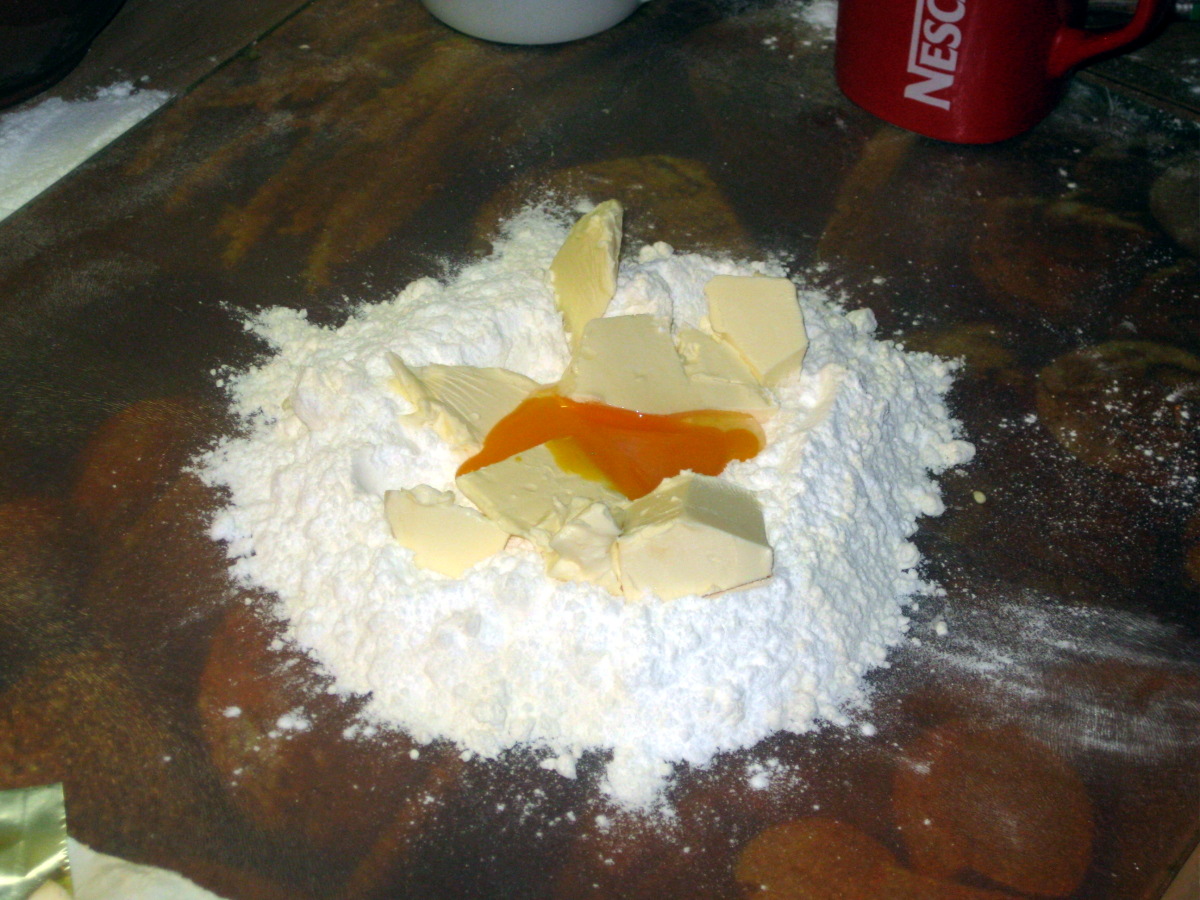
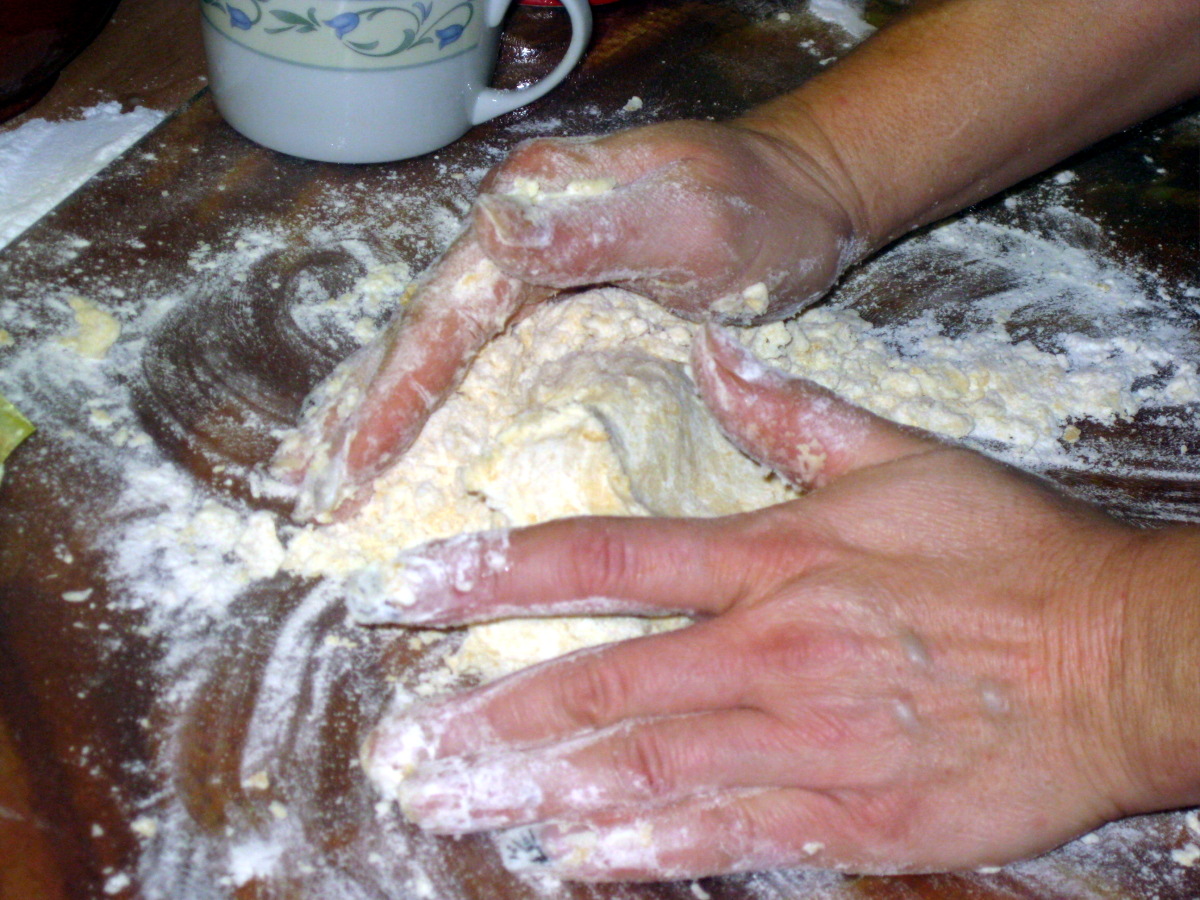
Start by preparing the dough. Mix flour (múka), baking powder (prášok do pečiva), powdered sugar (práškový cukor, the yolk (žĺtok) and 100g of butter (maslo). Work into dough.
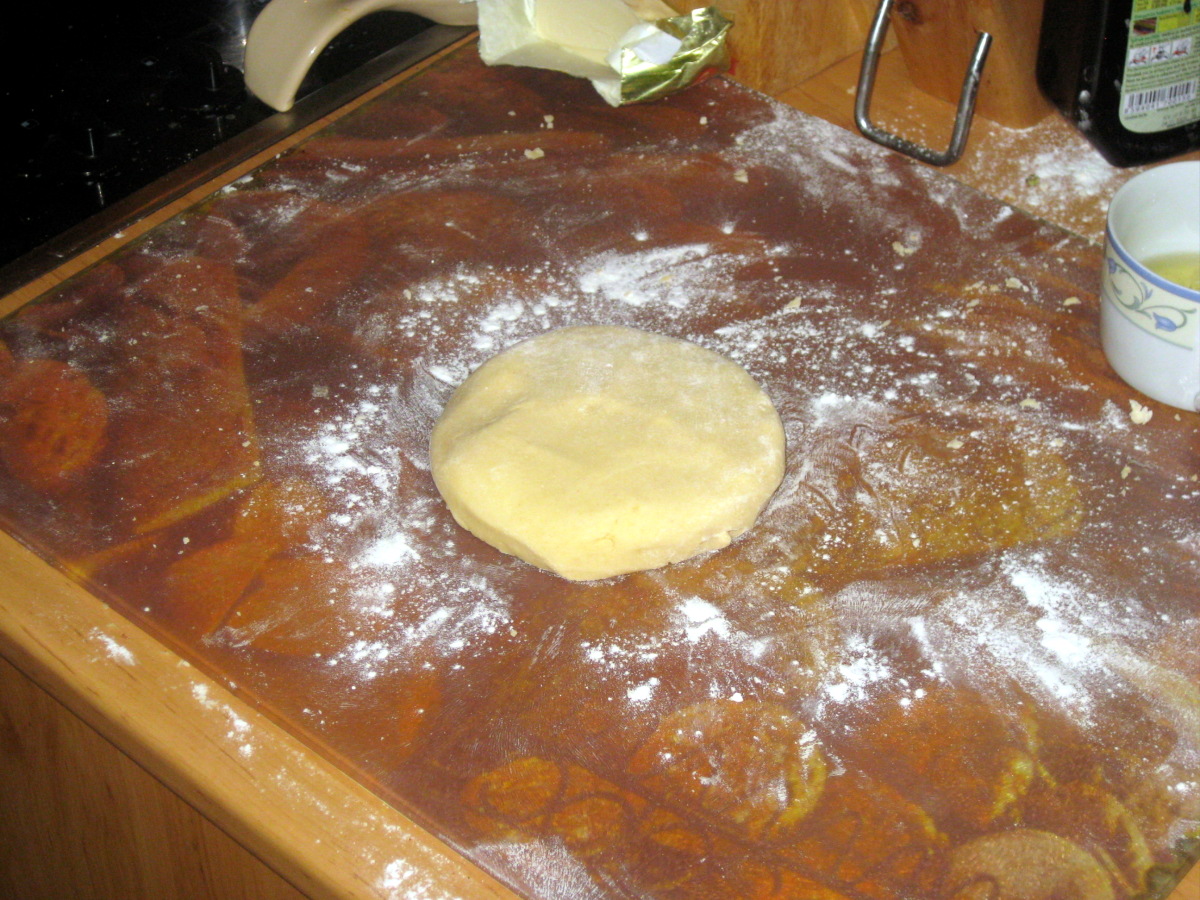
Place in the fridge for 30 minutes. This will cool the dough and make it easier to work with.
Make the filling
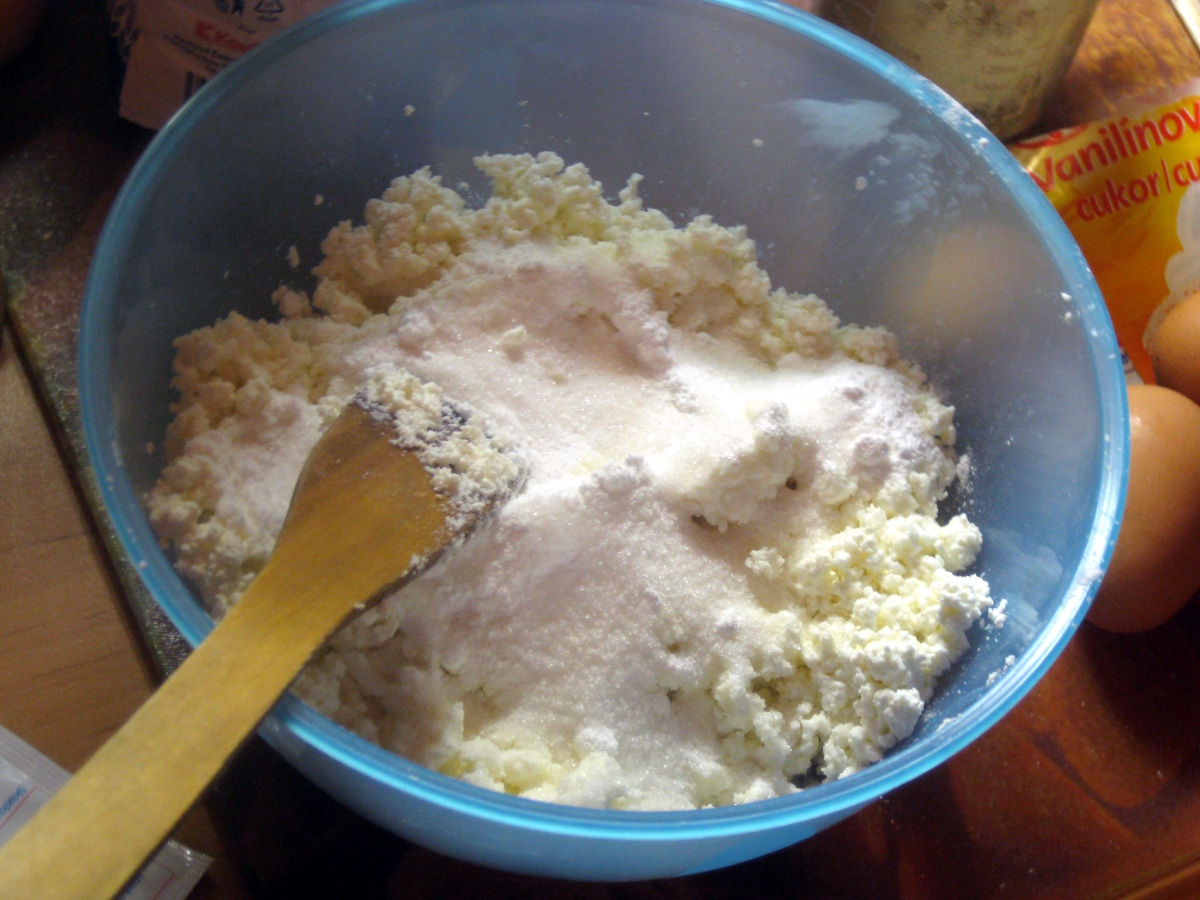
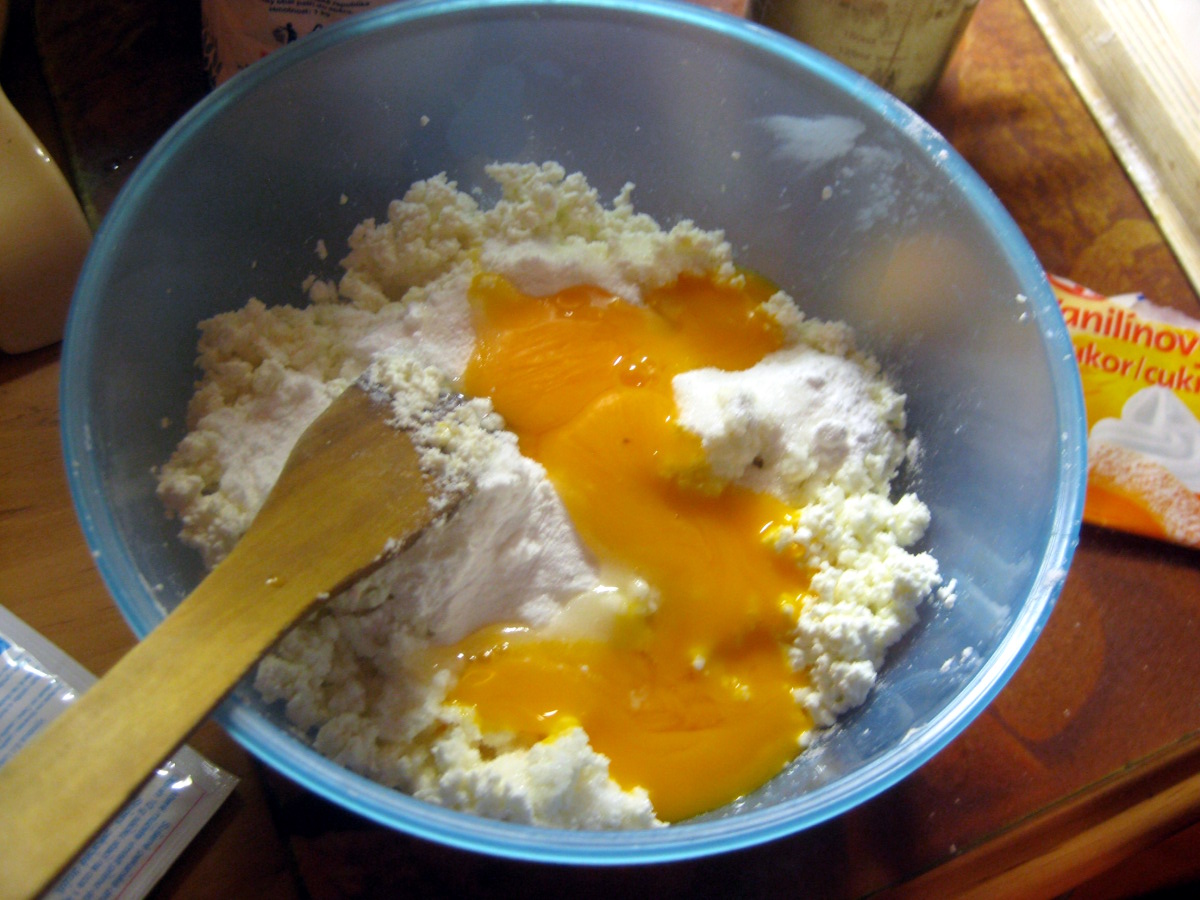
In the mean time, prepare the filling (plnka). Combine farmer’s cheese (tvaroh) and vanilla sugar (vanilký cukor). Janka also added two yolks, but this is not required.
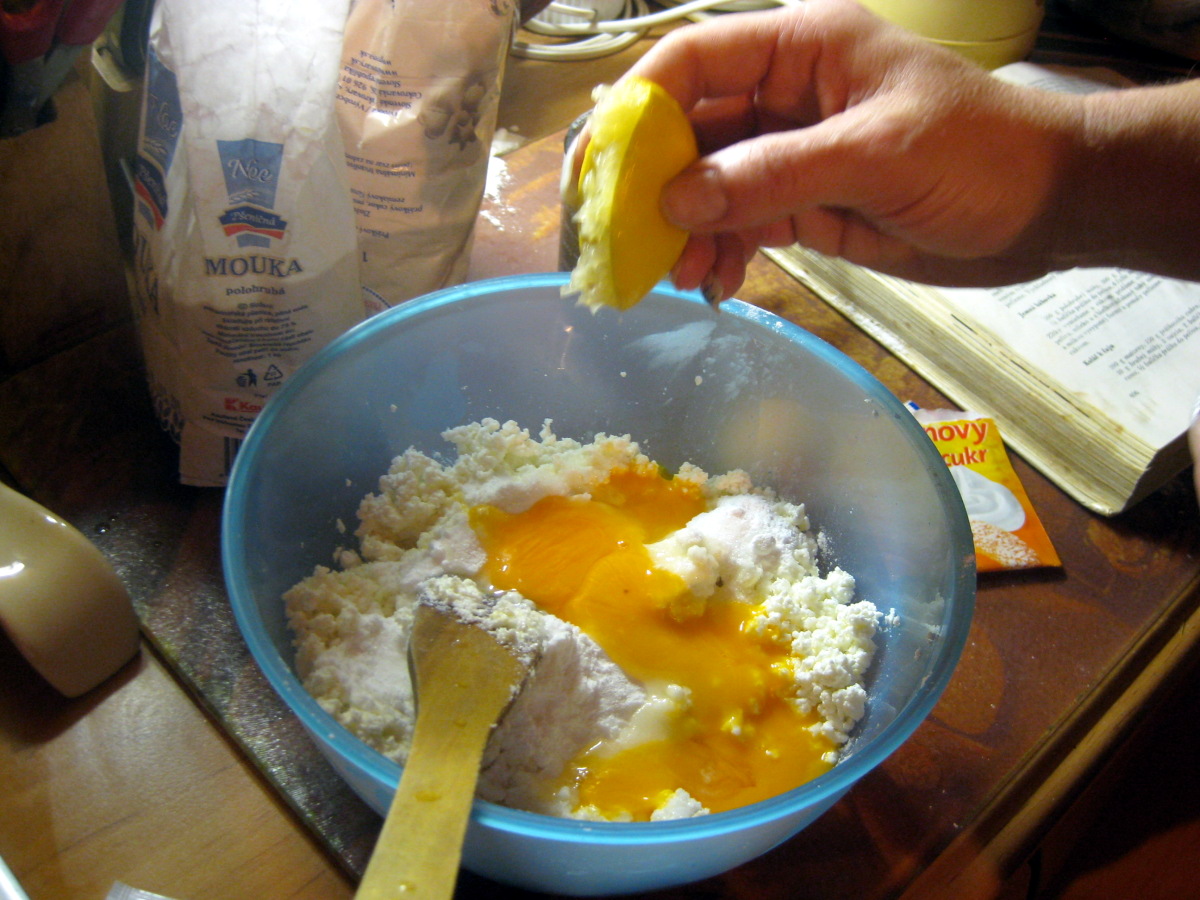
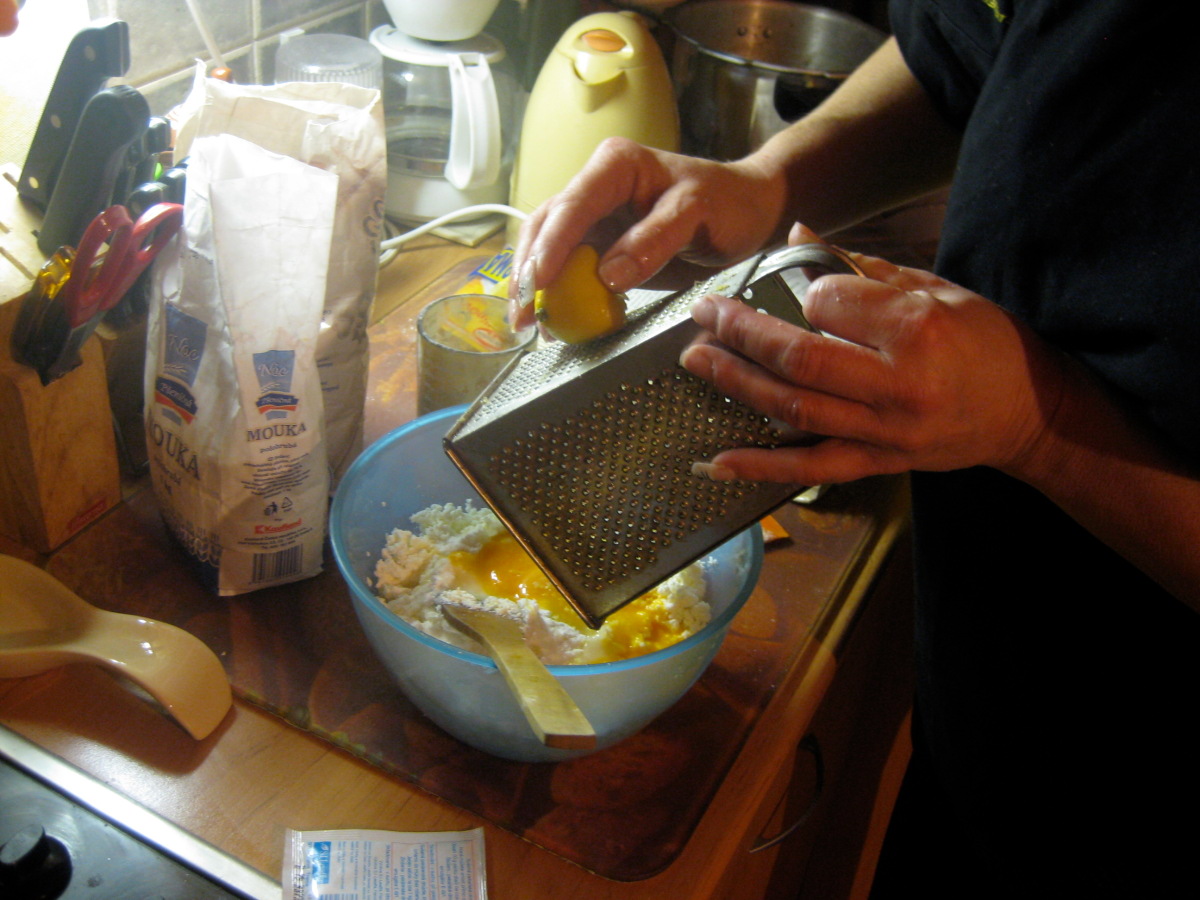
Add juice and zest from one lemon (citrón). Also dissolve 20g of gelatin in 0.5 boiling water. Add to the filling.
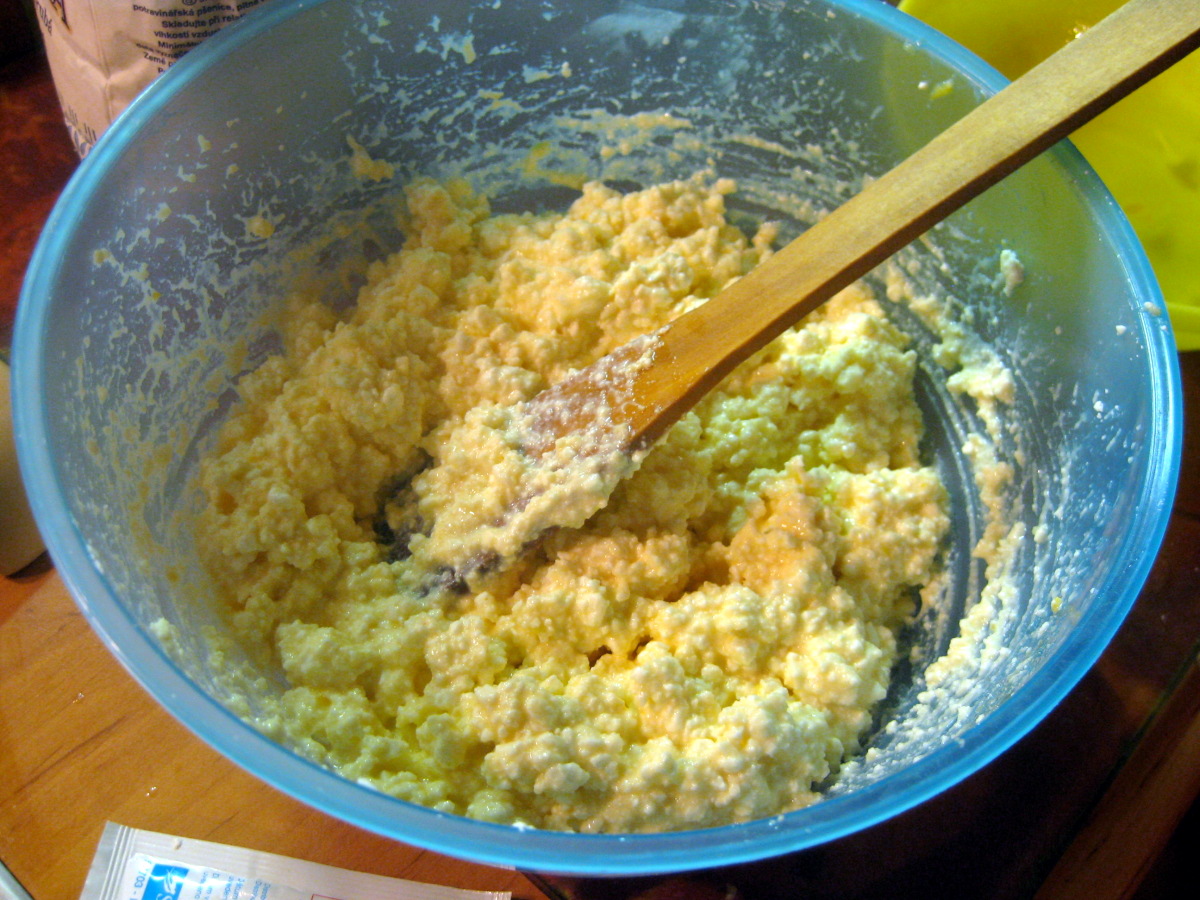
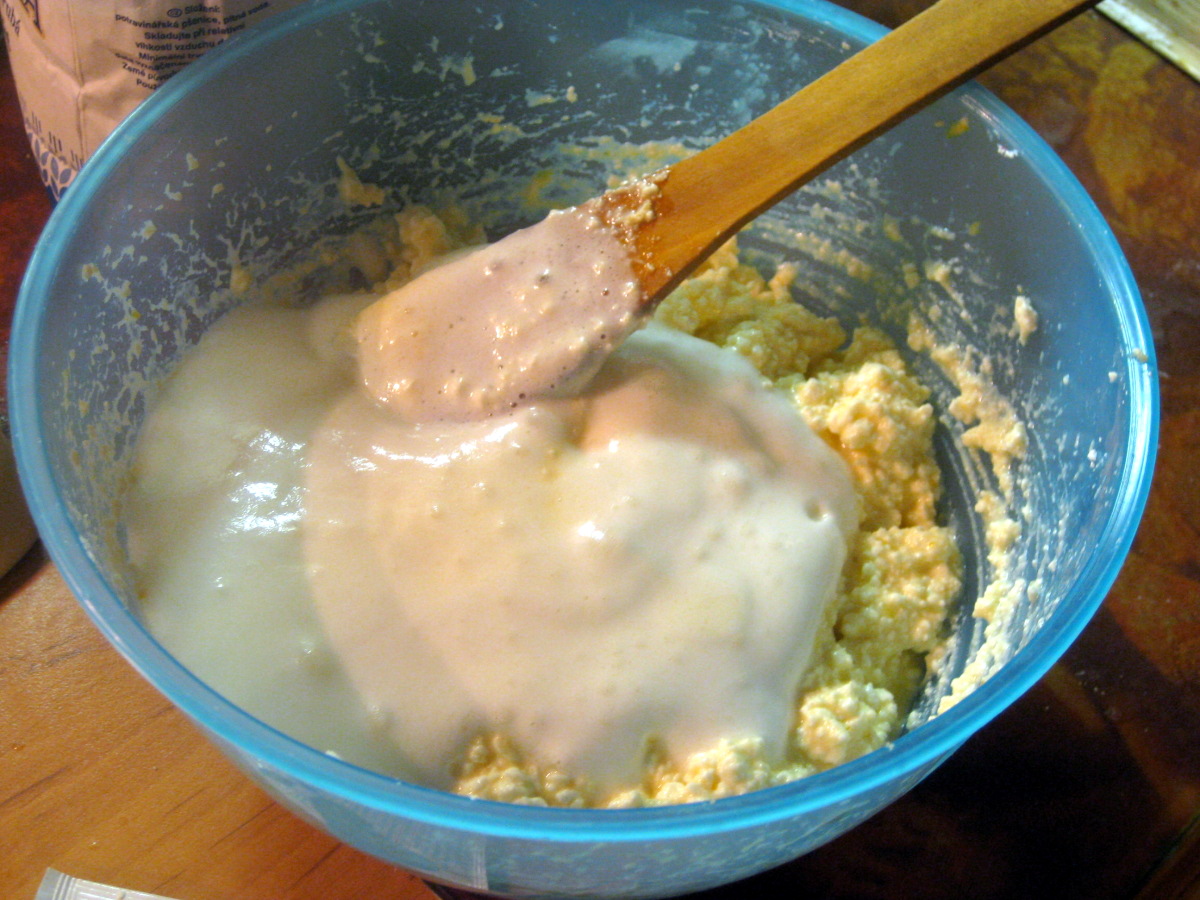
Mix well. Also add the whisked cream. We didn’t have cream, so Janka made snow (sneh) by beating egg whites.
Top and bake
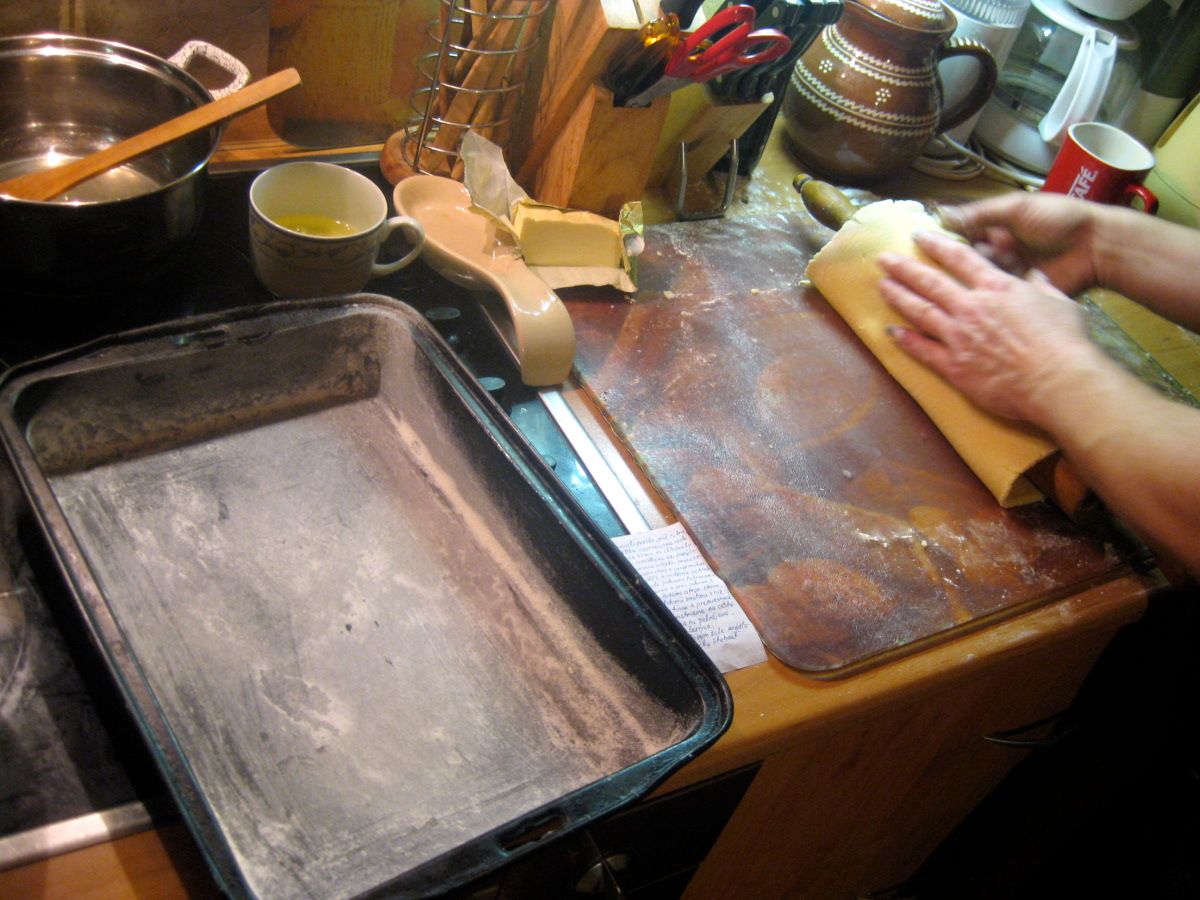
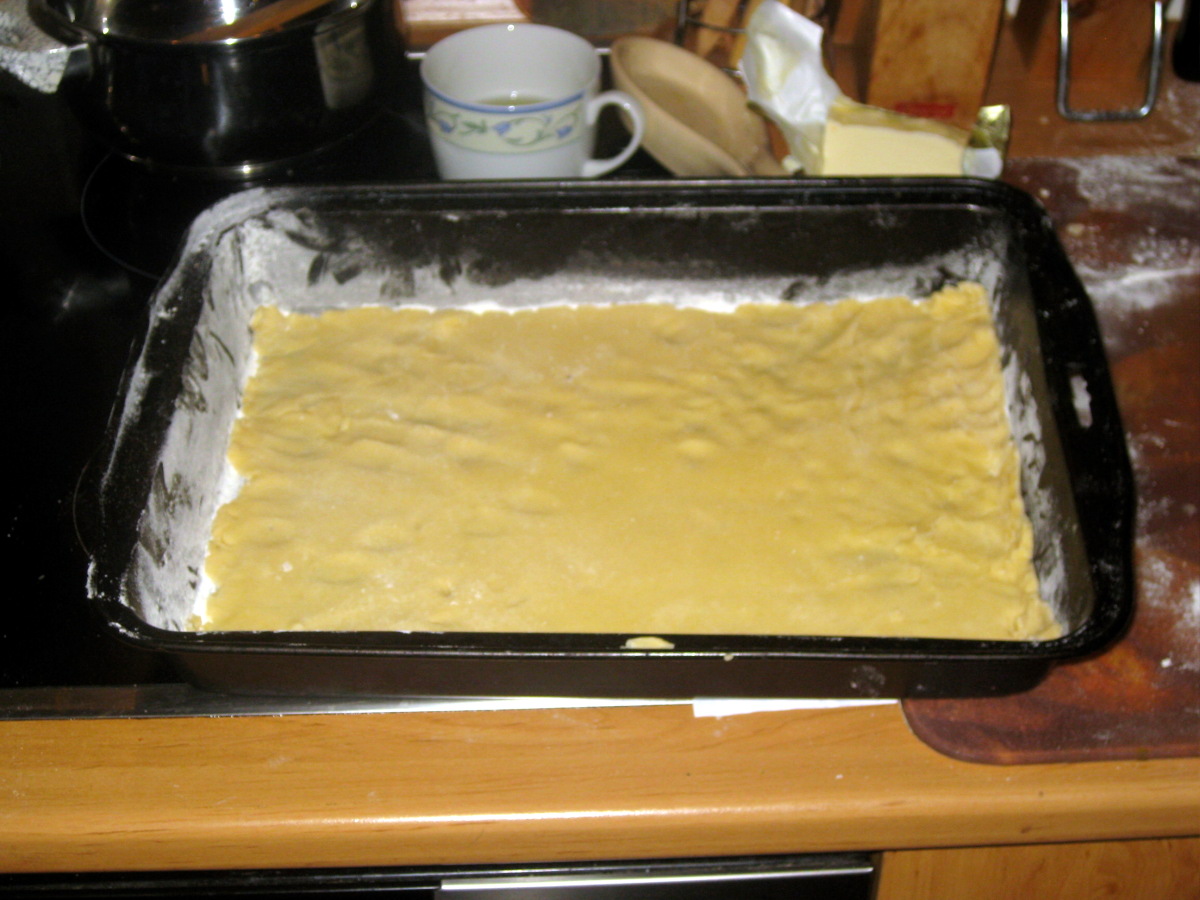
Carefully roll out the dough to match the size of your baking pan. Then, with the help of the rolling pin, transfer the dough to the pan.
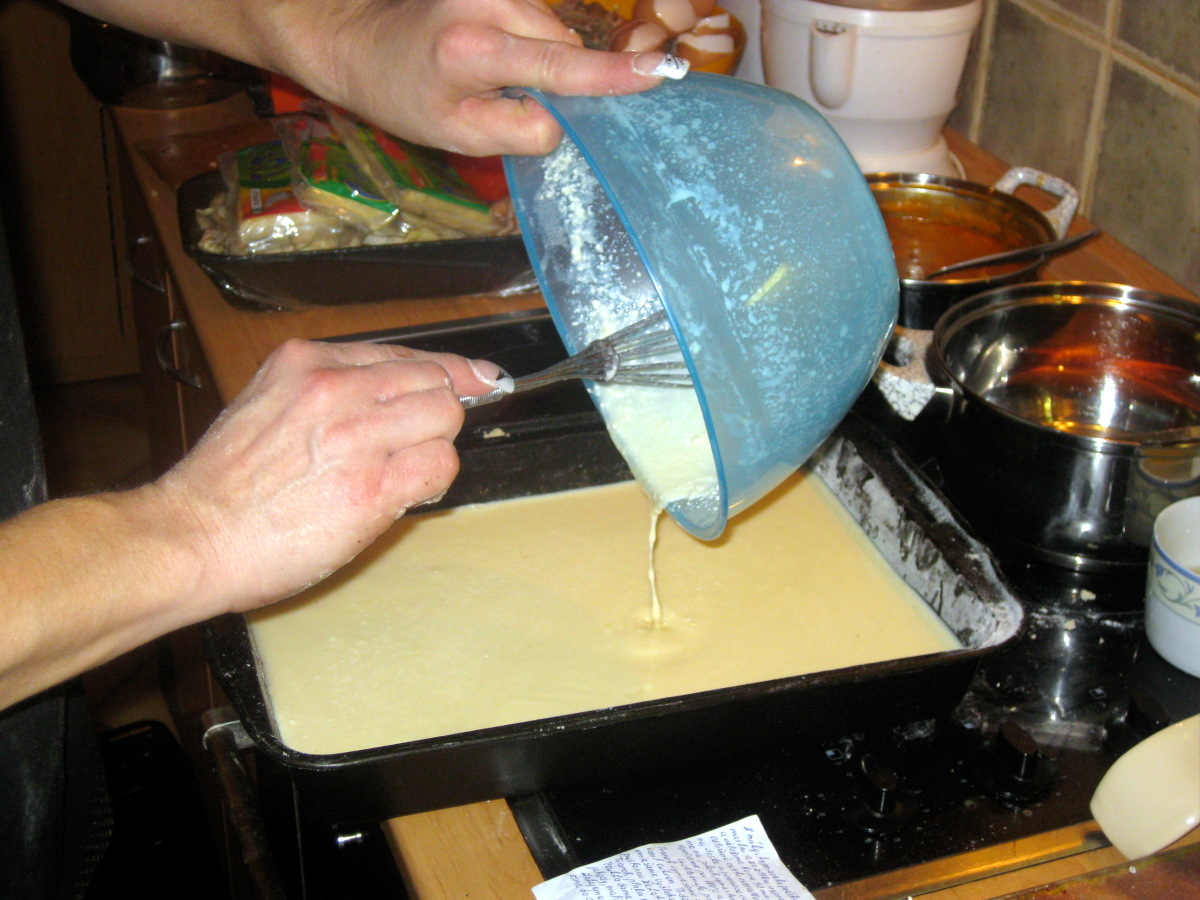
The original recipe calls for the dough to be baked by itself. However, since we used eggs, Janka topped the dough with the filling and baked it together. Bake at 375F for about 30 minutes.
Add fruit and jelly

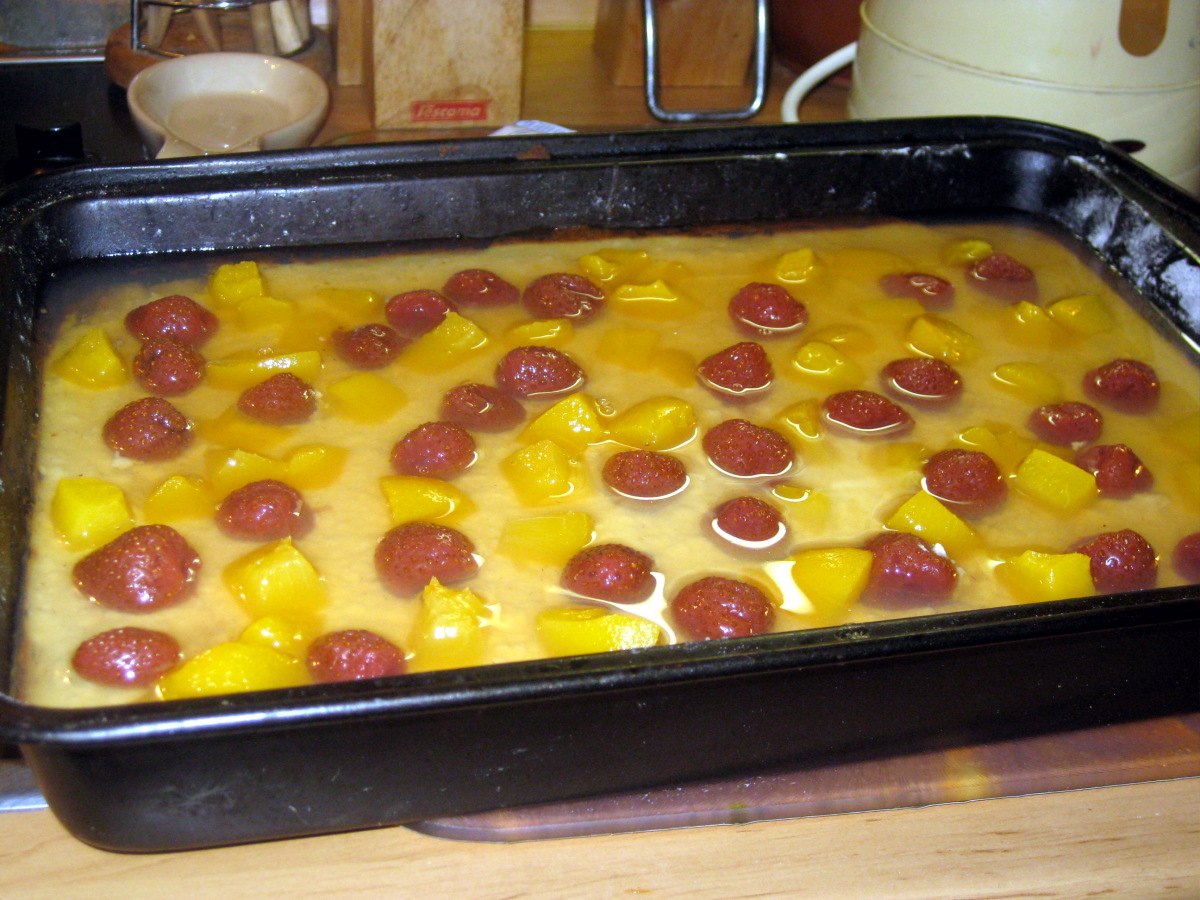
If you baked the dough first, you would now smear on a layer of raspberry jam (malinový lekvár) and then pour on the farmer’s cheese filling (tvarohová plnka). Top with fresh fruit, or if you don’t have any, with canned fruit. Strawberries and blackberries are very popular, but strawberries and apricots work great as well. Then prepare more jelly by dissolving gelatin in boiling water. Our fruit came from a can so Janka cooked the gelatin in the fruit juice mixed with water. This will give the topping bit of color; omit this step if you desire clear tops. Then simply let sit in a fridge for a while to let the jelly set.
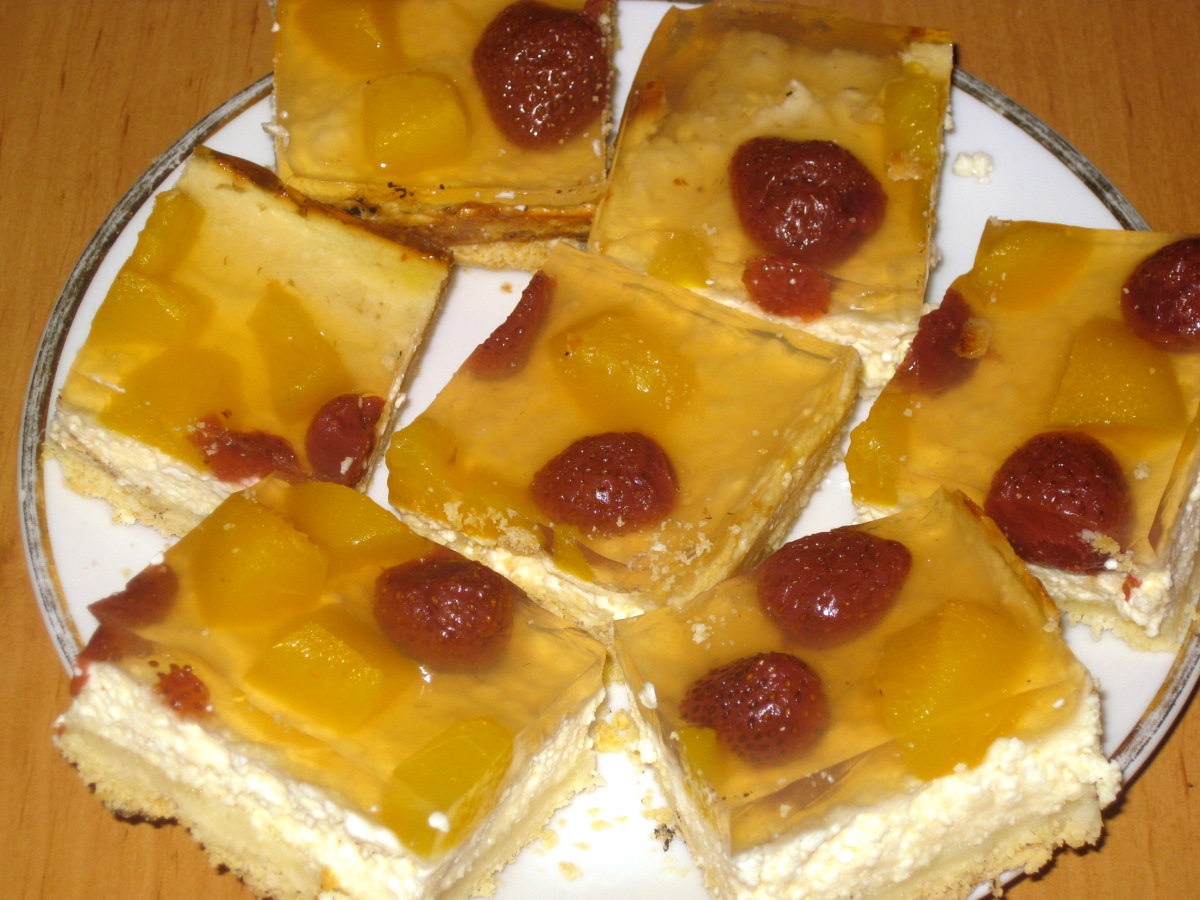
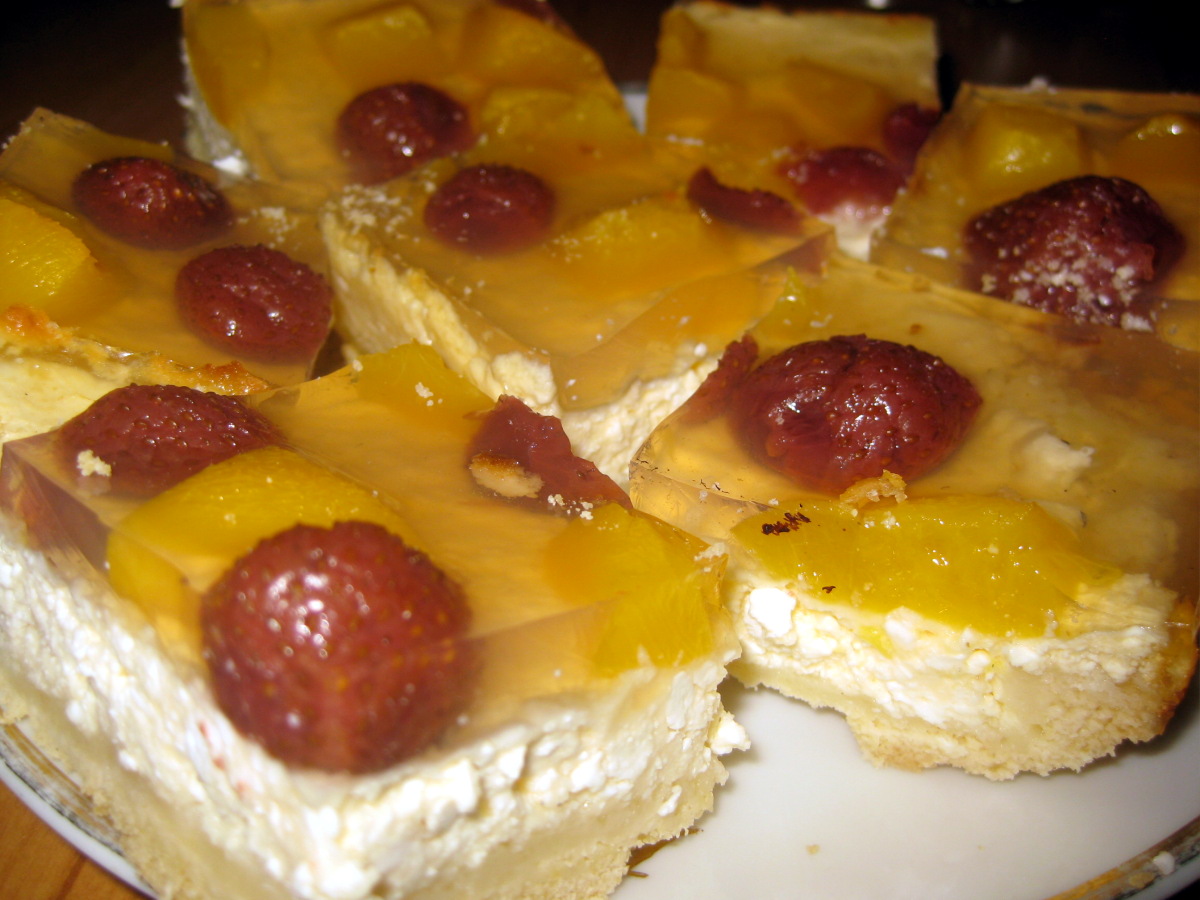
And that’s it. It’s hard to believe that Slovak people are so skinny with goodies like these!
Love your receipes..can you give us the amts in American equivalents? Several receipes call for a “g” amt.
Thank you.
Anne, I am planning to start working on a cookbook this summer, and in the process I will make sure to convert all the amounts. In the meantime, a great conversion tool is Google itself. Just fire up Google, and type “80g to lbs” into the search bar. When it comes to flour, there is approximately 125 grams per cup. So for this recipe you will need about cup and a half.
Lubos, How is your cook book coming? I would love to buy it! Actually, i would like to buy several copies! You have many, many, excellent recipes here on this site. AND they are uncommon here in the states. I hope that you would include all the recipes you have published here. Your photos are great! They clear up a lot. I hope you include information about the ingredients such as flour. Here in the states we have many kinds, but not sure they are the same as what is used in Slovakia. Also, I like that the comments cleared up things such as American corn grits is not the same as what you call Grits in Slovakia, which are what we call Farina/semolina. Your comments sections add a lot of information for the recipes. Anyway, hope the endeavor is going well!! I am very anxious to see it for sale!!
When I roll out the dough, do I need to flour the surface first? I made the dough and it turned out somewhat crumbly. I don’t know where I went wrong.
I refrigerated the dough overnight sealed in a bag.
Rina, this desert was made by my dad’s friend, so I just watched how she made it. But little crumbliness is ok. I remember the dough falling apart, and Janka had to redo it few times. And when it comes to dusting, this is always a safe bet. Whenever I roll out dough, I dust the surface and the rolling pin with flour first.
It’s also possible the crumbliness could have to do with flour. In Slovakia, flour comes in several grades according to how finely it is milled. I believe that here she used the “fine” kind. The all-purpose flour found in the States is coarser than this.
Hope this helps…
The crust actually turned out fine after baking.It tasted just like I had at the coffee bar. The flour I use was psenicna muka Hladka special OO Extra. Can you tell me what it means? Yes there is various types of flour here. I tried them all and couldn’t figure why so many types and what they are for. I wish I had stumble upon your site two years ago, it would have been very very educational and extremely helpful.Even now reading your blog enhances my knowledge and vocabulary of Slovakia.You are doing great service to people like me!
Glad to hear it turned out tasting good! Pšeničná múka means wheat flour and hladká means fine. Those two zeroes at the end indicate the flour is of highest quality (this is from Slovak Wikipedia). According to this great article about flour (but it’s in Slovak), grade 00 is ideal for baking cakes.
And don’t feel bad about not finding the site earlier. The site is only one year old, so it would have been quite hard to stumble upon it two years ago. 🙂
Ahoj Lubos,
dekuji za tyto vase recepty, mam otazku kde se da sehnat farmer’s cheese, da se necim jinym nahradit?
snazil jsem se delat babovku a ani me nenaboptnala v troube, co s tim????
dekuji za rady
Cau Lukas, ja ho kupujem normalne v “Giante”. Neviem ze kde si, ale Giant je chain of grocery stores tu na east coast (ja som pri Washington, D.C.) Maju ho tam vedla fety a sour cream. A nasiel som tu istu brand (Friendship), ale vo vacsom beleni, aj v Russia Gourmet co je taky rusky potravinovy obchod v McLean, VA.
Ale ak to nanajdes, tak mozes vyuzit normalny cottage cheese, dat ho do cheese cloth, a vytlacit von stavu. Lebo farmer’s cheese je vlastne suchy cottage cheese. Je to ale paplanina. Daktori ludia pouzivaju aj ricotta cheese, ale tom som este nikdy nespravil tak neviem ze ci chuti podobne.
Maj sa
I’ve heard of this but never had the pleasure to try them. Looks great!