Cabbage Halušky (Strapačky)
Prep Time: At least an hour for the kraut to get soft
Last weekend the EU embassies here in Washington, D.C. held an open house. Each embassy had some free goodies symbolizing that respective country. Germans had bratwurst, Belgians beer and chocolate, Poles kielbasa. The Slovak embassy cooked up strapačky and served them with cold Slovak Golden Pheasant (zlatý bažant) beer. If you attended this even, and want to try making this simple, yet very traditional dish at home, well you are in luck. Here is (my) recipe for strapačky.
About the name. My family has never used the word strapačky. We call all potato dumplings halušky. Even according to the Slovak Wikipedia, these two words are synonyms. My grandma would call this halušky s kapustou or kapustové halušky. But, strapačky seems to be a really common term – that’s what the embassy called this dish. It’s actually a pretty fitting term. It is derived from the word strapatý, which means shaggy, as when your hair is uncombed. Pretty good resemblance, I think.
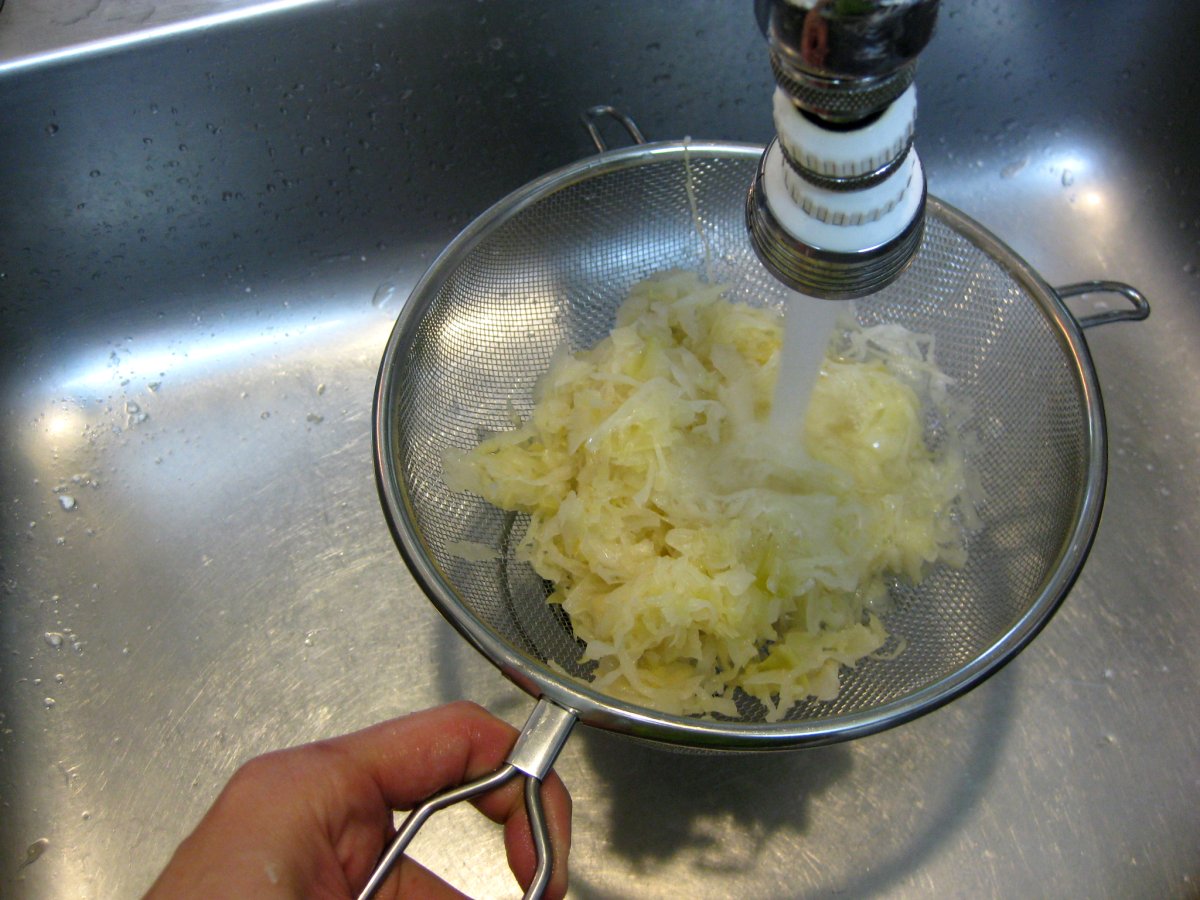
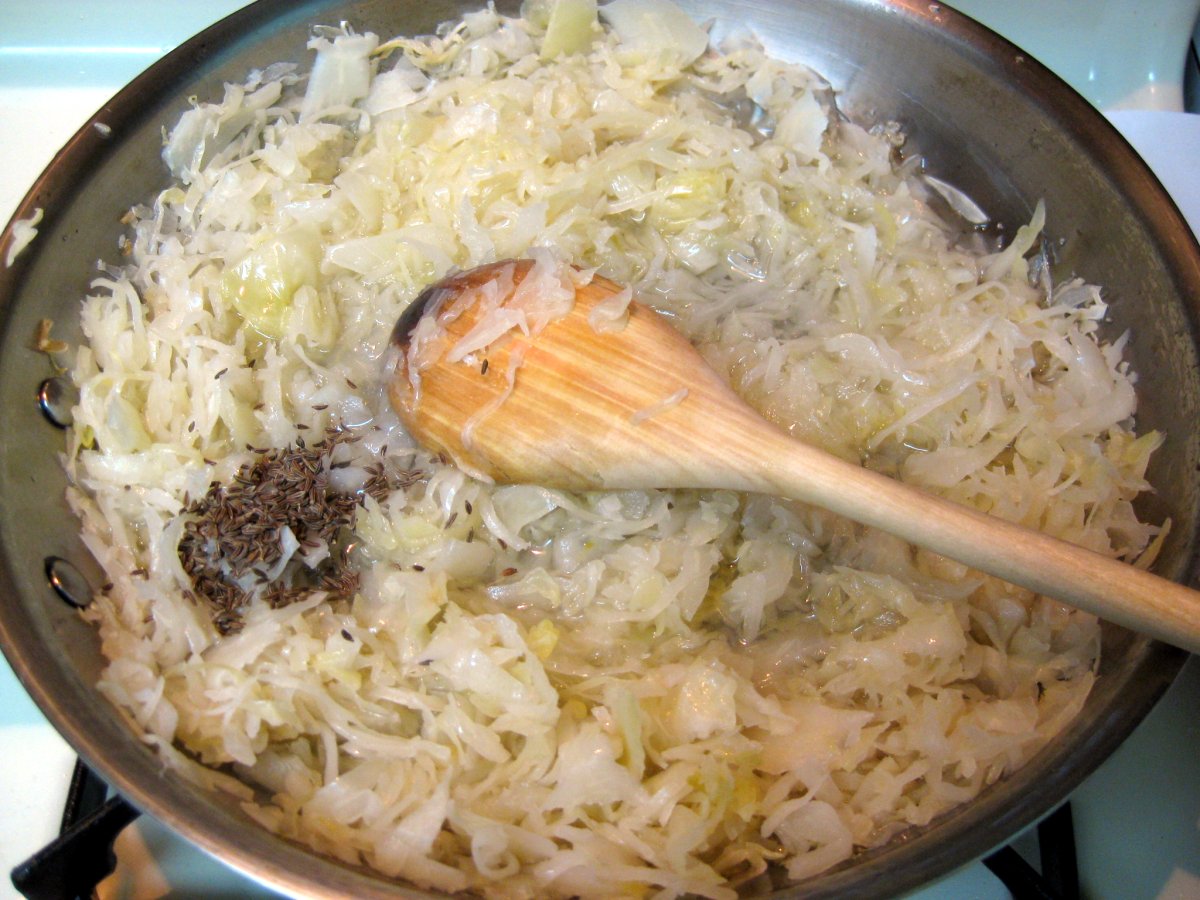
The first (and very important!) step is to rinse the sauerkraut (kyslá kapusta). Rinse it well, get your hand in there and toss it around. Otherwise, the result will be too sour. Then heat up oil, and fry the kraut for few minutes. Make sure you have a lid for the pan you are using. Also add some caraway seeds (rasca). Then give it little bit water. Not too much, just enough to have a small layer on all the way across the pan.

Reduce the heat, cover, and let steam for at least an hour. Periodically open the lid, stir the cabbage, and also add more water as needed. You want to steam the cabbage, not fry it. Usually, little bit of sugar is added to the cabbage. I like to do this at the end, I figured it’s better to sweeten it only once the taste is close to being done. I also don’t like the cabbage particularly sweet, so I gave it just a small handful. It will take at least an hour for the cabbage to get soft.
Don’t forget to make halušky while you wait for the cabbage!
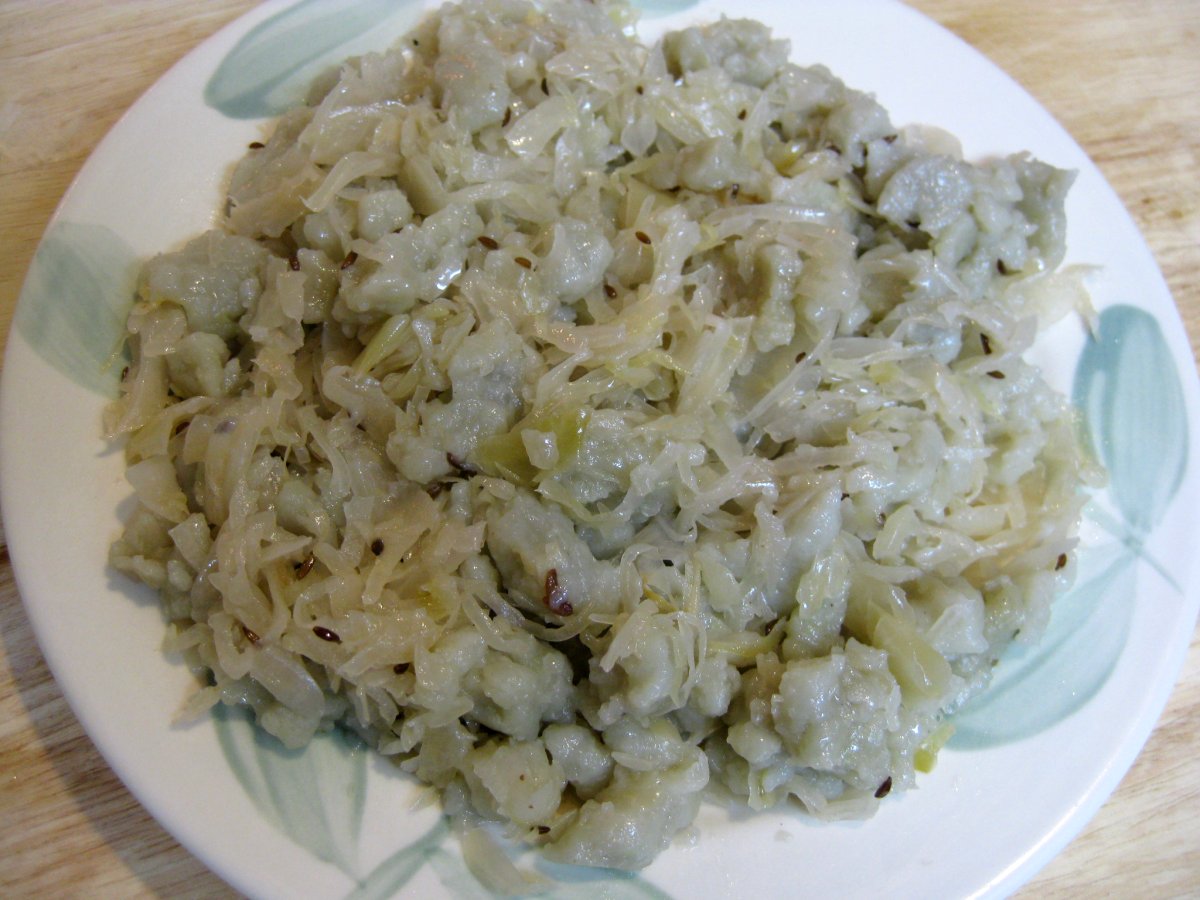
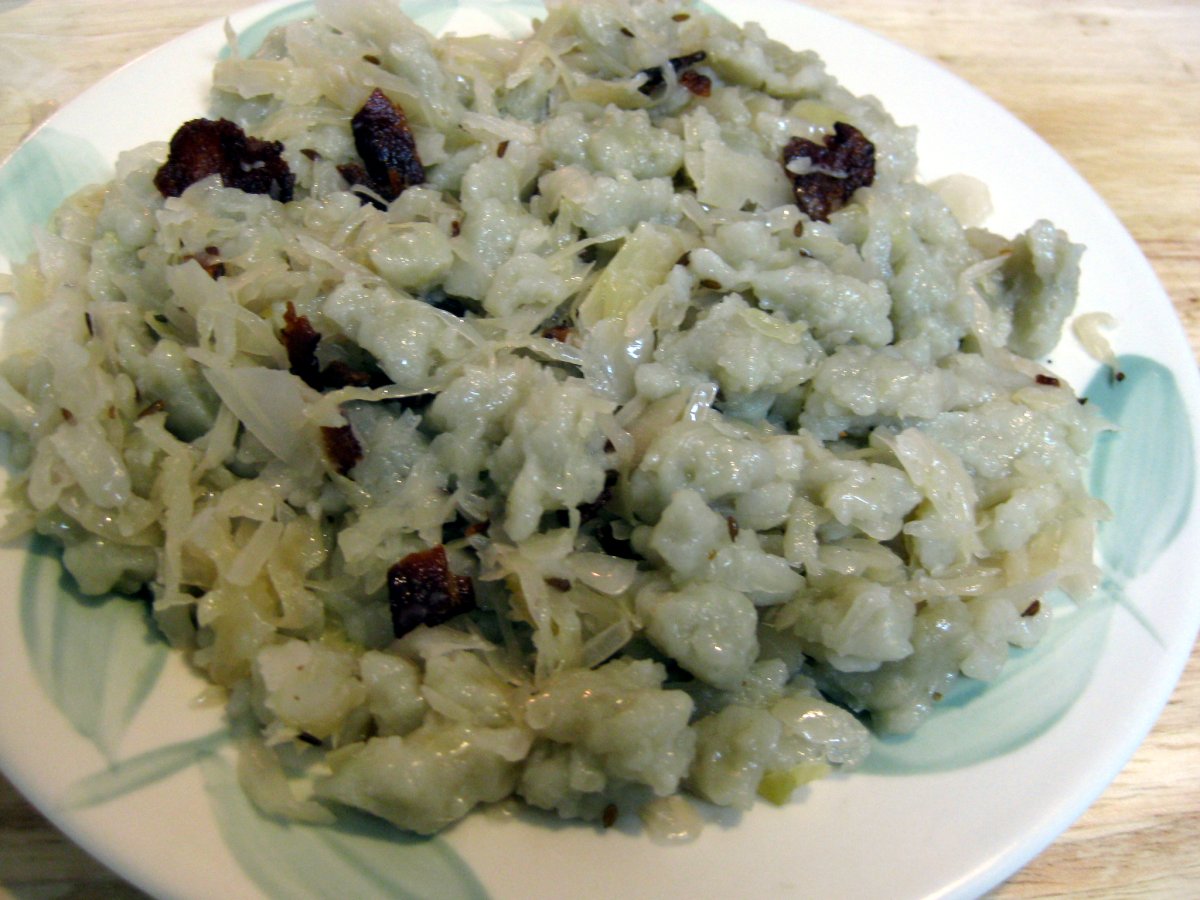
And that’s it. Just mix the kapusta in and serve. I also strongly believe that any dish is better with bacon, so I also like to add bits of fried bacon into my kapustové halušky.
Bryndzové Halušky
Since I cooked up halušky, I could not resist making the other variant, the one that is considered the national dish of Slovakia, bryndzové halušky. (I have previously posted this recipe, but the old photos are not of good quality and the high resolution images are missing. But if you are interested in seeing the original recipe and the many comments, click here)
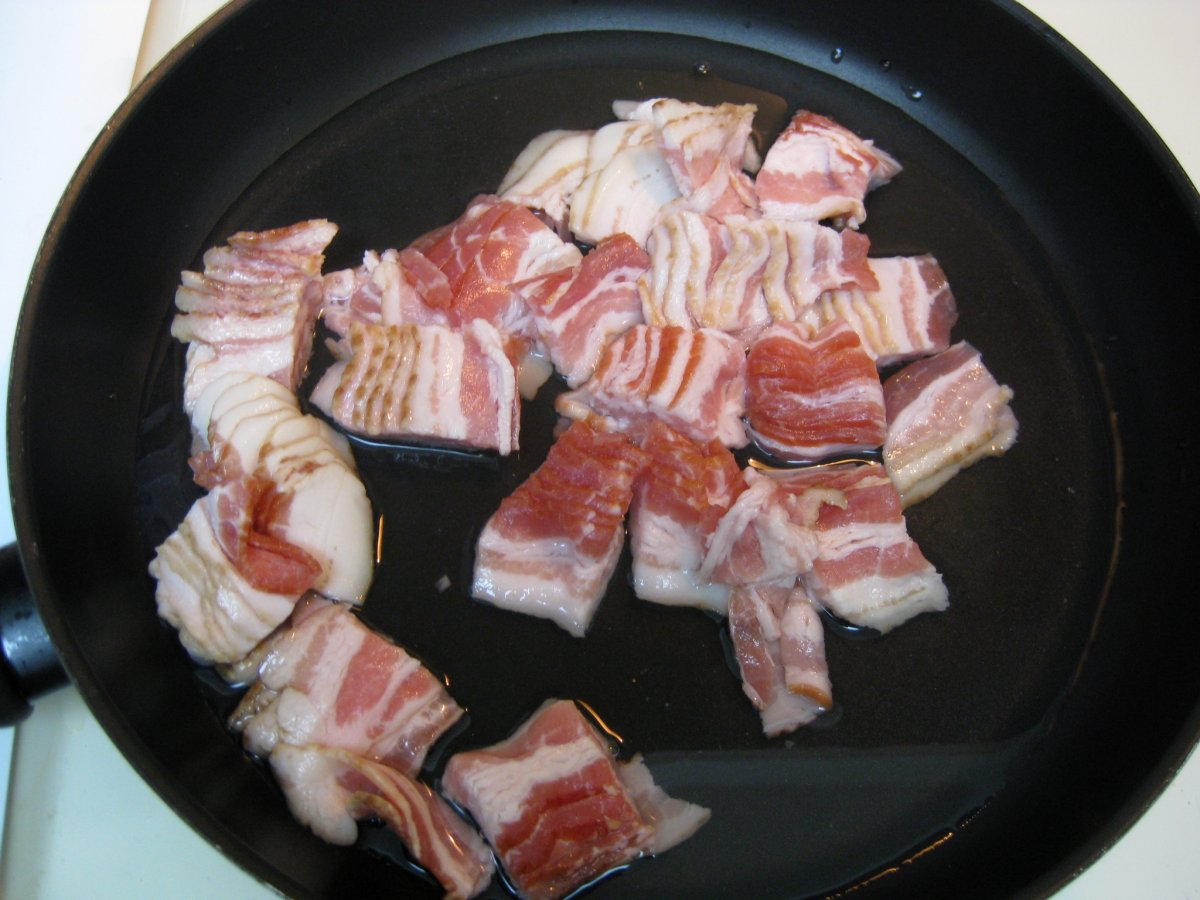
Integral part of this dish are bacon bits called škvarky. To make them right, you need REALLY thick piece of bacon, or even better, a single cut of pork belly. You can then follow Rado’s recipe. The reason it’s so hard to replicate the taste with the American bacon, is that Slovak škvarky start off as cubes, so they end up crunchy only on the outside. But, in keeping up with the traditions as much as possible, cut up the bacon (slanina) into squares about half inch wide. Put them in a frying pan containing just enough water (voda) to cover their bottoms. Bring the water to boil. Then, lower the heat to minimum, and let cook for at least an hour, stirring frequently. Make sure to keep stirring, so that you don’t fry the bacon. Instead, you want to slowly let the fat melt away.
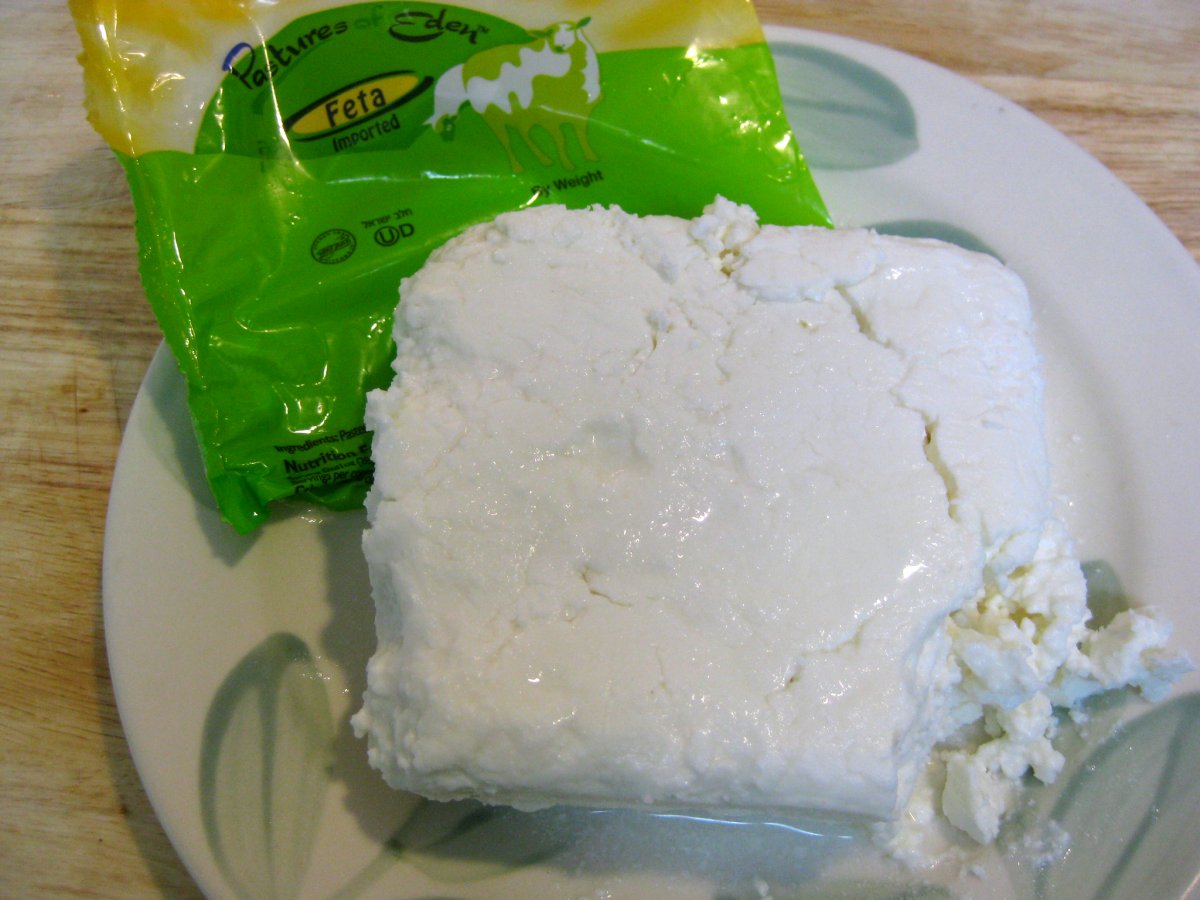
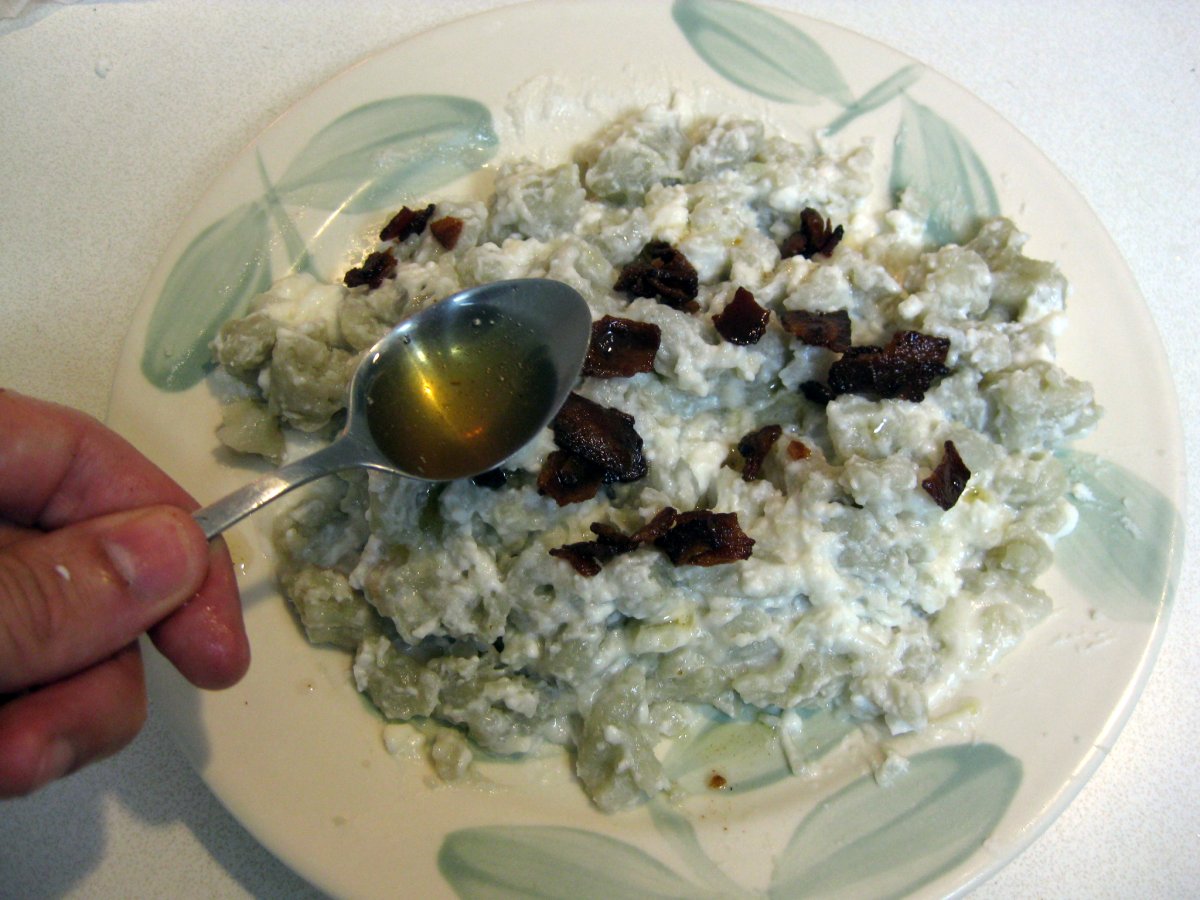
You will also need bryndza, the special Slovak sheep milk cheese. Where can I buy bryndza in the United States, you may ask. Well, I have good news! Some folks from the Washington, D.C. Slovak Meetup group tipped me off to the Israeli-style Feta sold in Trader Joes. This kind, by the Pasture of Eden, is darn close to bryndza! It’s not cheap (7 bucks for this block), but definitely worth the price. Mix it in (make sure the dumplings are still warm so the cheese softens) and top with the bacon bits. Finally, add few spoonfuls of the bacon grease. This is important; don’t skip this last step. You can always go for a jog later to burn off all that fat.
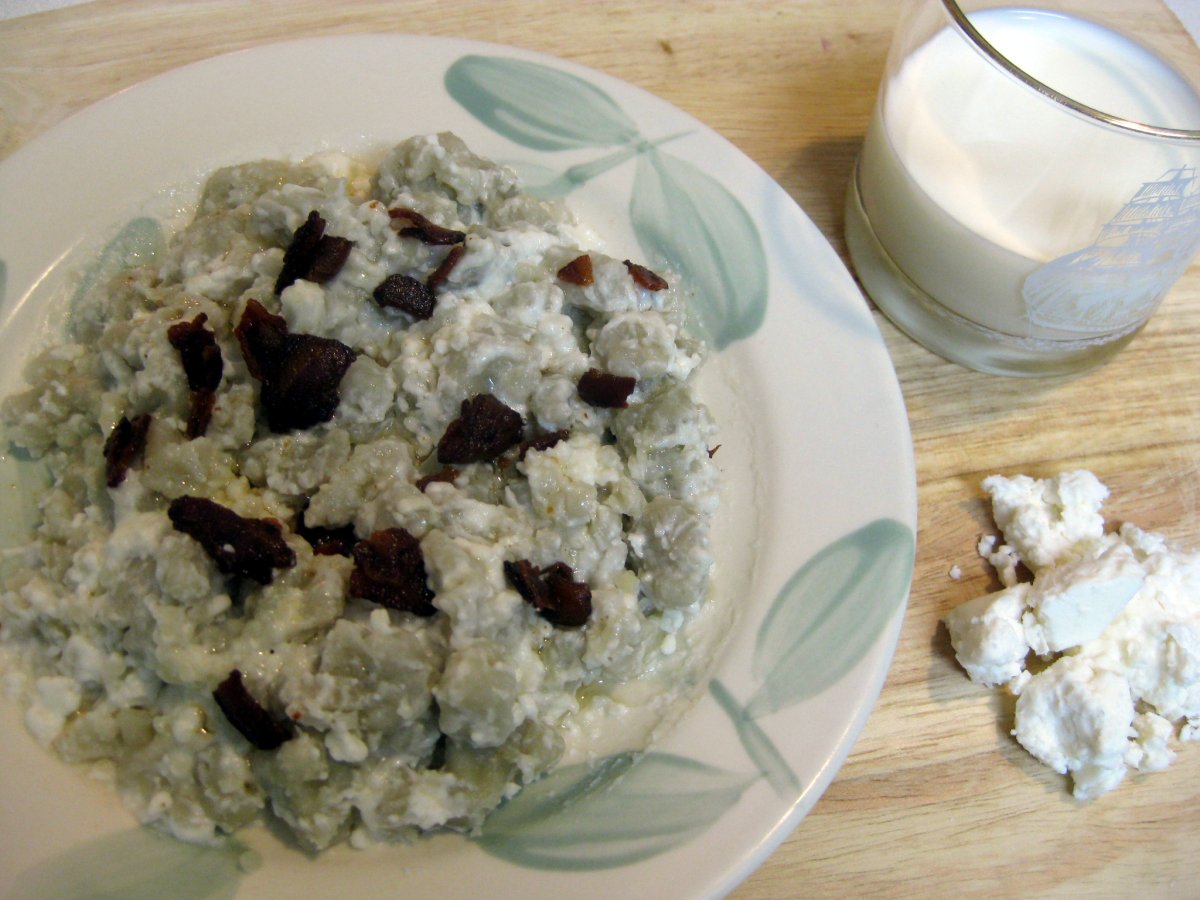
To really experience the traditional Slovak taste, you must have this dish with a glass of žinčica, the whey that drips off during the making of bryndza. Žinčica is similar in taste to kefir, but has a stronger flavor. Very often, Slovak restaurants will instead offer you zákysanka, which I believe is identical to kefir made of regular cow milk.
YUM, YUM – they look GREAT!!!!! One of my favorites. The best Bryndza is the “May Bryndza”. You can buy in in some specialty stores in Toronto – comes in a little wooden case. They sell a really good “sheep milk” feta that’s as good as any real bryndza I have tasted at the Kitchener Farmer’s Market in Kitchener, Ontario – the booth is located on the ground level near the steps. Also for those of you in the area that like “roast pig” there is a place upstairs in the market that sells it by the pound.
Thanks for the info on sourcing Bryndza. I’ve been to the market in Kitchener serval times. I did buy some at Starsky’s in Oakville. Comes in a store packed plastic tub. Not sure if this is a good bryndza. It’s great experimenting with different cheeses when making Halusky. I grew up in Northern Manitoba. There was no bryndza. My Mom used Cheese Whiz. I still use it today. In the US, they sell Pub Cheese which works. My mom also used the dry cottage cheese. The feta cheese is worth a try.
We call it strapacky too.
It looks like you were busy these past few days Lubos!You can’t get over the bryndza discovery yet, I can tell.
Also you can top your halusky with fine chopped dill(kopor), taste very good.
I sampled the sauerkraut and dumplings at the embassy – they ran out of the beer so they substituted wine which also ran out. However, the food kept coming!
On the terrace, I had a discussion with a couple as to what the ingredients were! We all agreed spaetzle (German dumpling)was used, however, they being Jewish were surprised it contained small bits of Black Forrest Ham (which I noted).
It was too late at that point for our plates were clean and ready for the bin.
We all agreed that it was a wonderful treat!
In Chicago you can buy bryndza at Gilmart on Archer Avenue — I hear they just opened a new location in Willowbrook, I’ll have to try that soon. I have also seen bryndza pirogi at Bobak’s on Archer Avenue in the freezer section — but only one time. My Slovak cousins LOVE that philly/scallion/corned beef cheese ball that we serve at holidays on cocktail rye bread — probably similar to the smerekase you mentioned.
Hi Stephanie, these type of hlusky are known in certain part of Slovakia, and they are not so readily available in specialty restaurants.Don’t understand why since all these staples are what locally people can grow themselves, like a sourkrout… I make them at the same time as bryndza halusky and my kids would not have it any other way… they’re delicious !!:))
I also call this Halusky. My grandma and my aunts showed me how to make it like my great grandma did when they were growing up. Mine is a little different though. I fry the bacon..saving the grease. I chop the cabbage, add a little grease and water, letting the cabbage simmer and steam til soft. Then I make potato dumplings. When they and the cabbage are done, I add the dumplings and the crumbled bacon to the cabbage…add a little salt to taste. It’s the only Slovak dish from my grandma that I can get down….but with this site, maybe I’ll be able to master some more!
Hmmmmmm…halusky!!!! Haven`t had in over 8 years…Thank`s for sharing the Trader Joe`s “bryndza”…In NC I don`t think I could find the real thing…so feta is gonna make do…
Charlotte has a very nice deli of European foods. It is mostly Russian, but carries a lot typical slavic foods. I don’t know where in NC you are, but there’s an idea. Deli is off Independance Blvd, not far from 485.
the european deli is called zygna, and while they don’t have the smoked cheese version i had while in tatra mountains they do have a fresh farmers cheese that i purchased which i think is very similar. i’m going home to make some haloushki tonight. just got back from poland and slovakia and fell in love with the dish (ordered it three times in two days at the place we stayed next to the belianska caves). they also sell a variety of pork and kelbasa… and at least the woman I spoke to behind the counter was from poland (krakow area). My mothers side of the family moved from jablanov and lucka before the war and while i’m not that huge on polish food or much slovak I just can’t seem to get enough of this dish.
Cheers!
thanks Kathleen…Next time I have a way through or to Charlotte I`ll stop by (I`m in Winston Salem)
My grandmother is 1/2 slovak 1/2 hungarian and her twist on this recipe is that there aren’t any potatoes in the recipe. Simply, fried cabbage in bacon drippings with bacon added after it’s browned and boiled broad egg noodles added. add salt and pepper…yum
I am 1/2 slovak and 1/2 romanian gypsy and my family recipe has a few changes. First we fry the bacon and cook the cabbage in the bacon fat. We fry the cabbage until it has carmalized (but not burned). We add diced ham chunks, and make homemade potato noodles. Everything is combined and then mixed with cottage cheese before being served. by far my favorite food!
I had a Slovak grandmother, mom & auntie.. So haluski was a commonly made dish! Grandma would brown real butter, over low heat in a saucepan until it foamed, then gradually became granular as the milk solids cooked until deep golden! We then tossed the haluski into the butter, and added a good creamy cottage cheese with this at the table … Nothing short of spectacular !! The ultimate in comfort food! Use fried cabbage too…. But remember this dish is not for anyone watching calories!!!!
AHHHH brown butter is the best. I am half Slovak allnd my mother would make this and I made it for my children as well. We also browned the butter for Pierogies. You are so right not good for the weight but so good.
WOW! I get it now. My Grandfather would add cottage cheese to halushky when he made it. I never got it. Really taking dumplings made with lard, and fried in bacon fat and making it MORE richs seemed bizzare. Now I get it, he was making due for bryndza. Cool.
Hello – I really enjoyed reading this!
For my wife (whose grandmother emigrated from a little town called Zakarovce), halusky are THE quintessential Slovak food, along with Easter Cheese, Kolache and Holubky (which she calls “pigs in a blanket”).
If anyone is interested in seeing how my wife’s family made Halusky, they can follow this link for some historical information, the recipe and step-by-step pictures.
http://foodsoftheworld.activeboards.net/babika-haluky-s-kapusta-alebo-tvarohom_topic1253.html
It is similar to the way described above, but there are a few differences.
Thank you –
Ron
My step-mother who was born in Slovakia made halusky but with noodles. Does anyone have that recipe? It was made with regular cabbage not sourkraut. Thank you.
Ann, it’s not really halusky but I know what you talk about and lubos described it in a “kapustove fliacky” recipe
I remember my mom making it, it was cheap to feed our hungry bellies and it was kind of tasteful, but what isn’t when you are hungry? that said, it was a good meal, and if you were better off , you can throw in some sausage or something
My mom used to make haluski alot when we were kids since we had meatless meals every Friday back then. She made potato dumplings with cottage cheese for her & I and some with fried cabbage for my dad & brother. Haven’t made the potato dumplings in ages. So good! Will have to do that again soon!
So, I made a batch of strapačky and a batch of Bryndzové Halušky. After tasting both, I decided to mix the two together. It was delicious. Is this done in Slovakia or did I commit a culinary faux pas?
great site made me hungry i am Slovak my parents were both Slovak mother from Poprade maiden name Bellas.Father from Bratislava.again love your site my grandmother on my fathers side was a Michelic her side of family lived in Pennsylvania.
I am SO going to make this!!! It sounds exactly like a dish my great grandmother taught my mom to make when I was 6 years old, We ate it every now and then I loved it, and my mom & dad loved it as well.
My great grandmother called her dish “Klinickie” she spoke very little, broken English she was from Poland. so the translation could be differnt or lost.
I have searched the ingredients and this sounds exactly like it and since my mom has beginning stages of Alzheimer’s I cannot be taught the recipe but I will try this and take some to her maybe this dish will bring a memory back for her too..
Thank you for posting!
My great Grandmother was from Eastern Europe. She made Poatato dumplings. She grated raw potatoes mixed with flour, salt etc. and pushed them off plate into boiling water. When cooked, Poured Bacon and fat over them. Servrd them with Sauerkraut and Pork. Fabulous. mom made them too! We all loved them, but cannot find recipe. Grandmom called them Clays or Kleesla (sp) HELP me with this please!!
This is the way my Polish Grandmother made them as well! Although she used sweet and sour cabbage, and then cottage cheese
Hello there! I know this is somewhat off topic but I was wondering which blog platform are you using for this site? I’m getting sick and tired of WordPress because I’ve had issues with hackers and I’m looking at alternatives for another platform. I would be awesome if you could point me in the direction of a good platform.
We just spent 3 days in Prague, and I fell in love with strapacky at a Christmas market. Only they just called it halusky. They added bits of ham. Fabulous!
My Gramma made sweet and sour cabbage over potato dumplings. Do you have a recipe for the cabbage sauce? She used apple cider vinegar with sugar and caraway seed. Served with the cabbage sauce over the dumplings and fried pork chops. We would use the left over dumplings the next day sliced and cooked with eggs scrambled together with the left over cabbage sauce over the top for breakfast. Oh so very good. Gramma and Grampa were both immigrants from Czech. and Bohemia. Any info would truly be appreciated. Thank you.
I love your site! I come by often to check on recipes I try to remember my Baba making. I know I fudge some, but they get eaten. Lol
I recently made the sauerkraut and haluski also with onions. I browned in butter and put cottage cheese in last. We poured the store bought noodles into this mixture until hot. It’s really nothing like your recipient, but we pretty much devoured it. Next time I will go buy your recipient!
Thanks for being there for us younger Slovakians, who wing it!!!