Bread (Chlieb)
Ingredients: 2lb flour, pack of yeast, milk, sugar, caraway
Prep Time: 2 hours
Good bread is hard to find in America. At least, if you don’t want to spend upward of 5 dollars for a tiny artisan loaf. So I had my grandmother show me how to bake bread. In this recipe, I show you how to make bread at home, without the use of any fancy gizmos. All you need is flour and yeast, and the will to get your hands a little dirty.


Place 2lbs of flour (múka) into a large container. Prepare the yeast mixture (kvások) by dissolving yeast in a bit of warm milk (mlieko) or water (voda, we used water). Also add a teaspoon of sugar (cukor) and caraway seeds (rasca). Grandma also used a small amount of mashed potatoes left over from making breaded steak. Supposedly mashed potatoes help the bread not get crumbly.
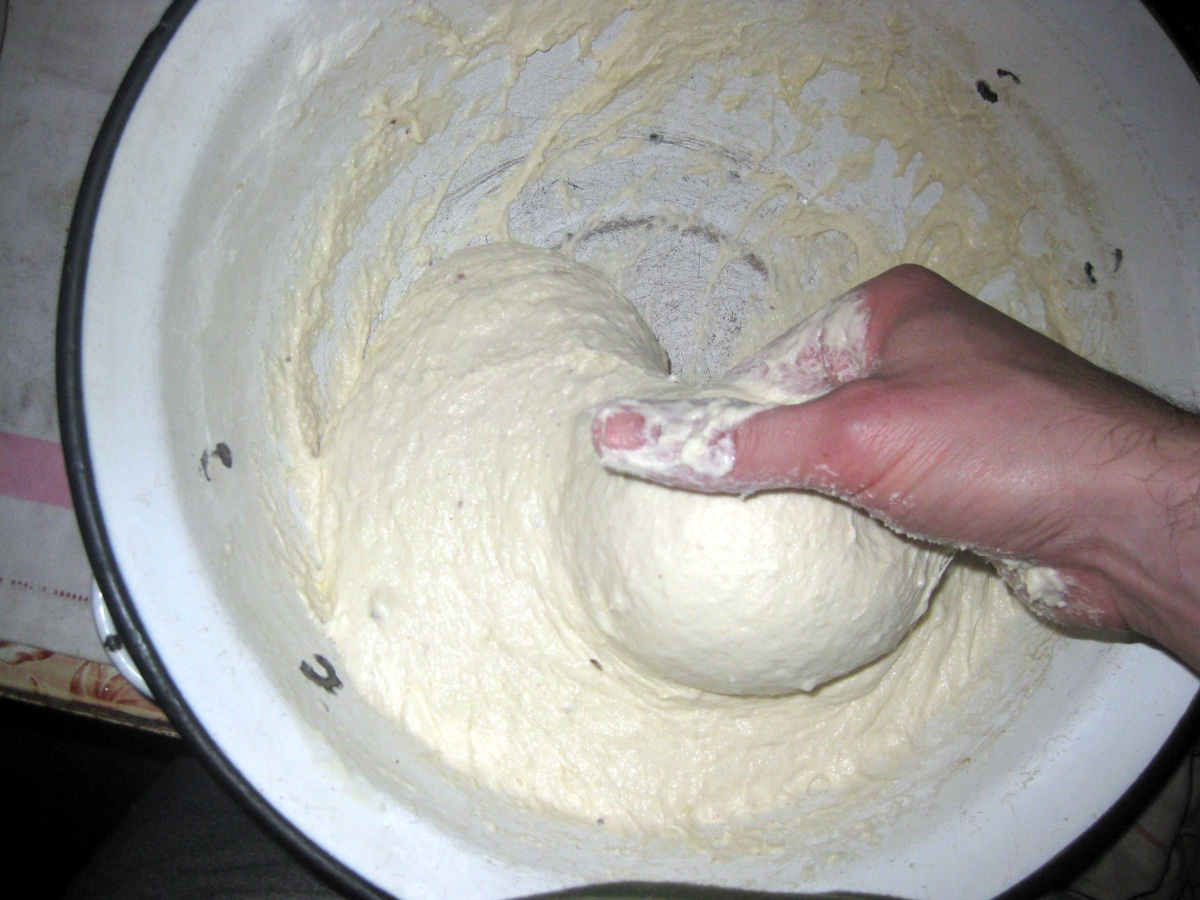
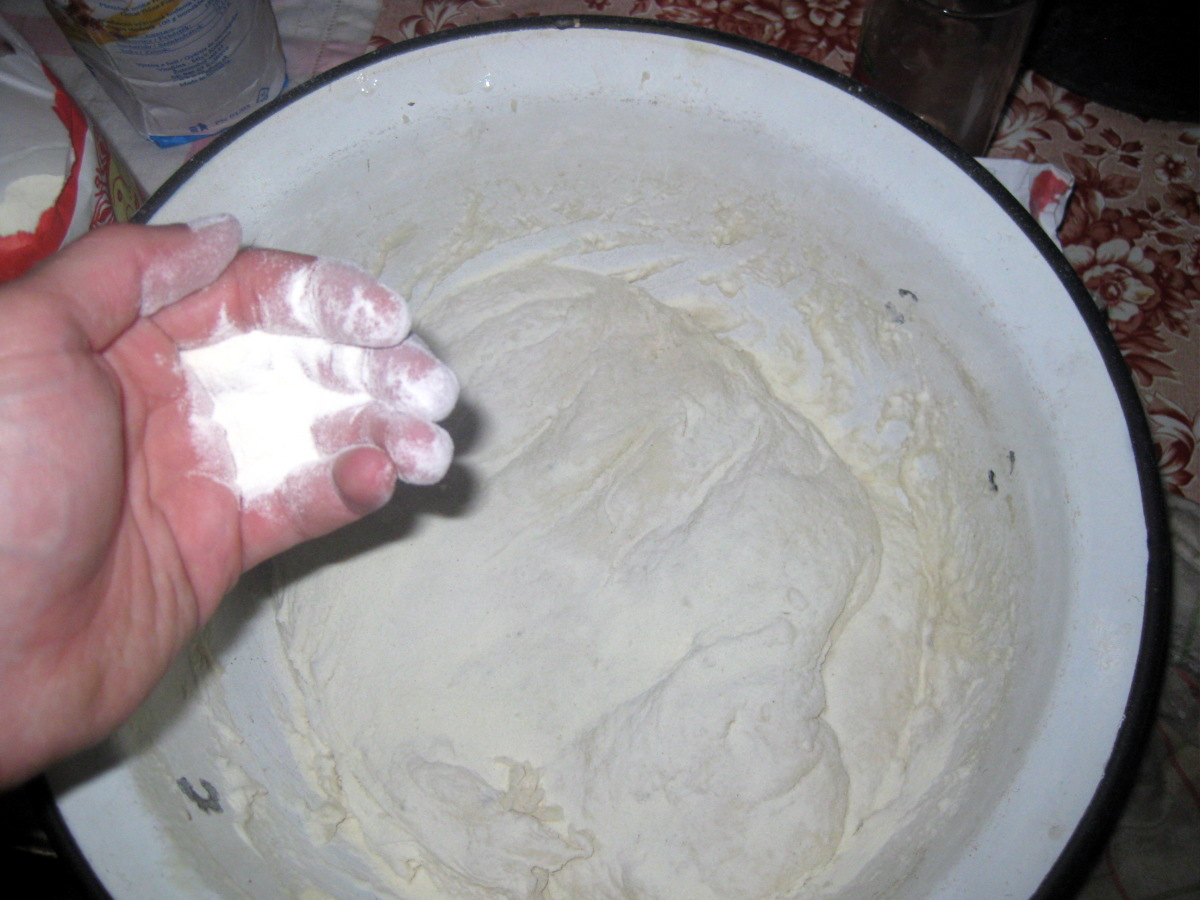
Knead the ingredients using your hands until you get a smooth dough that easily separates from the pot. Dust the top with flour.
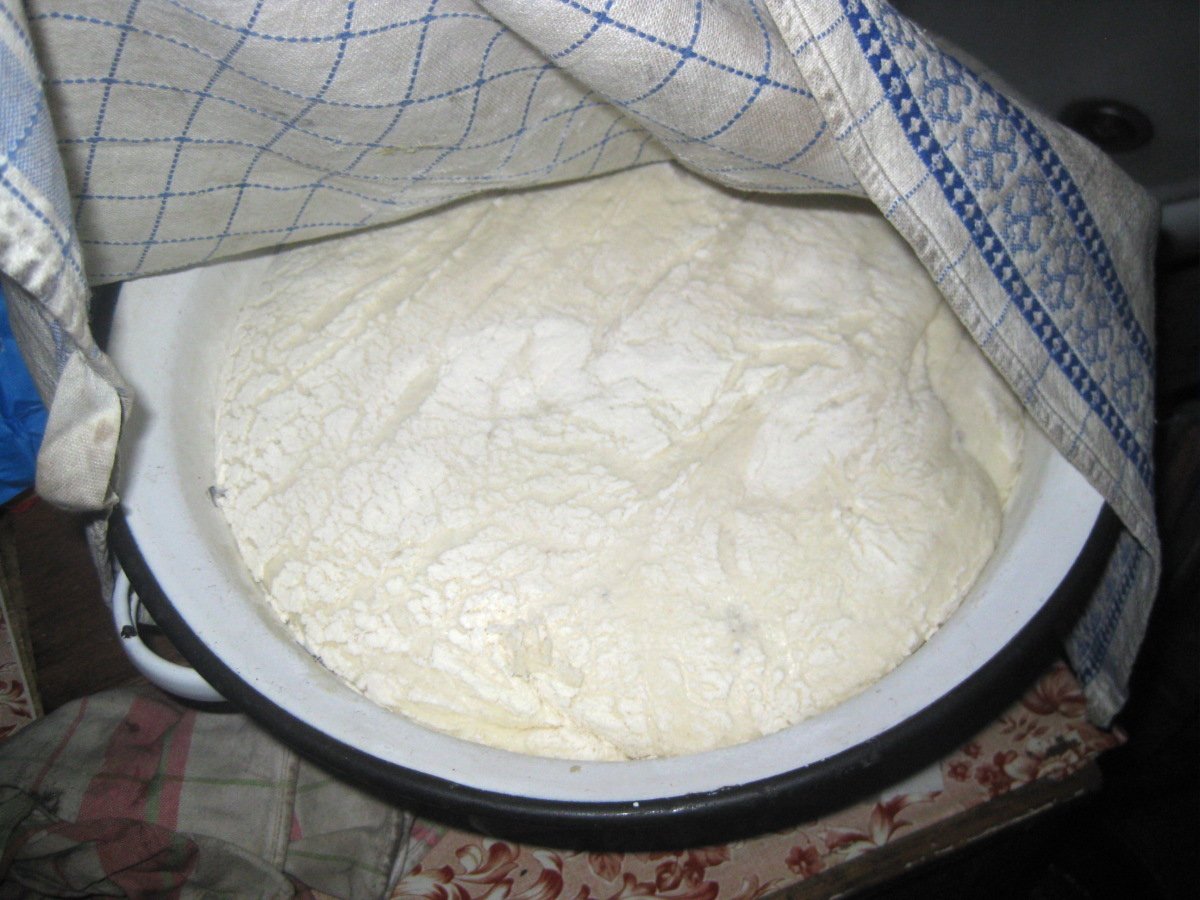
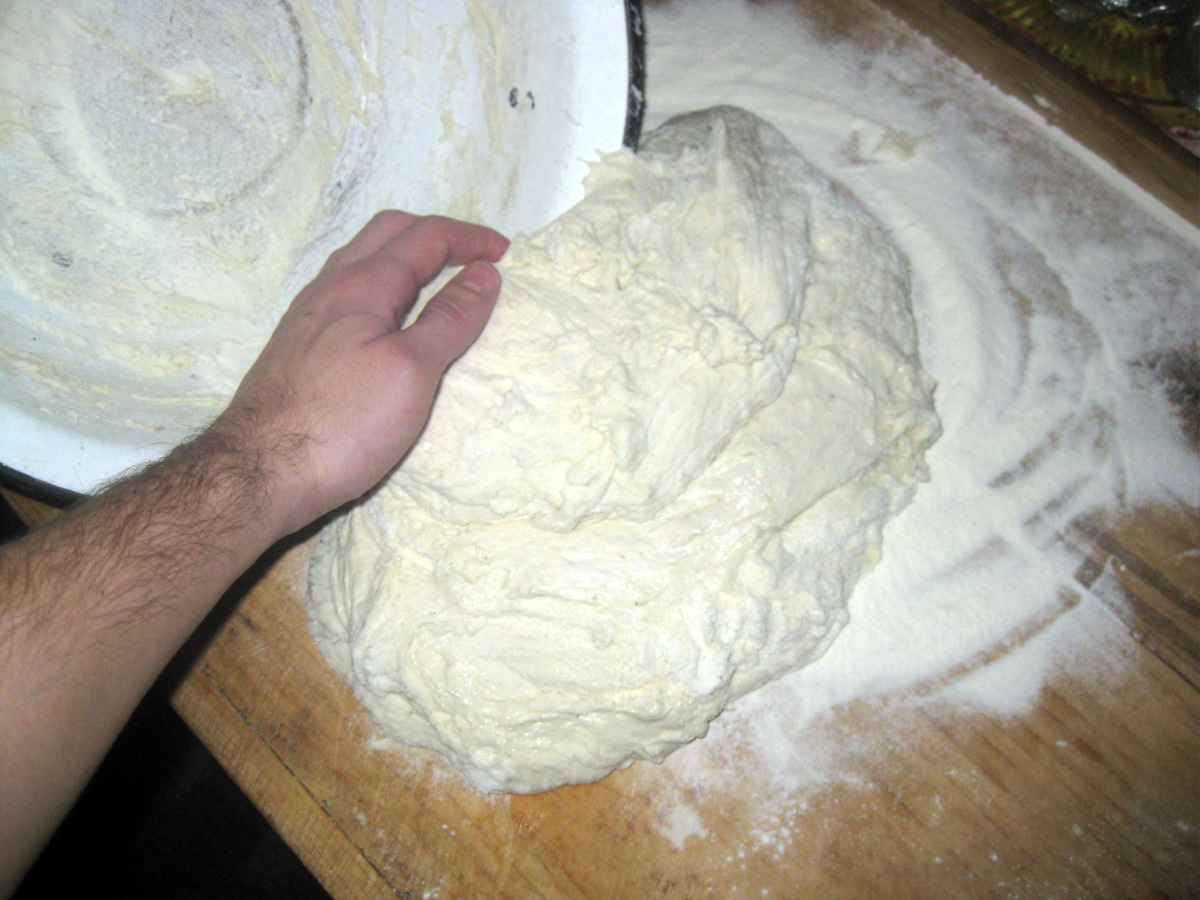
Cover, and let rise for about an hour. Then scoop out onto a wooden board generously covered with flour.
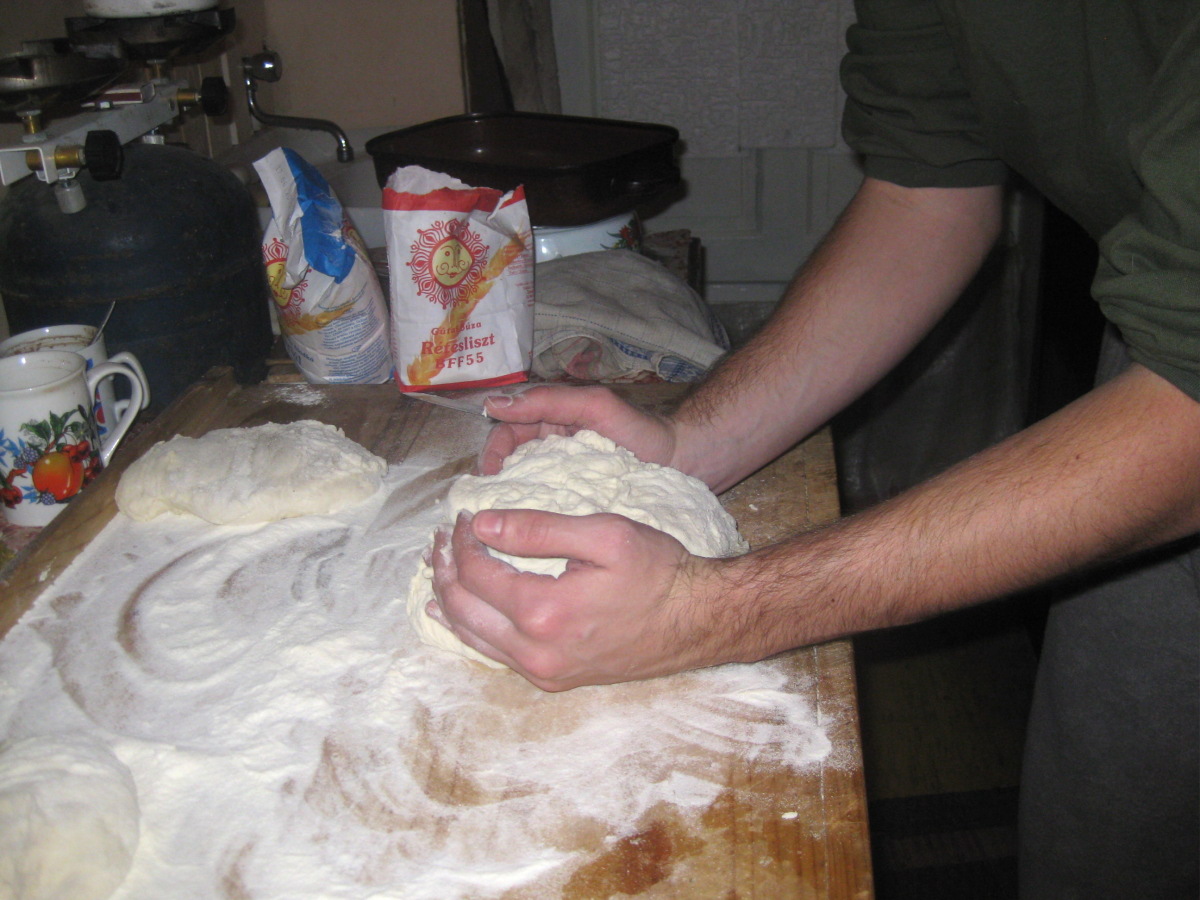
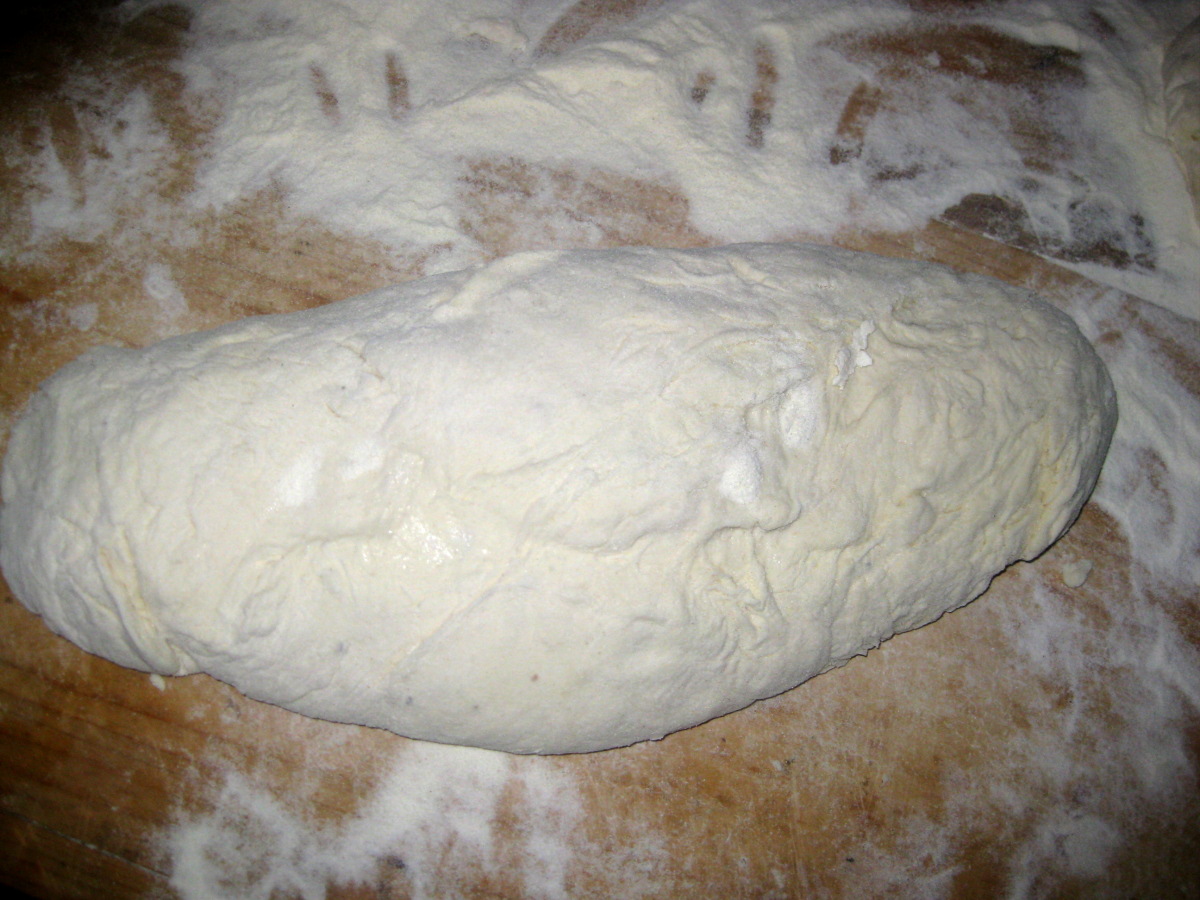
Roll the dough over and over for about 15 minutes until various deformities get smoothed out. Shape into a loaf.
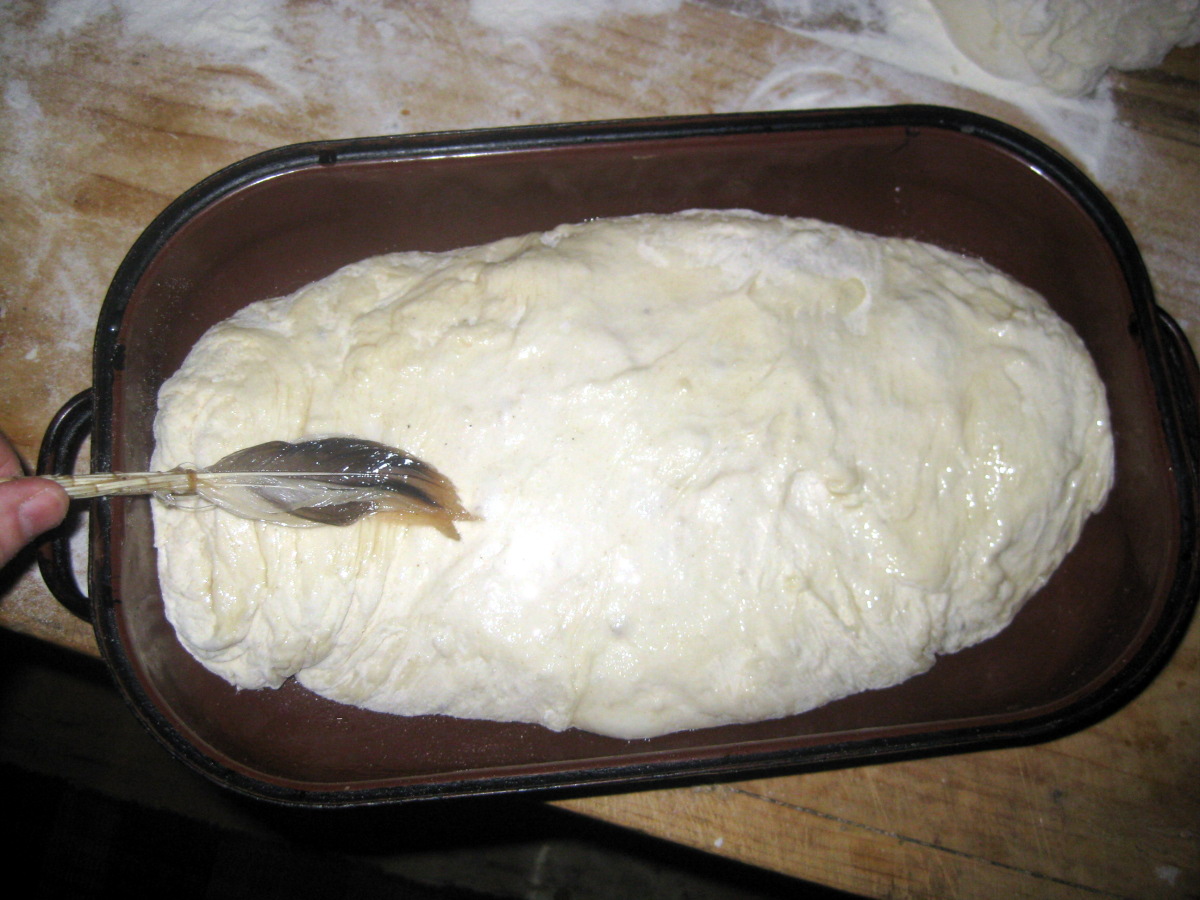
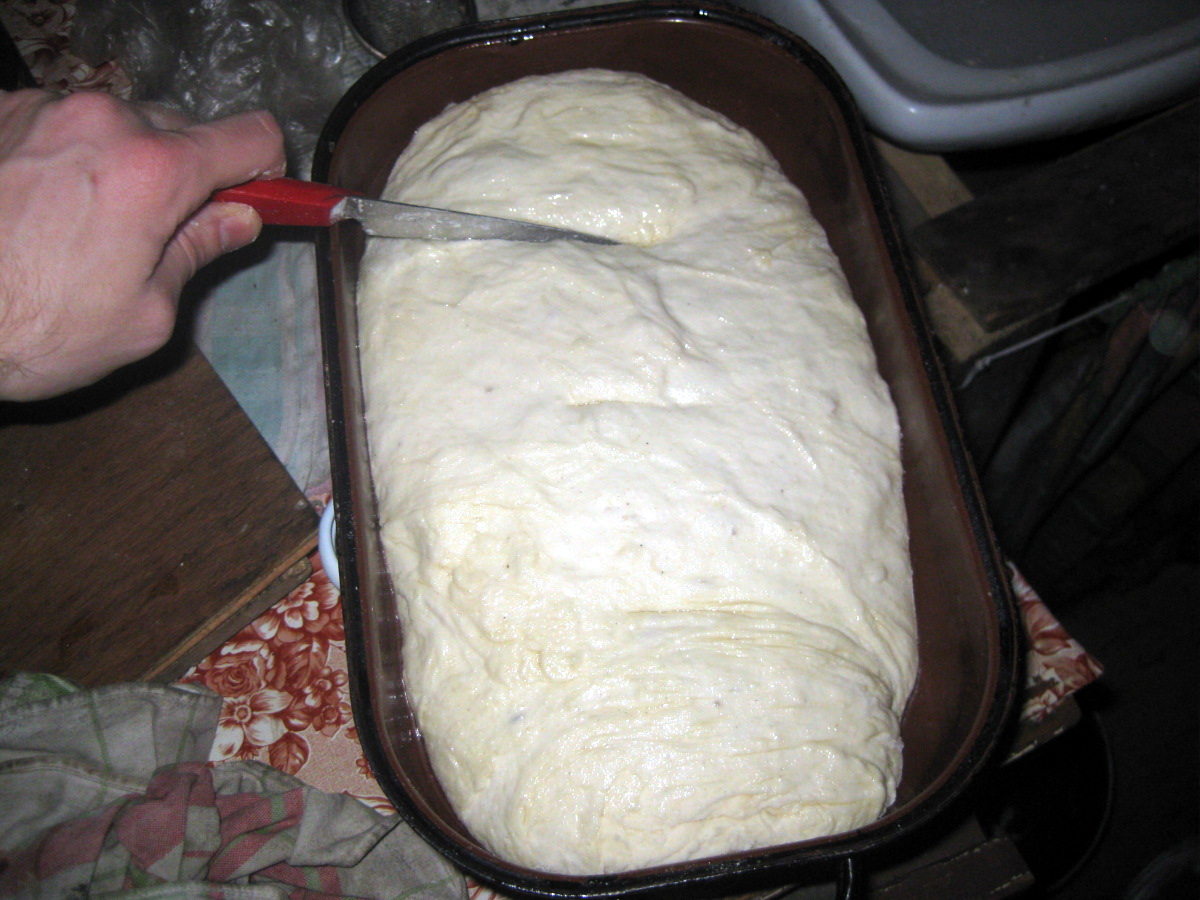
Place the loaf into a baking pan few inches deep. Grease all around. Let rise. If you feel creative, you can use a knife to cut in some designs.
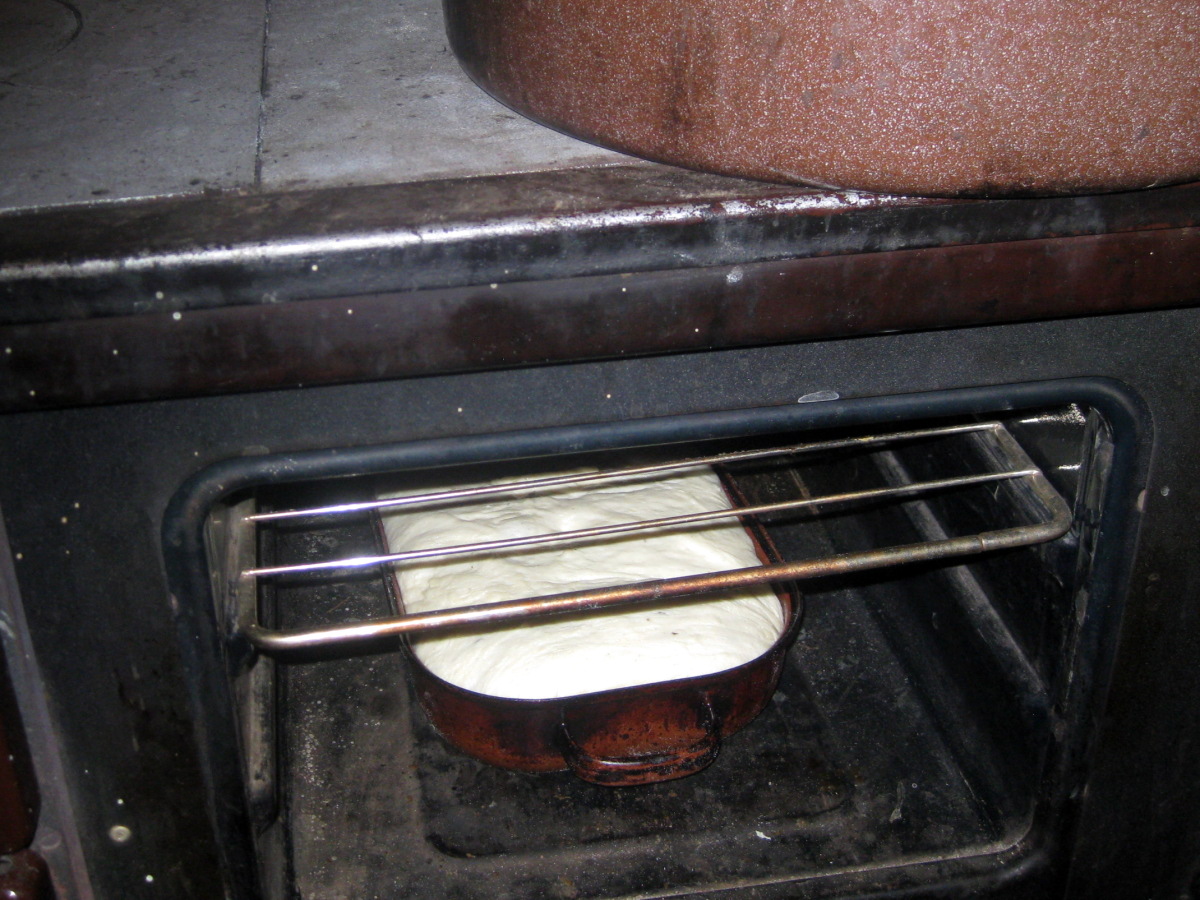
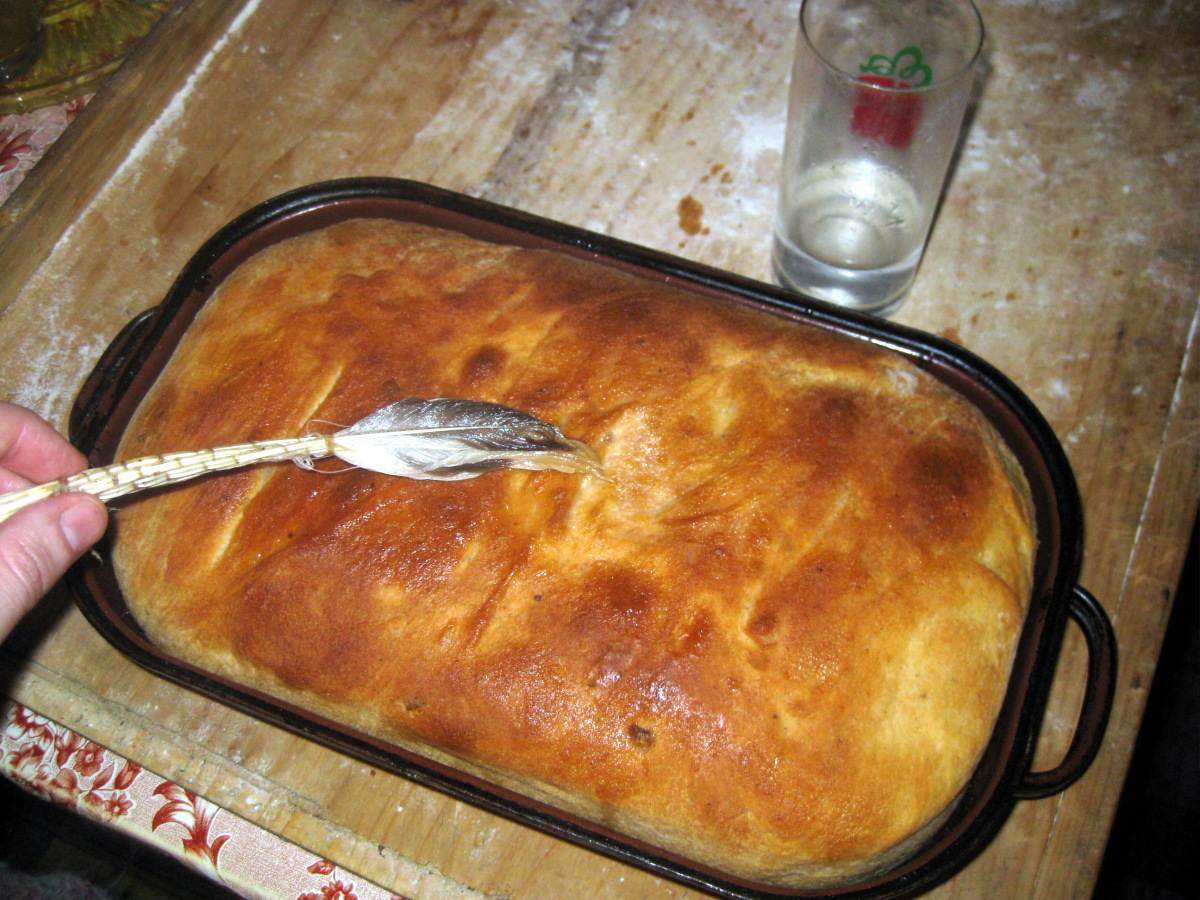
Place on the bottom rack of a stove preheated to 200C. Then lower the temperature to 150C for baking. Bake for 40 minutes. You can check if the bread is done by running some stick down the middle and seeing if any dough sticks to it (it shouldn’t). Brush water onto the crust of the finished bread to soften the crust. Skip this step if you like your crust hard. Note: Temperatures listed here are the estimates my grandma gave me. We baked the bread in a wood burning stove. We started baking at “a lot of logs” and finished at “fewer logs”. I’ll post an update once I make bread back in the States..
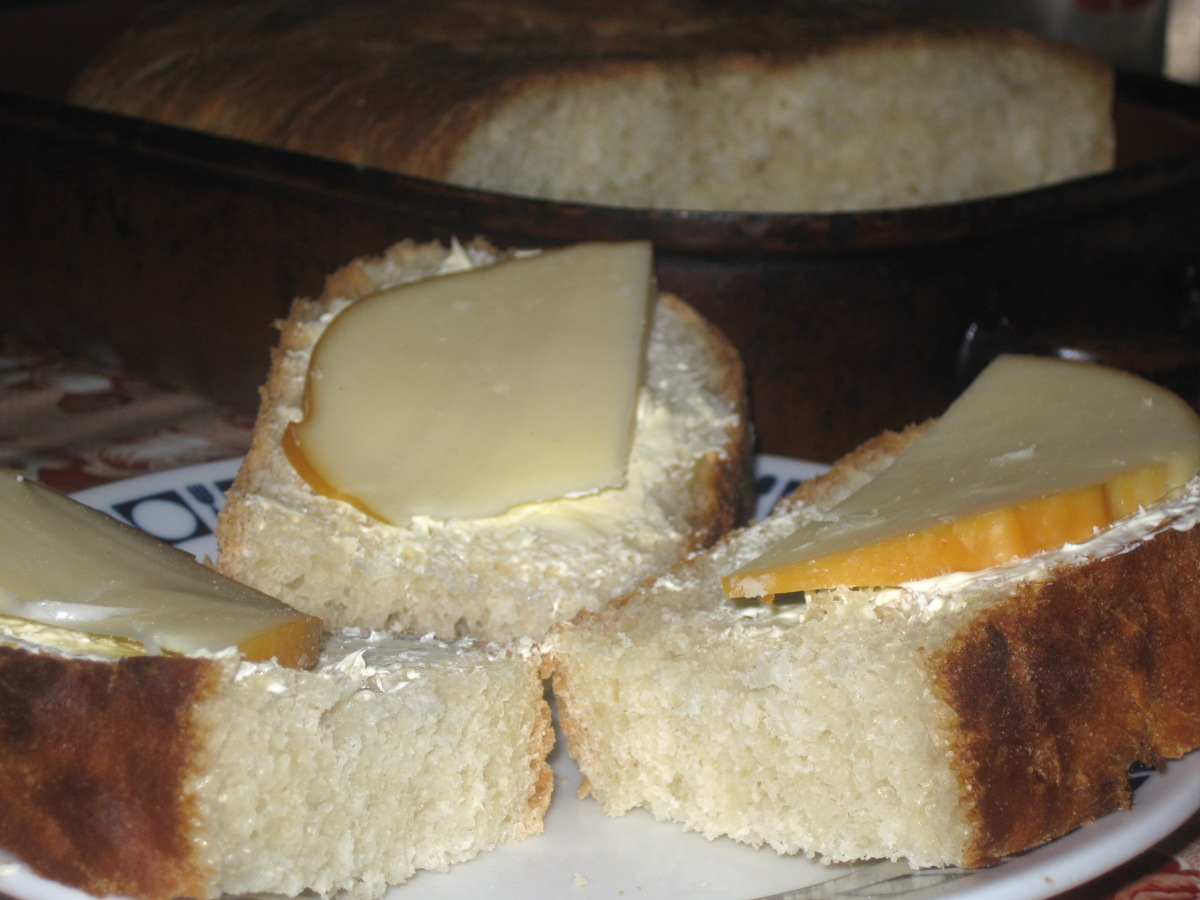
And that’s it. Here is the typical old-fashioned Slovak breakfast: home baked bread, butter and smoked cheese.
I would love to read your hints and tips for baking bread. I am sure that I’ll find a lot of intricacies when I try repeating this recipe back in America, using a gas-burning stove.
Oops!
You have given some of your baking temps in Fahrenheit [very very low] I think you meant Celsius!
A Simple mistake but could be a costly one if someone follows your recipe and cooking temps to the letter.
In cooking/Roasting you can add, subtract and substitute ad nausium but in baking it takes a lot of science and exacting formulas ect.
The Temps in question are highlighted by
******[X] ******
“When you wrote “Place on the bottom rack of a stove preheated to *****’200F’******. Then lower the temperature to *****’150F’****** for baking. Bake for 40 minutes. You can check if the bread is done by running some stick down the middle and seeing if any dough sticks to it (it shouldn’t). Brush water onto the crust of the finished bread to soften the crust. Skip this step if you like your crust hard. Note: Temperatures listed here are the estimates my grandma gave me. We baked the bread in a wood burning stove. We started baking at “a lot of logs” and finished at “fewer logs”. I’ll post an update once I make bread back in the States.”
I would hope you meant 200° Celsius or 392°F or [300°F]
The conversion formula is as follows:
[°C] = ([°F] – 32) × 5/9
[°F] = [°C] × 9/5 + 32
205°C converts by formula to 392°F but rounded out you can get away with <400 °F.
So many of my favorites were lovingly made by rote by the cook or the baker. A pinch, a dash, some of this, some of that, add some scalded milk???? I wish I would have taken the time back when to actually pay attention. I have some written recipes but still they wrote a little, some of, cook it a while…, when it smells done, it’s done.?
Wow! I can’t wait to make this bread!
I share the same opinion as MoBoHunk, I think you wrote the temperature in Celsius instead of Fahrenheit… if you look at converter Fahrenheit to Celsius your 200F would be 93.3C and 150F only 65.6C, that’s too low for any kind of baking. I just hope you will try to correct this mistake asap, as not many people looking the whole way down to comments and maybe some of them, especially beginner chefs will just follow the recipe as it is written. I’m from Slovakia myself as well, currently living in UK and absolutely love your website. I miss a lot of our goods from home, but I’m trying to make as much Slovakian traditional food as I can. I love the simplicity in your recipes as they would come from my own grandmother, I also love your pics especially the ones from your grandparents kitchen, reminds me so much my lovely grandmother, RIP. Thank you for your time creating and updating this site with new recipes…
heeeeeeeeeeey where that upset S
mile came from? that’s not my face expression…
That’s called a “gravatar” (http://en.gravatar.com/). 🙂 It’s an image that is automatically generated from your email address. You can make an account on WordPress.com and upload your own image, then that image will show up on all WordPress blogs (like this one).
By the way, I have corrected the F to C. You are right, it had to be a typo. You need about 300F for the browning reaction to occur, without it, you wouldn’t get the nice crust. I bake my bread now at 375F which is about 190C.
ok I learn something new today… thanks lubos… BTW i did register on word press and i want to register here to be able to add recipes but your link to account said “User registration is currently not allowed”
ok so you do bake it on higher temperature than 150… what kind of oven you have?
and i did upload my image on gravatar as well and look at this uggly thing keep looking at me :o(((((
I bake my own rye bread for 22 years now while we love to spread butter on top of it. This is not possible to do on the bread sold in our stores.
I let my bread machine knead the dough for me and than put the dough on baking sheet and let it rise for 1 hour.
I do bake my bread on 450deg F for 15 minutes first, than the rest on 350deg F for 30 minutes. Also water should be placed in the bottom of an oven. This helps the bread to age little slower and gives the bread also some moisture. I put the water in a coffee mug.
I do brush the bread with milk after baking. It gives the bread darker shiny glaze and it stays crunchy. A mix of sour cream with water can be used if milk is not on hand.
This same recipe can be used for rohliky. It is divided into many portions. I do bake it on 370deg F for 20 minutes only. No temperature changes.
My oven is electric, but I would assume gas oven would do the same trick.
tell me something about breads behind slovakian boarders… they put so much of this “E” stuff in them to keep them soft and for them to last longer, so we are getting this horrible sponge what they call bread… luckily after my 3 years in UK they started to sell polish bread in our local tesco store, which i’m sooooooooooooooo grateful for… it taste almost as the one at home in slovakia and have same texture as well… thanks for your tips with baking i will try them next time i will bake my own bread… i even read somewhere that is good to put ice cubes on baking tray in the bottom of an oven, it does then same effect as your trick with water in coffee mug.
Hey you guys you need to read the baking temperature again. Pay attention. Te recipe is calling for 200C which is 200 Celsius, and 150C which again means 150 Celsius. So what is your problem?
Hey Bret, Lubos changed it after he realized that he was posting it in Celsius not Fahrenheit.
Yes there may be a problem when folks do not realize what’s one or the other, and may folks do not (growing up on one or the other temperature scale)
you don’t have to be down to 1 degree, as not even the best oven can give you such accuracy.
Here is a simple by precice conversion for cooking between Celsius and Fahrenheit.
I hope it’s useful for all us folks lost between different temp scales 🙂
http://chinesefood.about.com/library/blcookingmarks.htm
mark to use with this handy table of oven temperature conversions.
Cooking Instructions Fahrenheit Metric: (Celsuis, Centigrade) Gas Mark
Very Hot 475 245 9
Very Hot 450 230 8
Hot 425 220 7
Q/Fairly Hot 400 205 6
Moderately Hot 375 190 5
Moderate/Medium 350 175 4
Warm 325 165 3
Slow/Low 300 150 2
Very Slow/Low 275 135 1
Very Slow/Low 250 120 1/2
Very Slow/Cool 225 110 1/4
I found that if you 1/2 the recipe, you can put it in the bread machine on dough cycle! Super and less work!
Oops! This post was supposed to be put under the Leavened Dough section! Sorry!