Lesson 2 Dialog: He is hungry
Now that you’ve made some new friends, it’s time to go out and grab something to eat.
V hoteli (in the hotel)
Mišo: Michael, ste hladný?
You: Yes, I am hungry. A vy?
Mišo: Ja som tiež hladný. A čo ty, Lucia?
Lucia: Nie, ja nie som hladná. Ja som smädná. Poďme!
Na ulici (on the street)
Lucia: Tu je Stará Radnica.
You: Oh yes, here is the Old Town Hall. It is pretty.
Lucia: Áno, je pekná. Je aj stará.
You: That’s right. It says here that the tower dates back to the 13th century.
V reštauracií (in the restaurant)
Mišo: Prosím si bryndzové halušky a jedno pivo.
You: That sounds good! I will also have bryndzové halušky and a beer.
Waiter: A vám?
Lucia: Dám si kapustnicu a Kofolu.
Pár minút neskôr (few minutes later)
You: How is your meal?
Mišo: Bryndzové halušky sú výborné. A kapustnica?
Lucia: Kapustnica je tiež dobrá.
You: And how is your beer?
Mišo: Pivo je skvelé! Je studené.
You: A Kofola?
Lucia: Kofola je vždy super!
The dialog, dissected:
Time to go out and sample the excellent Slovak cuisine. Along the way, let’s learn how to describe things using adjectives. After this lesson, you should be ready to make simple dialogs and order your first meal, in Slovak!
The conversation starts with Mišo asking you ste hladný? (are you hungry?). This is the short form of vy ste hladný? As you learned in the previous lesson, ste is the form of the verb to be used with the plural you which is used when addressing somebody formally. You will see that the pronoun is typically omitted. There really is no need for it – you can figure out what you are referring to from the form of the verb. Often when it is used it is done to emphasize the subject.
Good that Mišo asked because you are hungry! Turns out, so is he. Ja som tiež hladný means I am also hungry. This sentence should be quite familiar. It is very similar to the sentences you studied in the previous dialog. He then asks his friend, Lucia: a čo ty? is and what (about) you?. Turns out she is not hungry (hladná), but she is thirsty (smädná). Let’s go! (poďme!)
On your way to the restaurant, you pass by the Old Town Hall, one of the oldest buildings in Bratislava. Tu je Stará Radnica means here is the Old Town Hall. One thing to note is that in Slovak, we don’t have any articles. So tu je Stará Radnica translates directly as here is Old Townhall. Lucia agrees that it is pretty, áno, je pekná (yes, (she) is pretty). She also tells you that it is also old: je aj stará ((she) is also old). Notice that again the pronouns are skipped. And notice those pesky genders! A town hall is feminine? Who would have though?
You finally made it to the restaurant. Mišo goes for a real Slovak dinner: bryndzové halušky with beer. Prosím si means I would like. This phrase comes from ja si prosím, I (for self) beg/ask. This is how you ask for just about anything in Slovakia. Just substitute the noun with whatever it is that you want. In this case, you order the bryndza dumplings and jedno pivo (one beer). They go really well together! The waiter then asks Lucia what would she like. A vám? means and (for) you?. I guess Lucia changed her mind, and orders something to eat, the sauerkraut soup, kapustnica. She also orders Kofola. Dám si means I’ll have.
What on earth is Kofola? The short answer is that it is the most amazing soda ever! One of the side effects of Czechoslovakia becoming a communist country after World War II was that trade with “the West” became 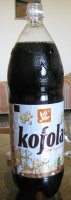 severely restricted. This doesn’t mean that there were food shortages. At least I have never experienced grocery stores not having food during my lifetime. But the selection was limited to brands made either locally or imported from other Soviet block countries. As such, there was no Coke. Instead, we had the local alternative, Kofola. It tastes nothing like coke, but I love it! It is also the cheapest drink you can order in a restaurant, cheaper than beer and much cheaper than water (which is typically more expensive than beer!). Western items like Coke were actually available, but only in special stores called “Tuzex”. These stores were built so that government officials who frequently traveled oversees could continue buying the goodies they may have come accustomed to on their trips. To prevent locals from getting hooked on Swiss chocolate, you couldn’t use regular money in these stores. Instead, you had to use something called “bony”. But, there was always a supply of shady characters hanging outside these stores more than willing to trade your Czechoslovak crowns for bony. This is for instance how my mom bought me Legos for Christmas, even though Lego was not available in regular stores.
Alright your meal came out. Mišo says his bryndza dumplings are great (výborné). And what about Lucia’s kapustnica? It is also good (dobrá). And the beer? It is also excellent (skvelé). (It) is cold, (ono) je studené. Note that pivo is neuter. And Kofola? Kofola is always amazing (kofola je vždy super)!
Hi folks, do you like these lessons? Please let me know. Your feedback is very much appreciated.
Just found your website and am enjoying trying it out. Maybe I will be able to talk to my Slovak relatives now.
kind regards
Thank you Brian!
It will help me with my visit to Spišská nová ves!
Regarding, ” And what about Lucia’s kapustnica? It is also good (dobrá),” from the last paragraph.
I was invited to lunch by a Slovak family. When asked about the meal I said something like, Ďakujem, je dobré,” and then had a little lesson in the difference between English and Slovak.
What I thought I had said was, “Yum, yum, this has been a lovely meal. Thank you very much.”
What my host heard was “Yeah, well, it’s ok … and that’s all it is.”
I was told that to say a meal is good is non-committal and is thus taken as an insult.
That is just my experience in someone’s home. I haven’t declared meals good since then so have not tested ‘good’ on other families.
Hádam jedlá sú chuti mi alebo pači sa mi to. A čo ty?
Sorry to hear this! But I am sure the family didn’t really get offended. Or at least I hope so. But yes, you are right. The word “dobré” in this context comes closer to “OK” than “excellent”. Basically when your complimenting the cook, you should say something like “je to vynikajúce!” or “je to výborné!” They both mean that the the meal is excellent. But if you are just sitting in a restaurant and commenting on the dish to your friends, the word “dobré” is more than sufficient. But if the owner or the chef come around, then you are better off switching to “výborné”.
SOM STASTNY MUZ
WHWEN I AM OVER IN SLOVAKIA …I TRAVEL WITH MY COMPANION WHO SPEAAKS ENGLISH… SO WHEN A POSSISBLY EMBARRASING MOMENT SHOWS UP I CAN ALWAYS APOLOGIZE FOR MY LACK OF KNOWLEDGE IN SLOVAK AND THEN I GET AN IMMEDIATE LESSON IN GRAMMAR OR SOMETHING TO REPEAT AND MAKE THINGS RIGHT??? MOST OF THE TIME PEOEPLE ARE VERY UNDERSTANDING …IT GOES BOTH WAYS… GREAT ARTICLES WITH THE LANGUAGE…. TO DAY IS IN THE KITCHEN MAKING POTATO PAANCAKES
MY AUNT IN BOJNICE IS AN EXCELLENT COOK WITH EVERYTHTING… ALL MEALS ARE HOMEMADE ..RIGHT TO THE DESERTS .WE SOMETIMES JOKE ABOUT OPENING A TRADITIONAL SLOVAK RESTAURANT IN THE USA … BUT SHE WON’T TRAVEL TO THE USA ..SOOOOOOOOO I WILL JUST PRACTICE HERE AND ENJOY THE FOOD ..I HAVE COME TO LOVE HERE…
JOE
Thanks Joe! Would your aunt like to take photos of her deserts and send them in? I would love to add them to the site. Enjoy the potato pancakes!
Hello Lubos,
did I read somewhere (which I can’t find now where) that one could create an account on this website? If so, how does one go about it? Thanks! 🙂
Neskusala som este ako chuti kombinacia halusiek a kofoly.. Je mozne, ze to zaludok zvladne. ;o)
Ja mam najradsej kofolu po masovom jedle, na pretravenie.
Kofola… :S
How about Marka, or Vinea? That’s something I haven’t seen elsewhere. (To explain to those who don’t know – it’s a carbonated grape-flavored beverage – not too sweet, kind of tangy in taste.)
Vinea is the most delicious for me. I enjoy drinking Kofola on occasion, but biela Vinea is my preferred drink. Cervena Vinea is alright too! What it is for me is an excellent play on White and Red wine. It’s like soda wine, minus the alcohol. I wish they had it in the States!
Muri, you may have already tried it, and it may not be exactly the same, but there is non-alcoholic “sparkling grape juice” that you can find in the supermarkets especially close to New Years for those who can’t drink alcohol. You might also ask at a beverage store, or even Costco World Markets. It’s not bad, really. Hope this helps you a littl.
OMG I love this site. It’s helping me with understanding Slovak to where I’m able to communicate better with my best friend. Please if you can add more lessons I’m so excited to know more Slovak <3
Hi! I’m trying to learn slovak, cos I have got friends there, I already was there but it’s a shame I didn’t try to learn the language before. Now I’m planning to get back there, and this time with Slovak knowledge (last time I was communicating in Russian) =D Hope you’ll get to publish some more lessons. PD, I’m from Mexico 😉
listen man, thumbs up for the web! when is spent my time in the sk-lang i learned my slovak through google translate (just imagine how many raised eyebrows i have encountered..) in addition, also nowadays it varies from rediculously hard, to fairly impossible finding information on the net about slovencina, which is a bit more than : ako sa volas? ja som hladny..
in conclusion, keep up the good work, would love to see more progressive lessons.. best wishes Nissan from israel..
I totally love this site! My church is putting on its’ annual Ethnic Festival and I am the chairperson this year. I am also hosting the Slovakia booth, so I’ll be doing a lot of good Slovak cooking! This website is invaluable! Thanks SO much! 🙂
I’ve not tried ordering any slovak food on my visits, but I often carry a bottle of Kofola around..
Do you teach slovak?
Rusyn nationality